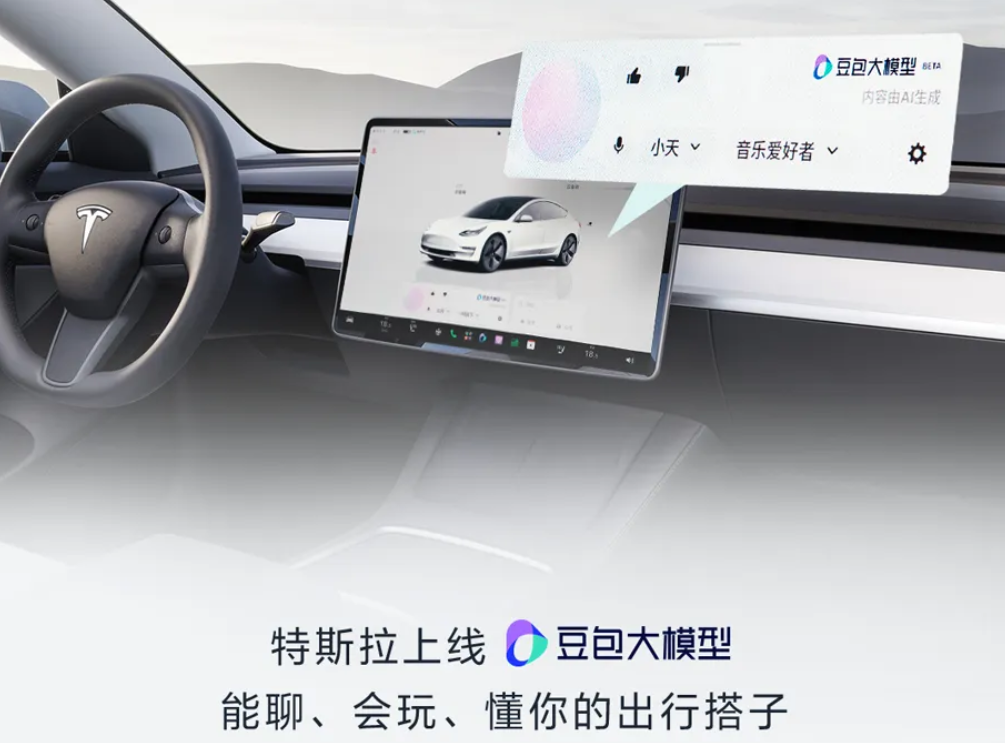
As the global electric vehicle landscape shifts toward intelligent cockpits, Tesla has made a pivotal move in its domestic Chinese operations. On August 19, 2026, ByteDance's enterprise division, Volcano Engine, officially announced that Tesla China has integrated its Doubao large language model (LLM) into its in-car infotainment systems. This strategic development highlights the growing importance of Tesla China AI localization as Western automakers adapt to highly competitive regional software ecosystems.
Decoupling the AI Stack: The Logic Behind Tesla China AI Localization
For years, Tesla's global strategy has relied on vertical integration and uniform software architecture. However, China's distinct regulatory environment and highly mature consumer tech ecosystem have forced a pragmatic decoupling. While Elon Musk's xAI develops Grok for Western markets, deploying a foreign LLM in China is virtually impossible without extensive local regulatory approvals from the Cyberspace Administration of China (CAC).
Rather than waiting for regulatory clearance for Grok, Tesla chose to accelerate its Tesla China AI localization by partnering with Volcano Engine. Doubao, one of China's most widely adopted LLMs, offers low latency, deep integration with local services, and full compliance with national data security standards.
Why ByteDance's Doubao?
ByteDance's Doubao model has quickly emerged as a market leader in China due to its cost-efficiency and robust natural language processing capabilities. For Tesla, this integration represents a strategic sourcing alliance that enhances the vehicle's conversational capabilities without requiring a ground-up rebuild of its operating system.
| Feature / Parameter | Global Implementation (xAI Grok) | Tesla China Implementation (Doubao LLM) |
|---|---|---|
| Data Compliance | Subject to US / Western regulatory standards | Fully compliant with CAC and local data residency laws |
| Language Optimization | Primarily English-centric, Western nuances | Native Mandarin with highly localized cultural context |
| Service Integration | Western APIs (X, Google, Spotify) | Local ecosystem APIs via Volcano Engine |
Strategic Localization vs. Global Standardization
As a market analyst observing the transition, this development demonstrates that technology integration in the automotive sector is no longer purely about hardware specs. To win the minds of Chinese consumers, digital cockpits must feel native. Western OEMs are increasingly realizing that localized regional footprints are essential for market retention. Tesla's decision to use a localized AI in China shows a mature understanding of trade adaptability and the necessity of local supply chain compliance.
By utilizing Volcano Engine's infrastructure, Tesla ensures its voice assistants can handle complex multi-turn conversations, manage native navigation, and seamlessly interact with local lifestyle applications. This cross-border collaboration allows Tesla to remain highly competitive against domestic software giants like Xiaomi, Huawei, and Geely.
What This Means for Investors and Competitors
For investors, this step mitigates regulatory risks. By aligning with ByteDance, Tesla avoids the potential geopolitical headwinds of trying to export US-based AI models into highly sensitive Chinese consumer databases. It also signals to other global automotive players that a dual-track software strategy—one for China and one for the rest of the world—is not just an option, but a requirement for modern market compliance and localization.