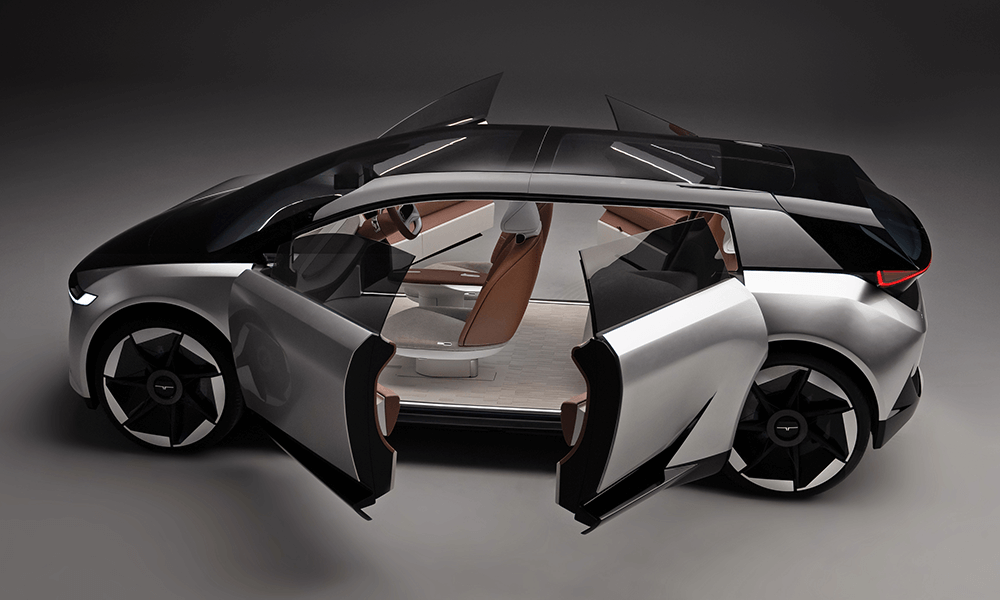
In a dramatic shift that highlights the shifting power dynamics of the global automotive supply chain, India's Tata Motors is reportedly turning to China's Chery Automobile to salvage its delayed luxury electric vehicle brand, Avinya. By leveraging Chery EV platform licensing, Tata is bypassing internal developmental delays to keep its premium EV aspirations alive for a 2027 launch. This move represents more than just a localized corporate alliance; it is a clear signal that Western and global legacy OEMs are increasingly reliant on Chinese architectural IP to survive the electric transition.
The Strategic Pivot: From JLR's EMA to Chery's Modular Tech
When Tata Motors first unveiled the Avinya concept in 2022, it was heralded as a beacon of India's home-grown engineering prowess. Originally, the premium EV lineup was slated to sit on Jaguar Land Rover's (JLR) highly-anticipated Electrified Modular Architecture (EMA). However, internal bottlenecks, soaring development costs, and delayed software integration timelines pushed the Avinya's target launch back to 2027.
As a Shanghai-based automotive analyst observing these multi-region negotiations, the solution Tata found is brilliantly pragmatic, albeit geopolitically delicate. Instead of waiting for JLR's native platform to mature, Tata is licensing an advanced, production-ready modular EV platform developed by Chery, JLR's long-standing joint venture partner in China. Under this framework, Chery will act as a core technology and component supplier, while Tata-owned JLR will help adapt the architecture for global standards.
Why Chery EV Platform Licensing Makes Economic and Technical Sense
For Tata, building a ground-up luxury EV platform in-house is an astronomical financial burden. By opting for Chery EV platform licensing, they gain access to a highly optimized, cost-efficient, and deeply integrated supply chain that has already been tested at 'China-speed'.
| Metric / Parameter | JLR EMA Platform (Original Plan) | Chery Licensed Platform (New Plan) |
|---|---|---|
| Development Status | Delayed, high integration complexity | Production-ready, mass-market validated |
| Supply Chain Matureness | Western-centric, higher battery costs | Highly optimized Chinese LFP/NMC ecosystem |
| Target Launch Timeline | Postponed beyond 2027 | On-track for 2027 localization |
Chery's platform capabilities—specifically its E0X high-performance electric architecture developed with Huawei—offer advanced 800V high-voltage fast charging, multi-motor configurations, and robust ADAS (Advanced Driver Assistance Systems) integration. This allows the Avinya to instantly compete with next-gen Western and Chinese luxury EVs upon its debut.
The Geopolitical Loophole: Navigating India-China Relations
This deal is bound to raise eyebrows in New Delhi and Beijing. Following border tensions in 2020, India has severely restricted Chinese foreign direct investment (FDI) and placed Chinese smartphone and automotive companies under intense regulatory scrutiny. Direct ventures from Chinese OEMs like BYD and Great Wall Motors have faced significant roadblocks in India.
Tata's workaround is ingenious. By routing the technology licensing through JLR's existing joint venture with Chery in China, Tata avoids a direct Sino-Indian corporate entity. The manufacturing will take place in Tamil Nadu, India, creating local jobs, while the core intellectual property and component kits will be supplied by Chery. It is a win-win: India gets local manufacturing of a luxury brand, and Chery secures a high-margin technology licensing fee without the political headache of setting up an independent plant in India.
What This Means for Western Investors and Competitors
For global investors, this licensing agreement is a paradigm-shifting data point. It proves that China has officially transitioned from a low-cost volume auto exporter to the world's premium EV technology licensor. If Tata Motors—backed by the industrial might of the Tata Group—cannot cost-effectively build its own high-end EV platform in time, Western legacy OEMs (such as Ford, GM, and Stellantis) face a similar existential threat.
To remain competitive and avoid multi-billion dollar write-downs on delayed proprietary platforms, more global OEMs will likely swallow their pride and seek Chinese technology partners. The 'China Information Gap' is closing, and those who recognize the value of Chinese EV architecture licensing early stand to gain the most strategic alpha in the coming decade.