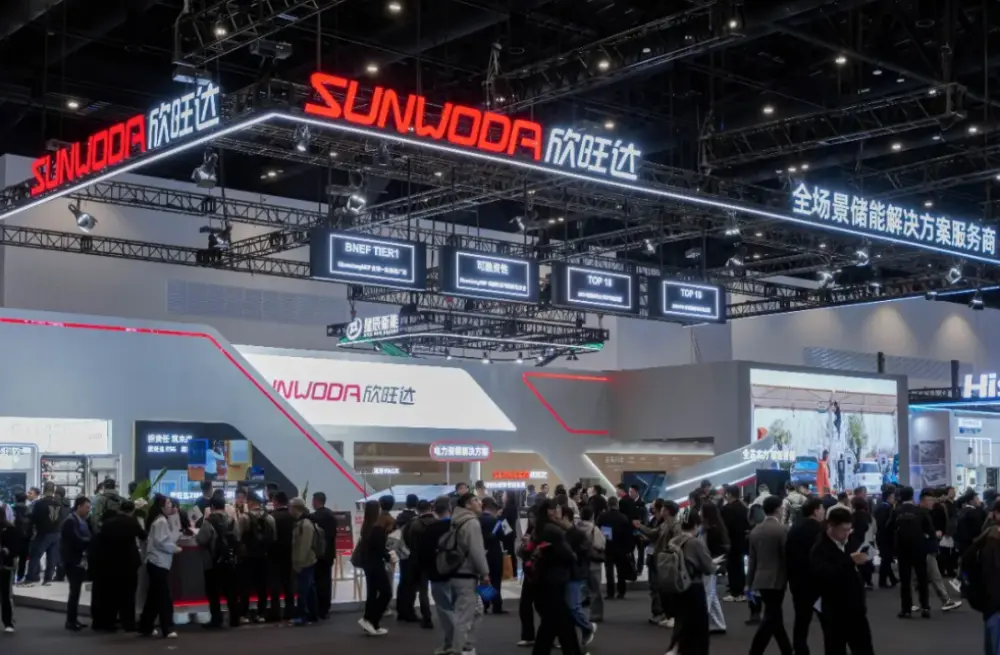
China's rapid consolidation of its domestic automotive supply chain has reached a critical milestone. The Beijing Shunyi District Ecology and Environment Bureau has officially approved the environmental impact assessment (EIA) for Sunwoda's massive new energy battery project. With a total investment of 5.37 billion RMB ($740 million USD), this upcoming Sunwoda Beijing battery gigafactory represents a major structural shift in the geographical distribution of China's lithium-ion manufacturing power.
The Architecture of the 41.32GWh Gigafactory
Sunwoda (SZSE: 300207), a major player in the global lithium-ion battery landscape, is placing a massive bet on northern China's industrial future. The project will be located in the Beijing-Tianjin-Hebei Intelligent Connected New Energy Vehicle Science and Technology Ecological Park in Shunyi, Beijing. This strategic zone is engineered to concentrate advanced automotive suppliers around major production facilities.
The facility's technical specifications demonstrate its high-efficiency design:
- Total Investment: 5.367 billion RMB (~$740 million USD)
- Annual Production Capacity: 41.32GWh
- Production Lines: 4 advanced lithium-ion battery cell production lines and 4 PACK (battery pack assembly) lines.
Strategic Geography: Why Northern China and Why Now?
As a seasoned market analyst tracking the Chinese automotive supply chain, this move signals a pivotal geographical realignment. Historically, China's lithium-ion battery manufacturing has been heavily concentrated in Southern and Eastern China—Fujian (CATL's headquarters), Guangdong (BYD's strongholds), and Jiangsu (CALB). This concentration required northern vehicle assembly plants to endure high transport costs, longer lead times, and increased supply chain vulnerabilities.
The creation of the Sunwoda Beijing battery gigafactory directly addresses these inefficiencies. By localizing cell and PACK production in Beijing, Sunwoda establishes immediate proximity to several massive EV anchor plants:
| Key Customer / Partner | Geographical Proximity | Strategic Synergy |
|---|---|---|
| Xiaomi EV | Beijing (Yizhuang) | Sunwoda is already a core battery supplier for the entry-level Xiaomi SU7. Nearby cell manufacturing dramatically reduces logistics overhead for Xiaomi's aggressive ramp-up. |
| BAIC Group | Beijing (Shunyi/Huairou) | BAIC's high-end EV transition and joint ventures require a highly reliable, local source of stable battery chemistry. |
| Li Auto | Beijing R&D & Production Hub | Provides localized dual-sourcing options for Li Auto's range-extended and pure electric models. |
Analyzing Sunwoda's Competitive Moat Against CATL and BYD
While CATL and BYD (FinDreams) hold dominant positions globally, Sunwoda has successfully carved out a massive niche by positioning itself as the 'flexible, high-performance alternative.' They specialize in ultra-fast charging architectures (such as their 4C and 6C Supercharging Flash Charge batteries) which have caught the attention of premium EV makers.
By building a 41.32GWh footprint in Beijing, Sunwoda prevents its rivals from monopolizing the northern China market. This local ecosystem approach allows Sunwoda to deliver custom, real-time battery calibrations directly to the assembly lines of Beijing's tech-first EV brands, matching the breakneck 'China-speed' product iterations.
What This Means for Western Investors and OEMs
For Western automakers and institutional investors, this gigafactory underlines the deep vertical integration occurring within China's domestic market. While Western legacy OEMs struggle with supply chain bottlenecks and high battery-pack assembly costs, China is successfully consolidating entire ecosystems into singular municipal zones like Beijing's Shunyi district.
This localized consolidation yields massive cost advantages, driving down the per-kWh cost of Chinese-built EVs. Western OEMs hoping to remain competitive in Asia—or protect their home markets from cheap Chinese EV imports—must recognize that China's cost dominance is no longer just about cheap labor; it is about unmatched infrastructural speed and localization.