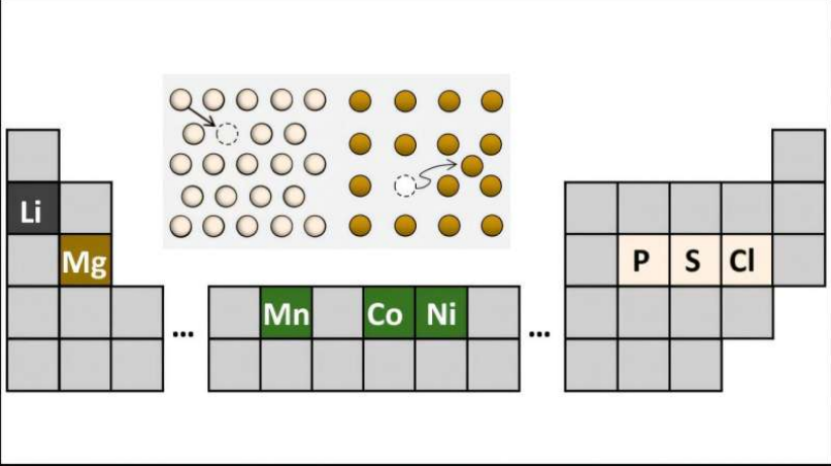
The race to commercialize next-generation energy storage has entered a critical phase, and the success of sulfide solid-state battery technology may ultimately hinge on an engineered barrier almost thin enough to escape imagination. Researchers at the U.S. Department of Energy's Argonne National Laboratory have developed an ultra-thin, 1-nanometer magnesium oxide (MgO) protective coating that successfully resolves the chronic interface degradation plaguing sulfide-based solid-state architectures.
As a global battery analyst tracking materials science breakthroughs, I view this development as a profound shift. While major battery manufacturers are aggressively establishing pilot lines for sulfide-based systems targeting a 2027-2030 commercial window, foundational material-level innovations from research institutions like Argonne provide the critical intellectual property needed to stabilize these chemistries. Rather than isolated development, this highlights the necessity of cross-border technology integration and collaborative supply chain standardization.
The Interface Problem in Sulfide Solid-State Battery Technology
Sulfide-based solid electrolytes are widely considered a leading candidate for next-generation systems because their ionic conductivity at room temperature can rival or even exceed traditional liquid organic electrolytes. However, they suffer from extreme chemical and electrochemical instability when in direct contact with high-voltage cathodes (such as lithium nickel manganese cobalt oxides, or NMC).
During cycling, parasitic reactions occur at the solid-solid interface. This leads to:
- Impedance Growth: The formation of a high-resistance passivation layer that slows down lithium-ion transport.
- Structural Delamination: Microstructural stress during volume expansion, causing the physical contact between the electrolyte and electrode to degrade.
- Capacity Fade: Rapid loss of usable energy over fewer charge cycles, making the battery unfeasible for automotive lifespans.
The 1-Nanometer Shield: How Magnesium Oxide Solves the Interface Crisis
To mitigate this, the Argonne team utilized precise synthesis techniques to deposit a magnesium oxide layer measuring a mere 1 nanometer in thickness directly onto the cathode active material. This atomic-scale engineering acts as a chemically inert passivation barrier.
The breakthrough lies in its dimension. At 1 nanometer, the MgO layer is robust enough to prevent direct chemical reduction of the sulfide electrolyte by the high-voltage cathode, yet thin enough to allow lithium ions to tunnel through easily, keeping internal resistance low.
Performance Comparison: Treated vs. Untreated Interfaces
The table below outlines the comparative performance metrics of sulfide solid-state batteries utilizing this advanced 1-nanometer coating compared to conventional untreated baselines:
| Metric | Untreated Sulfide Interface | 1nm MgO Coated Interface |
|---|---|---|
| Interfacial Resistance | High (increases exponentially with cycling) | Low and Stable |
| Capacity Retention (500 cycles) | Rapid degradation (<60%) | High (>85% projected) |
| Side Reaction Suppression | Minimal (leads to gas & byproduct formation) | Excellent chemical passivation |
Strategic Implications for the Global EV Supply Chain
This technical milestone has immediate commercial implications for automotive OEMs and technology developers worldwide. While polymer-based solid-state batteries are easier to manufacture, their lower ionic conductivity limits high-performance applications. Oxide-based solid-state systems, on the other hand, are often too brittle for large-format automotive packs. Thus, the industry is increasingly centering on sulfide solid-state battery technology as the premier path forward for premium, high-range EVs.
Fostering Collaborative Ecosystems
As automotive manufacturers and tier-1 suppliers seek long-term strategic sourcing alliances, integration of advanced materials science like Argonne's MgO coating will likely be scaled through global manufacturing partnerships. Global cell manufacturers, who excel in the gigawatt-scale production of advanced cells, can integrate these atomic-scale coating technologies to ensure their solid-state product offerings meet the rigorous safety and longevity demands of international markets.
Ultimately, this research signals that the path to solid-state commercialization is not a siloed race, but a highly integrated, global technological effort where atomic-scale breakthroughs unlock gigawatt-scale realities.