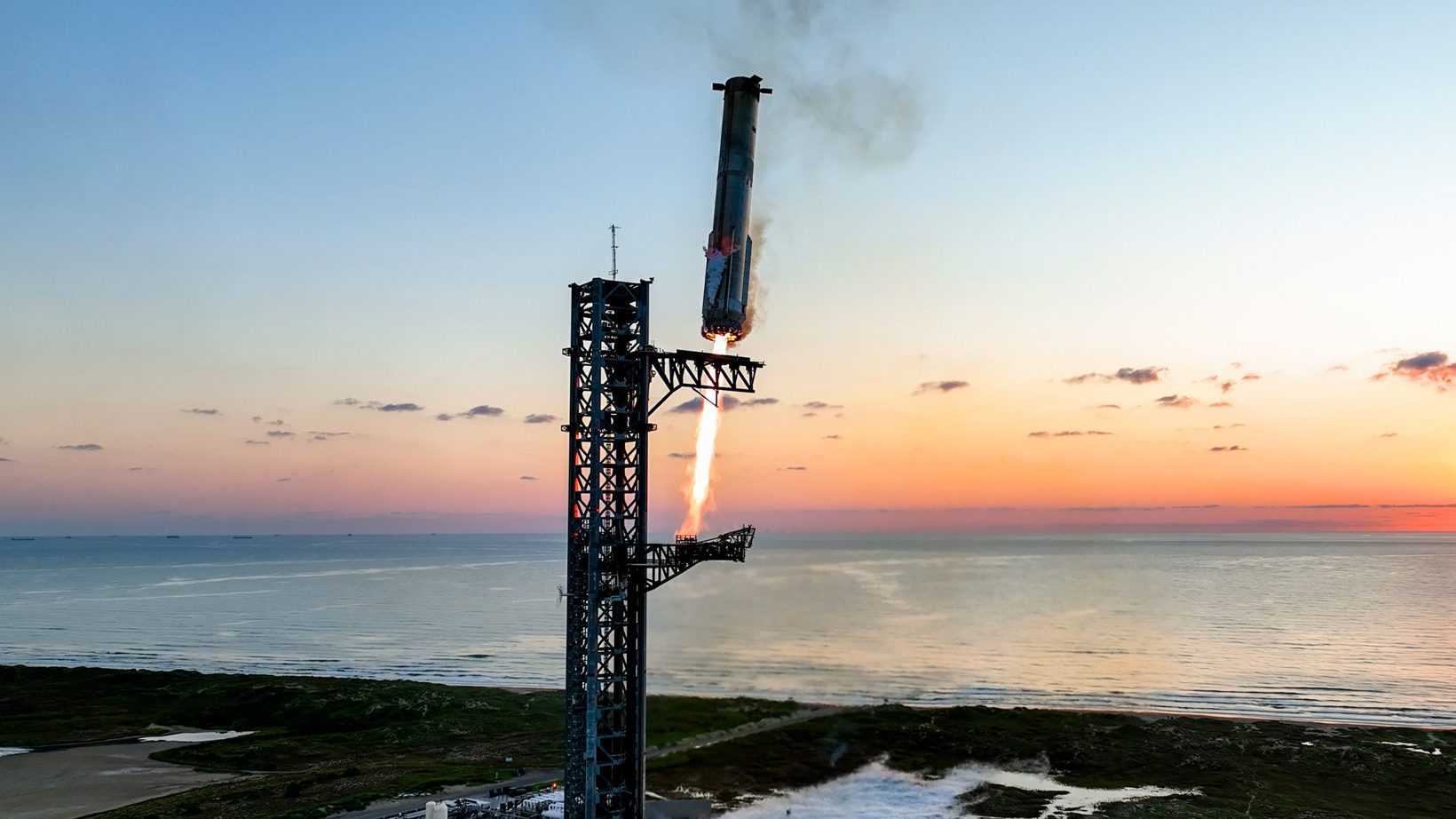
With SpaceX securing a historic $75 billion IPO, the implications of this monumental capital injection reach far beyond rocket science, directly reshaping the SpaceX IPO Tesla Chinese EV dynamics on Earth. As Elon Musk solidifies his trillion-dollar status, this massive influx of capital establishes a formidable aerospace moat for Tesla, intensifying the strategic space-to-road race against Chinese automotive conglomerates like Geely, who are launching their own proprietary satellite constellations.
The Record-Breaking $1.77 Trillion SpaceX IPO
On June 11, SpaceX finalized the largest Initial Public Offering (IPO) in U.S. history, pricing 555.56 million shares at $135 each to raise an unprecedented $75 billion. Based on its 13.08 billion outstanding shares, the company's valuation surged to a staggering $1.77 trillion. This milestone eclipses the historic 2019 IPO of Saudi Aramco, which raised $25.6 billion at a $1.71 trillion valuation.
As a combined leader in space exploration, satellite communications, and artificial intelligence, SpaceX's massive valuation reflects the financial market's bet on the commercialization of low-Earth orbit. However, for auto industry analysts and Western tech investors, the true alpha of this deal lies in its strategic spillover into the global electric vehicle and autonomous driving sectors.
Space-to-Road Synergies: How SpaceX Empowers Tesla
To view SpaceX and Tesla as separate silos is a fundamental miscalculation. As an analyst monitoring the 'China-speed' expansion of smart EVs, it is clear that Musk's aerospace empire serves as Tesla's ultimate unfair advantage. The synergy operates across three distinct pillars:
- Starlink and Continuous Connectivity: Next-generation autonomous driving demands uninterrupted, high-bandwidth data transmission. Starlink's LEO constellation provides the global telemetric infrastructure required to update Tesla's Full Self-Driving (FSD) fleet in areas lacking robust cellular 5G.
- AI Training Cross-Pollination: The raw computing infrastructure behind SpaceX trajectory optimization, Starshield telemetry, and xAI's LLM models directly benefits Tesla's Dojo supercomputer training, accelerating neural network capabilities far ahead of competitors.
- Brand Halo & Leverage: A $1.77 trillion sister company provides Musk with virtually infinite financial and political leverage, reducing Tesla's vulnerability to localized market downturns or price wars.
The Chinese Counteroffensive: Geely's Spaceship Enterprise
Recognizing that autonomous driving is fundamentally a space-and-cloud game, Chinese automakers are not standing idle. Geely Holding Group, the parent company of Zeekr, Volvo, and Polestar, has been aggressively deploying its own satellite network through its subsidiary, Geespace.
Often dubbed the 'Chinese Starlink,' the Geely Future Mobility Constellation aims to deploy 240 satellites by the late 2020s. These satellites provide centimeter-level, high-precision Real-Time Kinematics (RTK) positioning to support Geely's advanced ADAS (Advanced Driver Assistance Systems) and vehicle-to-everything (V2X) communication networks.
| Metric / Feature | SpaceX Starlink (Tesla Ecosystem) | Geespace (Geely Ecosystem) |
|---|---|---|
| Current Satellite Count | 6,000+ active satellites | Approximately 30+ active (Target: 240) |
| Global Coverage | Truly Global (polar and equatorial orbits) | Primarily Asia-Pacific coverage initially |
| Primary Use Case | Broadband internet, OTA telemetry, remote ADAS updates | Centimeter-level navigation, V2X, smart city logistics |
Strategic Outlook: The Geopolitical Sat-Nav Moat
While Geely's progress is highly impressive and tailor-made for China's high-density urban environments, the scale of the SpaceX IPO highlights a stark divergence. Chinese satellite projects are constrained by regional launch capacities and state-controlled orbital licenses. Conversely, SpaceX's record $75 billion capitalization allows it to execute launches at an unprecedented frequency, further widening the gap in orbital real estate.
For Western investors, this indicates that Tesla's valuation is structurally backed by an impenetrable, orbit-to-ground ecosystem that Chinese EV competitors cannot easily replicate globally. As software-defined vehicles become the industry standard, the satellite connectivity network supporting them will determine who wins the global Level 4 autonomous driving market.