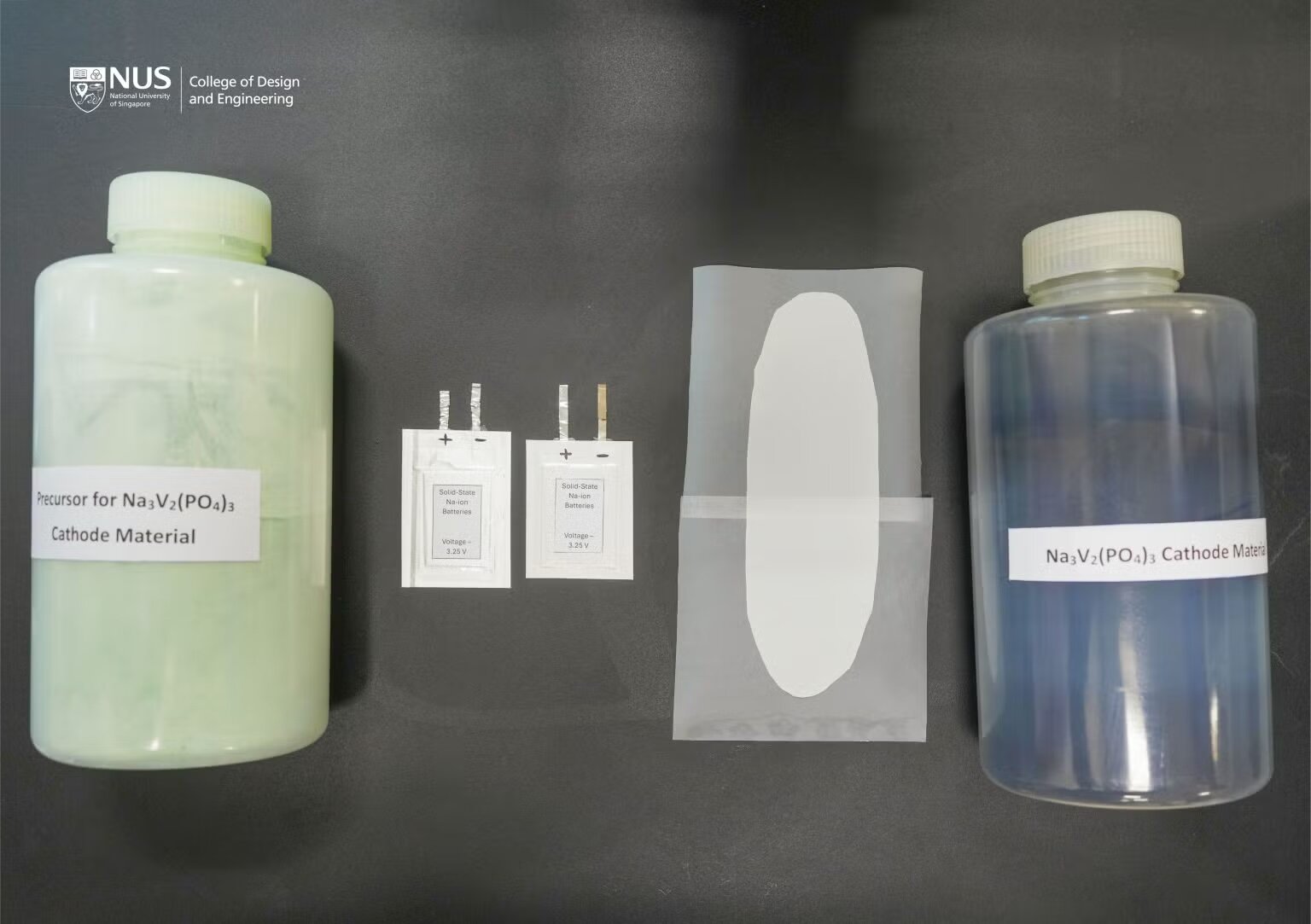
The global race for next-generation energy storage has a new frontrunner, and it is not lithium. As Western OEMs and energy grid developers scramble for supply chain independence, solid-state sodium battery technology is emerging as a critical frontier. The National University of Singapore (NUS) has recently announced a major scientific breakthrough that directly addresses the safety and longevity bottlenecks of sodium-based systems, positioning them as viable alternatives to lithium-ion dominance.
The Strategic Pivot: Why Sodium Matters
As a market analyst tracking energy transitions, I have observed that while lithium-ion batteries dominate electric vehicles today, their supply chain is highly vulnerable to geopolitical bottlenecks and escalating material costs. Sodium is roughly 1,000 times more abundant in the Earth's crust than lithium and can be harvested from seawater, making it cheap and immune to the mining crises plaguing lithium-rich regions.
However, sodium-ion batteries have long suffered from safety issues. Traditional liquid electrolytes are highly flammable. While switching to solid polymer electrolytes (SPEs) eliminates flammability, it introduces another critical failure point: sodium dendrites.
Solving the Dendrite Nightmare with Graphitic Carbon Nitride
Dendrites are microscopic, needle-like metallic structures that grow on the sodium metal anode during charging. Over time, these dendrites pierce the solid polymer electrolyte, causing a short circuit, catastrophic failure, and potential thermal runaway. This vulnerability has kept solid-state sodium battery technology locked inside the laboratory—until now.
The NUS research team tackled this by integrating a structural additive: graphitic carbon nitride (g-C3N4). This compound acts as a reinforcing filler within the polymer electrolyte matrix. The results are highly encouraging:
- Dendrite Suppression: The mechanical toughness of the g-C3N4 framework acts as a physical barrier, blocking dendrite penetration.
- Enhanced Conductivity: It establishes seamless channels that accelerate sodium-ion transfer, resolving the typical sluggishness associated with solid polymer electrolytes.
- Interfacial Stability: The additive chemically stabilizes the interface between the sodium anode and the electrolyte, ensuring a longer cycle life.
Comparing Next-Gen Chemistries
For investors assessing the battery landscape, understanding how solid-state sodium stacks up against existing technologies is crucial. The table below outlines key strategic metrics:
| Battery Type | Raw Material Cost | Safety Profile | Primary Use Case |
|---|---|---|---|
| Lithium-ion (NMC/LFP) | High (Lithium/Cobalt dependent) | Moderate (Flammable liquids) | EVs, Premium Electronics |
| Liquid Sodium-ion | Very Low | Low to Moderate (Flammable liquids) | Budget EVs, Basic Grid Storage |
| Solid-State Sodium | Low | Excellent (Non-flammable, Dendrite-resistant) | Grid Storage, Long-range Logistics |
Investor Outlook & Market Impact
From a macro perspective, this breakthrough is a direct challenge to the current battery hierarchy. While CATL and BYD have advanced liquid-state sodium battery commercialization for low-speed urban EVs, the real holy grail is safe, large-scale energy storage. Grid storage systems require decades of operation without degradation or fire risks. By enabling dendrite-free solid-state sodium systems, this technology unlocks the door to safe, cheap, gigawatt-scale grid storage. Western OEMs and energy developers should monitor this innovation closely, as it represents a viable path to bypass the highly contested lithium supply chain.