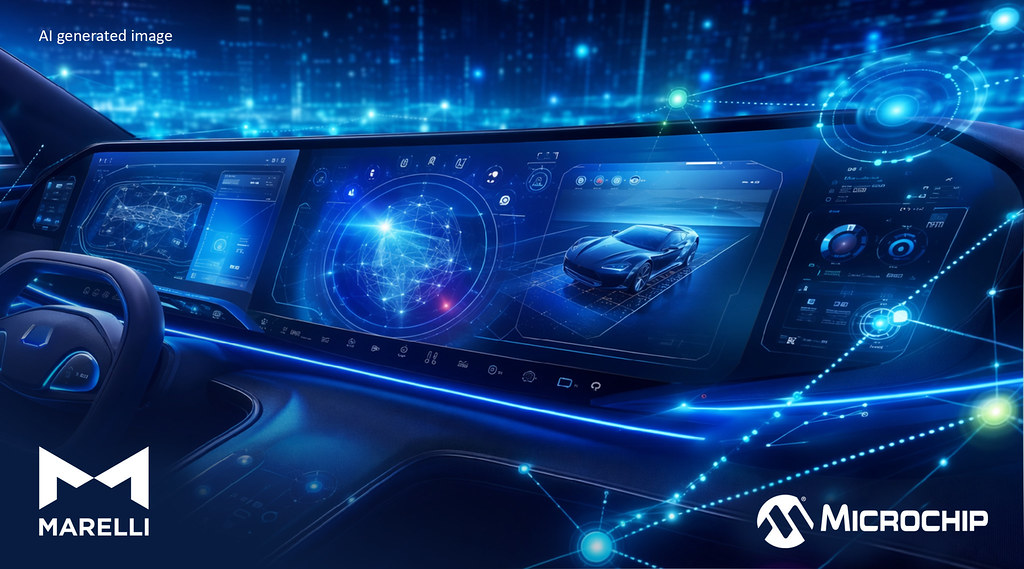
In the highly competitive automotive landscape, the digital cockpit has become a premier brand differentiator. As automotive manufacturers globally strive to match the rapid innovation cycles seen in the Chinese EV market, managing architectural complexity is paramount. The recent collaboration between semiconductor leader Microchip Technology and global automotive supplier Marelli to launch an open-standard solution for software-defined vehicle display connectivity represents a critical evolution in next-generation digital cockpits.
Breaking the Proprietary Bottleneck in Digital Cockpits
Historically, connecting high-resolution infotainment displays, digital instrument clusters, and passenger entertainment screens to the central vehicle computer required proprietary SerDes (Serializer/Deserializer) technologies. While effective, these proprietary solutions created significant vendor lock-in, inflated supply chain risks, and limited the architectural flexibility needed for modern software-defined vehicles (SDVs).
By pioneering an open-standard display connectivity solution, Microchip and Marelli are addressing a major industry pain point. This approach allows Tier 1 suppliers and OEMs to source compatible silicon from multiple vendors, fostering competition, reducing component costs, and ensuring long-term supply chain compliance.
The Strategic Value of Open Standards in the SDV Era
For Western OEMs and technology integration strategists, this partnership provides a blueprint for leveraging global supplier expertise without sacrificing architectural control. As vehicles shift from hardware-centric platforms to software-defined mobility hubs, display architectures must become as modular as the software running on them.
Key strategic benefits of this open-standard approach include:
- Architectural Agility: Engineers can easily scale the number of in-cabin displays (such as advanced AR-HUDs and co-pilot interactive screens) without redesigning the underlying communication protocol.
- Supply Chain Adaptability: Using an open standard mitigates geopolitical supply chain shocks. In an era where localized regional footprints are critical, standardizing components allows OEMs to easily substitute pin-compatible chips to comply with local trade frameworks.
- Reduced R&D Costs: Standardized protocols eliminate the need for costly custom bridging chips, directly improving margin profiles for mid-to-high-tier vehicle segments.
Comparative Analysis: Proprietary SerDes vs. Open-Standard Display Connectivity
To understand the technological shift, it is helpful to compare traditional proprietary connectivity frameworks with the newly proposed open-standard model:
| Metric | Proprietary SerDes Systems | Open-Standard Display Connectivity |
|---|---|---|
| Vendor Lock-in | High (Dependent on single-source semiconductor vendors) | Low (Interoperable across multiple compliant silicon providers) |
| Cost Structure | Premium pricing due to proprietary IP licensing | Commoditized pricing driven by market competition |
| Scalability | Limited by specific chipset capabilities | High modularity suited for complex, multi-screen SDVs |
| Supply Chain Resiliency | Vulnerable to single-source component shortages | Highly resilient through multi-vendor sourcing strategies |
How Cross-Border Collaborations Accelerate Time-to-Market
As an expert in automotive supply chain engineering, I view this partnership as a proactive response to the highly integrated ecosystems seen in the Asian EV sector. Rather than working in silos, global suppliers like Marelli (with deep roots in cockpit integration) and Microchip (a powerhouse in automotive semiconductors) are pooling resources to set a global benchmark. This form of technology integration enables Western OEMs to achieve the design velocity required to remain highly competitive on a global scale.
Furthermore, standardizing these interfaces simplifies the compliance process for strict functional safety standards (such as ISO 26262). Instead of validating unique proprietary links for every platform, engineers can rely on a pre-validated, open-standard framework to speed up safety certifications.
Final Outlook: The Digital Cockpit of the Future
The Microchip-Marelli initiative demonstrates that the path to the software-defined vehicle is paved with standardization. By commoditizing the physical transport layer of display data, the industry can redirect its creative energy toward building better software, more immersive user interfaces, and deeper ADAS integration. For forward-thinking investors and automotive executives, tracking the adoption rate of these open standards will be a reliable indicator of which platforms are built for long-term scalability and profitability.