From our analysis of Shanghai and Stuttgart supply chain telemetry, a quiet but profound architectural shift is taking place in the electric vehicle (EV) sector. While the global automotive industry has been hyper-focused on the high-voltage traction battery race—debating the merits of solid-state cells, high-nickel NMC chemistries, and structural lithium iron phosphate (LFP) packs—a parallel disruption is brewing in the low-voltage auxiliary power network. For years, sodium-ion chemistry was positioned as a direct challenger to traction-grade lithium-ion, only to face headwinds from falling lithium carbonate prices and physical energy density constraints. Now, the industry is witnessing a strategic pivot: commercializing sodium-ion auxiliary battery technology to replace legacy low-voltage systems.
Historically, low-voltage power was an afterthought. However, as modern vehicles transition to software-defined architectures, advanced driver assistance systems (ADAS), steer-by-wire, and complex zone-controller topologies, the demand on the auxiliary energy storage system has grown exponentially. Lead-acid batteries, long the default choice due to their ultra-low initial cost, are increasingly ill-suited for the cyclic, high-power demands of modern electric vehicles. Conversely, high-performance LFP auxiliary batteries, while robust, present cost challenges and severe performance degradation in freezing climates. This mismatch has opened a high-value entry point for sodium-ion chemistry, offering global automotive strategists a highly resilient and localized supply chain alternative.
The Mechanics of Sodium-Ion Auxiliary Battery Technology in Modern Architecture
To understand why sodium-ion auxiliary battery technology represents a logical evolution, one must examine the physics of sodium-ion (Na+) charge carrier dynamics relative to lithium-ion (Li+) systems. Sodium ions possess a larger ionic radius than lithium (1.02 Å versus 0.76 Å), which inherently leads to slower diffusion kinetics within host intercalation frameworks. In traction applications where high energy density (Wh/kg) and rapid C-rate charge acceptance are paramount, this physical characteristic has limited sodium-ion to budget vehicles or urban runabouts, typically topping out at cell-level densities of 140 to 160 Wh/kg.
However, when scaled down to 12V or 48V auxiliary form factors, these density penalties become virtually negligible, while sodium’s natural advantages shine. Crucially, sodium-ion batteries exhibit exceptional low-temperature charge acceptance and discharge efficiency. While LFP auxiliary batteries suffer from severe ion-transport deceleration at temperatures below -20°C—often requiring integrated resistive heaters that sap valuable pack energy—sodium-ion batteries retain over 85% of their nominal capacity and maintain high power output down to -40°C. This makes them ideal for guaranteeing the cold-weather start-up cycles of vehicle control units (VCUs) and ensuring safety-critical redundancy systems remain online in sub-zero environments.
Furthermore, from an electrical engineering perspective, sodium-ion cells can be discharged to zero volts (0V) without suffering copper dissolution or permanent cell damage, unlike lithium-ion chemistry. This is because sodium-ion batteries can utilize cheaper, highly conductive aluminum current collectors on both the anode and cathode, completely eliminating the need for expensive copper foil. This design characteristic allows for safer shipping and long-term warehouse storage in a completely discharged state, eliminating the thermal runaway risks associated with deeply discharged lithium-based chemistries.
| Metric | Sodium-Ion 12V Auxiliary | LFP 12V Auxiliary | Lead-Acid (AGM) 12V |
|---|---|---|---|
| Cell Energy Density (Wh/kg) | 120 - 150 | 140 - 180 | 30 - 45 |
| Cycle Life (80% DoD) | 3,000 - 4,500 | 2,500 - 4,000 | 300 - 500 |
| Operating Temperature Range | -40°C to 60°C | -20°C to 55°C | -15°C to 50°C |
| Material Current Collectors | Aluminum / Aluminum | Copper / Aluminum | Lead Grid |
| 0V Storage Capability | Yes (No damage) | No (Risk of copper dendrites) | No (Severe sulfation) |
Supply Chain Realities: Scaling Sodium-Ion Auxiliary Battery Technology
The industrialization of sodium-ion auxiliary battery technology is fundamentally an exercise in supply chain resilience and cost optimization. The standard 12V lead-acid battery has remained cheap because of highly mature, global recycling networks. However, the environmental burden, weight penalty, and high failure rates in electric drivetrains mean that automotive procurement departments are actively seeking a clean, high-density alternative that does not introduce volatile lithium pricing risks. Here, sodium emerges as an incredibly cost-effective candidate.
Sodium-ion cathodes typically rely on Prussian Blue analogues, layered transition metal oxides (comprising abundant elements such as iron, manganese, and sodium), or polyanionic compounds. This composition avoids the volatile supply chains of nickel, cobalt, and lithium. According to our internal Bill of Materials (BOM) models, at gigawatt-hour scale, the raw material cost for a sodium-ion cell is up to 30% lower than that of an equivalent LFP cell. This is driven by several key factors:
- Raw Material Abundance: Sodium carbonate (soda ash) is globally abundant and priced at a fraction of battery-grade lithium carbonate, insulating automakers from geopolitical supply squeezes.
- Anode Substrate Savings: As mentioned, the ability to utilize aluminum foil instead of copper foil for the negative electrode current collector removes a significant, volatile metal cost from the cell assembly.
- Process Compatibility: Sodium-ion batteries can be manufactured using existing lithium-ion roll-to-roll production lines with minimal retooling. Slurry mixing, coating, calendering, and winding equipment remain virtually identical, allowing tier-1 suppliers like Xupai, CATL, and HiNa Battery to scale up capacity rapidly.
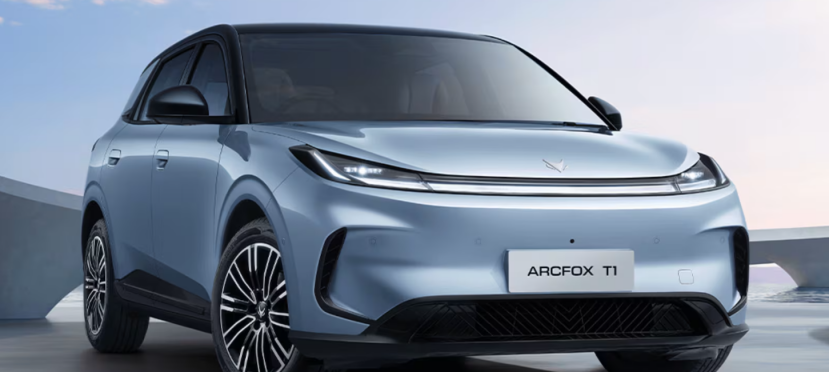
This industrial synergy is what enabled Xupai to secure its strategic partnership with BAIC Group’s high-end electric sub-brand, Arcfox. By targeting low-voltage auxiliary supply agreements starting in 2027, the partners can establish a stable manufacturing run-rate, iron out field-reliability data, and build out localized material refining pipelines without having to compete with the high-margin, high-volume lithium-ion traction battery sector.
Western Legacy OEM Impact & Competitive Fallout
As Chinese tier-1 suppliers and OEMs begin commercializing low-voltage sodium-ion packs, Western legacy automakers must evaluate their own auxiliary battery roadmaps. Major Western brands—including the Volkswagen Group, Stellantis, Ford, and General Motors—find themselves in a transitional phase. Most of their current EV architectures still rely on heavy, bulky 12V AGM lead-acid batteries, which are prone to deep-discharge failures when vehicles sit idle for extended periods under high parasitic software loads.
Tesla successfully pioneered the transition to lithium-based auxiliary power by adopting an in-house custom 16V LFP auxiliary battery. This move slashed vehicle weight by over 10 kilograms, dramatically reduced warranty claims related to bricked 12V batteries, and aligned the auxiliary lifespan with the overall vehicle design life. However, mimicking this strategy is costly for legacy OEMs who lack Tesla's vertical software integration and deep-cycle battery management expertise. For these players, adopting pre-engineered, highly stable sodium-ion auxiliary battery technology from global tier-1 partners could prove to be an elegant, cost-competitive shortcut.
Furthermore, as Western OEMs scale up high-voltage 800V silicon carbide (SiC) architectures to enable 350 kW+ fast charging, the demand on the low-voltage auxiliary network increases. Safety standards require that if the high-voltage pack is disconnected during a collision or thermal event, the low-voltage auxiliary battery must reliably power hazard lights, electronic door latches, telematics, and steer-by-wire actuators for a minimum specified duration. Sodium-ion’s high thermal stability and broad operating window make it exceptionally compliant with these stringent functional safety requirements (ISO 26262), giving early adopters a significant competitive edge in safety rankings and consumer peace of mind.
Geopolitical, Tariff & Regulatory Adaptation
The global trade landscape for battery technology is undergoing unprecedented fragmentation, characterized by the European Union's countervailing duties and the United States' Section 301 tariffs and Inflation Reduction Act (IRA) Foreign Entity of Concern (FEOC) rules. Navigating these compliance landscapes requires strategic adaptability and constructive supply chain partnerships.
Because sodium-ion battery chemistry does not inherently rely on highly restricted minerals such as nickel or cobalt, and utilizes widely available sodium compounds, it offers a simplified compliance pathway. Leading manufacturers are already exploring joint ventures and technology licensing agreements to establish localized regional footprints. For instance, establishing a sodium-ion cell assembly plant in Hungary, Spain, or Turkey allows suppliers to serve European OEMs directly while complying with local assembly mandates and rules of origin guidelines.
Furthermore, from an environmental, social, and governance (ESG) perspective, sodium-ion technology presents a highly attractive profile for regulatory bodies. The elimination of heavy lead from the auxiliary battery supply chain aligns perfectly with the European Union's REACH regulations and circular economy directives. Automakers transitioning away from toxic lead-acid batteries toward sodium-ion alternatives can capture valuable ESG credits, reduce their end-of-life vehicle (ELV) recycling liabilities, and present a cleaner, more sustainable product to increasingly conscious global consumers.
The Future Outlook for Sodium-Ion Auxiliary Battery Technology
The trajectory of sodium-ion in the automotive sector will likely be defined by a multi-phase roll-out over the next three to five years. Below, we outline three probable market scenarios mapping the adoption of this critical technology:
Bull Case Scenario
In this high-growth scenario, the supply deal between Xupai and BAIC Arcfox acts as an industry-wide catalyst. By 2028, field data confirms that sodium-ion auxiliary packs achieve zero cold-weather failures and deliver a service life exceeding 10 years without degradation. Prompted by these results, several major European and Japanese OEMs rapidly pivot their platform architectures. Multiple tier-1 battery giants scale up dedicated 12V/48V sodium-ion assembly lines, driving prices down to parity with traditional lead-acid systems. Consequently, sodium-ion becomes the dominant low-voltage standard for new EV platforms globally by 2031, capturing over 50% of the auxiliary market.
Base Case Scenario
Under the base case, sodium-ion auxiliary systems see steady, incremental adoption. Chinese domestic brands lead the integration, deploying these packs across a wide variety of mid-range and premium EV models. Western legacy OEMs adopt a more cautious approach, integrating sodium-ion auxiliary units primarily in vehicles destined for colder climates (Northern Europe, Canada, and the Northern US) or in highly automated platforms requiring redundant low-voltage power. Lead-acid remains a legacy option for budget, low-margin vehicles, while LFP and sodium-ion split the premium auxiliary market roughly evenly by 2030.
Bear Case Scenario
In the low-adoption scenario, persistent low lithium carbonate prices (remaining below $10,000 per metric ton) continue to narrow the economic advantage of sodium-ion over LFP. Simultaneously, advancements in low-temperature additives for LFP chemistry mitigate some of its cold-weather limitations. Western and domestic OEMs choose to standardize their auxiliary architectures around LFP to minimize engineering complexity. In this environment, sodium-ion auxiliary batteries remain a localized, niche solution optimized solely for ultra-cold climates or specialized fleet vehicles, struggles to scale globally, and captures less than 10% of the auxiliary battery market.
Strategic Implications for Executives & Institutional Investors
For strategic decision-makers, purchasing managers, and institutional energy investors, the rise of sodium-ion in the low-voltage auxiliary domain demands active repositioning. Key takeaways from this structural evolution include:
- Diversify Beyond Lithium Exposure: Procurement leads should leverage sodium-ion auxiliary systems as an effective hedge against long-term lithium carbonate price volatility, decoupling a portion of their component bill-of-materials from lithium markets.
- Prioritize Cold-Weather Market Readiness: Product planners for cold-climate markets should actively demand sodium-ion auxiliary development paths to eliminate winter-related vehicle failures and enhance consumer satisfaction.
- Capitalize on Localized Supply Chain Partnerships: Investors should identify tier-1 and tier-2 battery suppliers that are proactively establishing localized sodium-ion material processing and cell assembly hubs in tariff-compliant jurisdictions.
- Re-evaluate Lead-Acid Phase-Out Timelines: Engineering departments should accelerate the retirement of lead-acid auxiliary architectures, recognizing that sodium-ion now offers a mature, high-cycle, environmentally compliant successor.