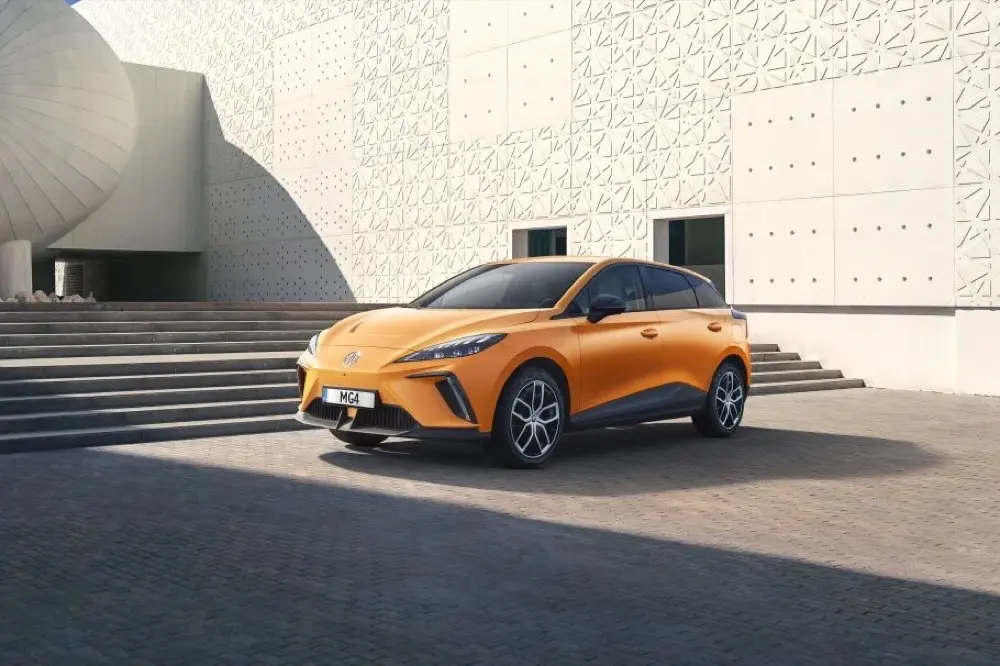
The geopolitical chess board of the global electric vehicle market just saw its most decisive move of 2026. As the European Union tightens its tariff dragnet around Chinese electric vehicles, SAIC Motor—the Chinese automotive giant behind the highly successful MG brand—has announced a strategic counter-offensive. By establishing the first SAIC Spain EV factory in the Galicia region, the state-owned automaker is signaling that local production is no longer just an expansion goal, but an absolute necessity for survival in the lucrative European market.
As market analysts, we have closely monitored how Chinese OEMs navigate Western regulatory hostility. While some players have hesitated, SAIC’s targeted move into northwestern Spain reveals a deeply calculated hedge. Let’s dissect the strategic math behind this €200 million investment, the geographic advantages of Ferrol, and the implications for global automotive supply chains.
The Strategic Geography: Why Galicia and the Port of Ferrol?
On June 2, 2026, Alfonso Rueda, the President of the Regional Government of Galicia, declared the SAIC project a strategic priority. This political greenlight is crucial, but the choice of location goes far beyond regional goodwill. Galicia is already an established European automotive powerhouse, home to Stellantis’ highly efficient Vigo plant and a robust network of Tier 1 and Tier 2 suppliers.
By positioning the SAIC Spain EV factory at the Port of Ferrol, SAIC secures a critical logistical advantage. The port integration allows for:
- Direct Maritime Logistics: Seamless import of battery cells and key componentry directly from China to the plant’s dedicated logistics hub.
- Efficient Export Distribution: Direct shipping routes to high-demand EV markets in Northern and Western Europe, bypassing congested land routes.
- Established Supply Chain Ecosystem: Access to Galicia’s highly skilled, cost-competitive automotive labor pool compared to Germany or France.
Tariff Avoidance: The Financial Mathematics of the €200M Gambit
This localized facility is a direct response to the EU’s punitive anti-subsidy duties on Chinese-made EVs. Under current EU determinations, SAIC has been hit with the highest individual tariff rates (approaching 35.3% on top of the standard 10% duty) due to its status as a state-owned enterprise. This regulatory barrier threatened to wipe out the pricing advantage of SAIC's best-selling MG4 hatchback.
By shifting to local assembly and sourcing within Spain, SAIC can structurally qualify its vehicles as EU-origin products. A €200 million (approximately 1.56 billion RMB) capital expenditure is highly rational when compared against the potential loss of billions in European retail revenue. This is a classic 'China-speed' pivot to defend hard-won market share.
| Project Metric | Details & Targets |
|---|---|
| Initial Investment | Approximately €200 Million (~1.56 Billion RMB) |
| Location | Port of Ferrol, Galicia, Spain |
| Focus Output | Electrified Powertrains (EV / PHEV) & Logistics Hub |
| Construction Start | 2027 (Pending Spanish Central FDI Approval) |
| Operational Launch | Targeted for 2028 |
Local Obstacles: FDI Approvals and Supply Chain Realities
While the regional government of Galicia has expedited the project, SAIC still faces critical hurdles. The project is currently awaiting final foreign direct investment (FDI) clearance from Spain’s central government in Madrid. In an era of heightened economic nationalism, this approval process will be closely watched by Brussels.
Furthermore, 'assembly' is not the same as full-scale localization. To fully satisfy EU 'Rules of Origin' and permanently evade tariffs, SAIC must ensure that at least 55% to 60% of the vehicle’s value is created locally. This means SAIC will eventually need to source battery packs and electric motors from within the EU, potentially forcing partnerships with local battery gigafactories or convincing Chinese battery suppliers to build adjacent facilities in Spain.
The Analyst's Verdict: A Template for Chinese OEMs
SAIC's move into Spain represents the next phase of Chinese EV globalization. We are moving away from the era of pure export models to a highly localized, geopolitically insulated production model. Investors should expect rivals like BYD (already building in Hungary) and Chery (partnering in Catalonia) to accelerate their European footprints. For Western OEMs, the threat hasn't been neutralized by tariffs; it has simply moved into their own backyard.