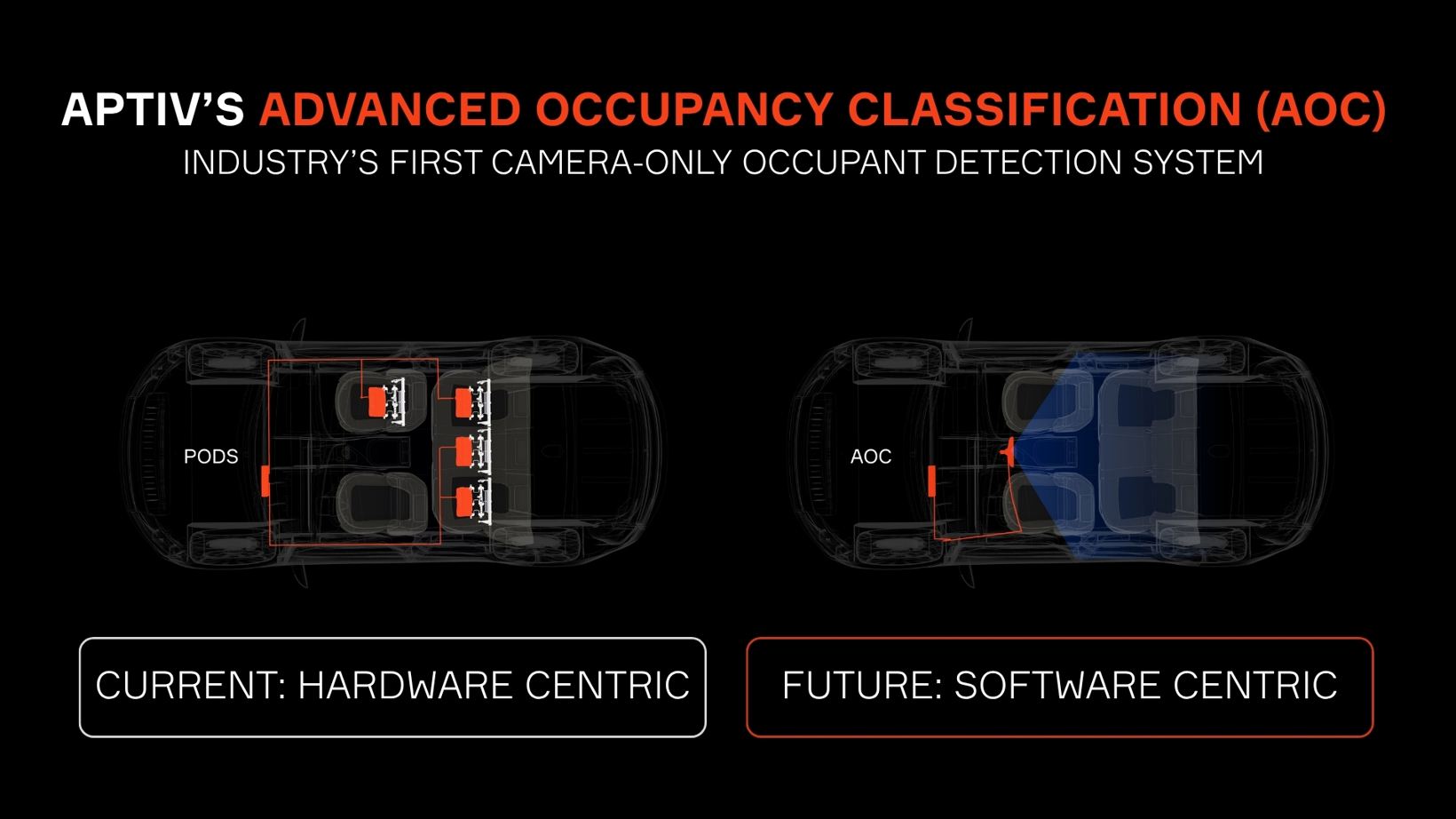
As the global automotive industry undergoes a rapid transition toward Software-Defined Vehicles (SDVs), Tier-1 suppliers are racing to consolidate hardware and shift complexity to software. In a groundbreaking move, global automotive technology leader Aptiv recently unveiled its Advanced Occupancy Classification (AOC) system—the industry's first fully camera-based occupant detection solution. By championing pure-vision cabin sensing, Aptiv is pointing the way toward a future where physical weight-sensing components in passenger seats are completely obsolete.
The End of Physical Seat Sensors: What is Aptiv's AOC?
Traditionally, vehicles have relied on physical weight-sensing bladders, strain gauges, or pressure mats embedded directly within the passenger seats. These analog sensors determine if a passenger is present, approximate their weight, and instruct the vehicle whether or not to deploy the airbag. While functional, these electromechanical systems add weight, introduce mechanical failure points, complicate seat design, and increase manufacturing complexity.
Aptiv's new Advanced Occupancy Classification (AOC) system bypasses physical hardware entirely. Using a single in-cabin camera combined with advanced machine learning and computer vision algorithms, the software dynamically analyzes occupant height, weight, and body posture in real-time. This represents a significant shift from hardware-reliant safety systems to agile, software-defined safety networks.
How Pure-Vision Cabin Sensing Drives Down OEM BOM Costs
For Western OEMs and EV startups struggling to match the aggressive cost structures of Chinese automakers like BYD and Xiaomi, hardware consolidation is a survival imperative. Moving from multi-component hardware to single-camera software profiling removes substantial cost from the vehicle's Bill of Materials (BOM).
| Metric | Traditional Occupancy Sensing | Aptiv Pure-Vision Cabin Sensing (AOC) |
|---|---|---|
| Hardware Required | Seat pressure mats, wiring harnesses, localized ECUs | Existing cabin monitoring camera / software API |
| BOM Cost Impact | High (multiple physical parts per passenger seat) | Low (software-defined, shares existing camera hardware) |
| Sensing Capabilities | Static, binary weight-based classification only | Precision skeletal tracking, posture, dynamic position bounds |
| Physical Failure Points | Mechanical wear and tear, physical sensor fatigue | None (software algorithms run on centralized compute) |
Behind the AI: Deep Sensing and Dynamic Airbag Deployment
Safety is the primary obstacle to replacing physical sensors with vision systems. Regulatory standards (such as FMVSS 208 in the US) mandate highly accurate occupant classification to prevent airbags from deploying with lethal force against infants or small children. Aptiv has leveraged over two decades of experience in occupant sensing to train its neural networks on a massive, diverse dataset.
The AOC AI engine doesn't just look for a shape; it performs real-time skeletal tracking. It detects if a passenger is leaning forward, out of position, or if a child seat is installed. By processing these complex body postures, the system provides high-fidelity inputs to the safety domain controller, ensuring optimal airbag inflation velocity or suppressing deployment entirely when necessary.
An Analyst's Perspective: The Geopolitical and Competitive Race
From an industry analysis standpoint, Aptiv's pure-vision play is a defensive yet aggressive maneuver against both traditional Tier-1 rivals (like Bosch and Continental) and fast-moving Chinese software ecosystems. As Chinese EV makers rapidly deploy advanced in-cabin AI (ranging from health monitoring to gesture control), Western OEMs require pre-integrated, highly reliable software stacks that satisfy global safety regulations.
Furthermore, because AOC can run on central compute architectures (such as Snapdragon Ride or Nvidia DRIVE platforms), it perfectly aligns with the industry's shift away from distributed ECUs to centralized zonal controllers. For automakers seeking to shave grams off vehicle weight and dollars off production lines, this software-defined approach is no longer optional—it is the baseline for next-generation vehicle design.