One of the most persistent bottlenecks in the pursuit of ultra-high-range electric vehicles (EVs) is the physical degradation of battery active materials. As high-energy-density lithium-ion batteries undergo rapid charge and discharge cycles, the cathode materials experience severe volume expansion and contraction. Over time, this mechanical strain leads to microcracking, which drastically accelerates capacity fade and compromises safety. To address this, a joint research team from the Hong Kong Polytechnic University (PolyU) and the Hong Kong University of Science and Technology (HKUST) has developed an innovative, biomimetic polymer coating designed to prevent cathode cracking in lithium batteries by mimicking the resilient properties of human joint cartilage.
As a materials science analyst tracking Greater China's battery R&D pipeline, I view this development as a significant step forward in structural stabilization. By applying a biomimetic approach to electrochemical engineering, the researchers are addressing the root physical cause of cathode degradation rather than simply treating its chemical symptoms.
The Mechanics of Cartilage-Inspired Stress Delocalization
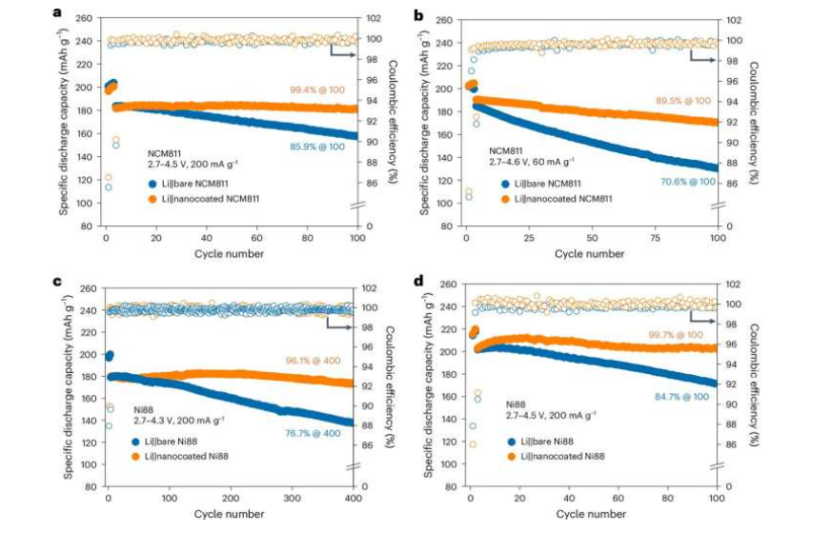
Human articular cartilage is exceptionally adept at absorbing high mechanical impacts while distributing load evenly across joint structures. The PolyU and HKUST research team successfully synthesized a viscoelastic polymer coating that behaves in a similar fashion. When applied to high-capacity cathode particles—such as high-nickel nickel-manganese-cobalt (NMC) formulations—the polymer acts as a mechanical buffer.
During lithiation and delithiation (charging and discharging), cathode particles experience anisotropic volume changes. Uncoated particles suffer from localized stress concentration, which splits the active material along grain boundaries. The newly developed polymer coating mitigates this through a process known as stress delocalization. By dissipating localized stress fields across the entire surface of the electrode, the coating ensures that the physical boundaries of the active material remain intact.
Why This Matters for High-Nickel NMC Cathodes
To maximize EV driving ranges, battery manufacturers are increasingly shifting toward high-nickel chemistries (such as NMC 811 or ultra-high nickel variants). While these chemistries offer superior specific energy, their primary failure mechanism is mechanical instability. Microcracks expose fresh, highly reactive internal cathode surfaces to the liquid electrolyte, leading to continuous solid-electrolyte interphase (SEI) growth, gas generation, and transition metal dissolution.
By implementing this cartilage-like protective barrier, developers can successfully prevent cathode cracking in lithium batteries, locking in long-term capacity. The table below outlines how this biomimetic approach compares to traditional surface modification strategies:
| Feature | Traditional Inorganic Coatings (e.g., Al2O3) | Biomimetic Polymer Coating (PolyU/HKUST) |
|---|---|---|
| Primary Mechanism | Chemical barrier (protects against acid attack) | Mechanical buffer + chemical barrier (stress delocalization) |
| Elasticity & Resilience | Rigid, brittle; prone to fracturing under volume changes | Highly viscoelastic; deforms dynamically with the active material |
| Cathode Crack Prevention | Minimal; cannot absorb structural expansion stress | Highly effective; actively absorbs and dissipates mechanical strain |
| Cycle Life Extension | Moderate | High (sustained capacity retention over hundreds of cycles) |
Strategic Implications for the Global EV Supply Chain
This breakthrough is highly relevant for Tier 1 battery manufacturers and Western OEMs seeking to stabilize next-generation high-energy-density cells. As the automotive industry transitions toward longer-range, faster-charging platforms, battery longevity and thermal runaway prevention remain paramount. Technologies that can extend the life of high-nickel chemistries without adding significant weight or processing costs will be highly competitive.
From a manufacturing standpoint, polymer coatings are generally easier to apply at scale via wet-chemical processing or slurry-based coating methods compared to expensive vapor-deposition techniques. If this technology can be seamlessly integrated into existing roll-to-roll manufacturing lines, it presents a compelling value proposition for global battery suppliers looking to optimize both cost and performance.