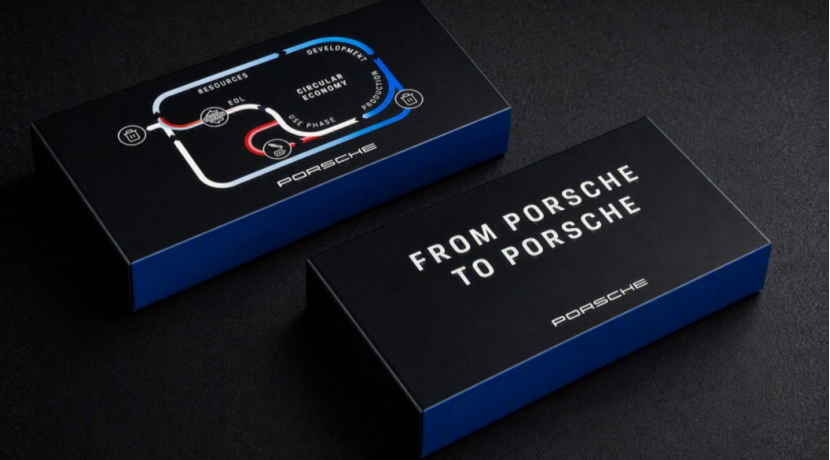
When Porsche announced that it had successfully manufactured high-voltage battery cells using 100% recycled cathode active materials, European automotive executives and sustainability compliance officers breathed an audible sigh of relief. For years, the European automotive industrial base has faced an existential strategic vulnerability: near-total upstream reliance on Chinese refining for battery-grade lithium, nickel, cobalt, and manganese. Porsche’s pilot demonstration, executed alongside specialized recycling and metallurgical partners, purports to demonstrate that end-of-life cells and production scrap can be hydrometallurgically reclaimed into precursor materials with zero measurable degradation in electrochemical performance.
Yet behind the polished corporate narrative lies an uncomfortable industrial reality. While producing a bench-scale batch of premium ternary cells from reclaimed black mass proves chemical feasibility, it does not resolve the brutal economics of closed-loop supply chains. As the European Union tightens minimum recycled content mandates under the EU Battery Regulation, legacy Western original equipment manufacturers (OEMs) are racing to demonstrate circular compliance. However, comparing a boutique laboratory validation for high-performance sports cars against the cutthroat realities of mass-market EV manufacturing reveals deep structural tensions across energy efficiency, scrap yields, and chemical processing economics.
Electrochemistry Under the Microscope: Reclaimed Precursors vs. Virgin Cathodes
The core technological claim of Porsche’s initiative centers on achieving parity with virgin chemical precursors using closed-loop battery recycling. In typical high-performance nickel-rich formulations—such as the NMC 811 (80% nickel, 10% manganese, 10% cobalt) or advanced NMC 9.5.5 chemistries favored by luxury European brands—any microscopic contamination severely damages long-term cycle stability. Impurities such as trace copper, iron, or aluminum from current collector foil shredding can precipitate dendritic lithium growth during fast-charging cycles, dramatically accelerating cell impedance and escalating thermal runaway hazards.
Porsche’s recycling loop relies on advanced hydrometallurgical extraction rather than traditional pyrometallurgical smelting. In pyrometallurgical processing, batteries are fed into high-temperature blast furnaces; while nickel and cobalt are recovered as an alloy matte, lithium and manganese are largely lost into the slag, requiring energy-heavy secondary processing. In contrast, the closed-loop hydrometallurgical route dissolves shredded battery scrap (black mass) in mineral acids (typically sulfuric acid, H2SO4) followed by multi-stage solvent extraction, chemical precipitation, and crystallization to isolate battery-grade lithium carbonate (Li2CO3) or lithium hydroxide (LiOH·H2O), alongside high-purity nickel sulfate (NiSO4) and cobalt sulfate (CoSO4).
| Metric / Parameter | Porsche Closed-Loop NMC Cells | CATL / Brunp Industrial Reclaimed | Virgin High-Nickel NMC (Tier 1 Benchmark) | Low-Cost LFP (BYD Blade Reference) |
|---|---|---|---|---|
| Cathode Chemistry Type | NMC (High-Nickel Reclaimed) | NMC 622 / 811 Reclaimed | NMC 811 Virgin Chemical Feed | LiFePO4 (Virgin Synthetic) |
| Recycled Metal Proportion | 100% Cathode Metals | 50% - 85% Blended Loop | 0% (Virgin Mining / Brine) | 0% (Virgin Precursor) |
| Claimed Metal Recovery Yield | >95% (Li, Ni, Co, Mn) | >99% (Ni, Co), >90% (Li) | N/A (Standard Primary Refining) | >85% (Low Commercial Value) |
| Production Scrap Dependency | High (Pre-consumer R&D cell scrap) | Mixed (Gigafactory scrap + modules) | Zero (Virgin raw supply) | Zero (Standard bulk synthesis) |
| Estimated Processing Cost Penalty | +30% to +45% over spot virgin | +10% to +18% over local market | Baseline ($11.50 - $13.50/kg pCAM) | -40% relative to NMC cathode |
| Regulatory Target Alignment | EU Battery Pass (2031/2036 Mandates) | China MIIT White List Standards | Non-Compliant with 2031 EU Quotas | Struggles with EU Recycling ROI |
To validate electrochemical parity, the regenerated precursor cathode active materials (pCAM) were synthesized into single-crystal or advanced polycrystalline NMC cathode powders and coated onto aluminum collectors. According to initial performance disclosures, these closed-loop cells demonstrated an energy density approaching 270 to 300 Wh/kg at the cell level, with charging cycle longevity and internal resistance metrics statistically indistinguishable from baseline control cells built with virgin materials. However, verifying chemical equivalence at the test-bench scale ignores the severe chemical variances encountered when recycling diverse batches of degraded post-consumer passenger EV packs.
Supply Chain Realities: Black Mass Chemistry, Solvents, and Tier-1 Economics
A closed-loop system is only as viable as its intermediate supply chain. In Europe, the battery dismantling and hydrometallurgical landscape remains fragmented. Porsche’s project operates within a consortium ecosystem that intersects with specialized metallurgical refiners, chemical processors, and cell manufacturing initiatives. Unlike China, where vertical consolidation allows battery giants like CATL to run proprietary recycling arms (such as Brunp Recycling) directly adjacent to multi-gigawatt cell factories, the European battery recycling ecosystem suffers from massive structural friction.
Consider the Bill of Materials (BOM) cost breakdown for high-voltage battery production. Historically, raw cathode active materials account for roughly 45% to 55% of the total cell manufacturing cost. Under standard market pricing, purchasing battery-grade lithium hydroxide from Chinese or South American refining hubs costs between $10,000 and $14,000 per metric ton depending on spot volatility. Reclaiming that same lithium from domestic European black mass via hydrometallurgical refining currently incurs significant operational cost penalties due to high regional energy costs, chemical reagent expenses (including sodium hydroxide and organic extraction solvents), and complex environmental permitting frameworks for effluent handling.
Furthermore, Europe faces a chronic shortage of end-of-life EV battery packs. Modern automotive batteries are engineered to retain 70% to 80% of original capacity for 8 to 12 years. Consequently, the feedstock currently fueling European recycling pilots does not consist of aged consumer vehicles; it is overwhelmingly composed of pre-consumer manufacturing scrap generated by newly commissioned European battery gigafactories. Ironically, as European manufacturing scrap rates stabilize from chaotic startup scrap ratios of 20-30% down toward mature industrial benchmarks of 5-8%, the localized supply of high-purity black mass feedstock will actually contract before the wave of end-of-life EVs hits the market in the early-to-mid 2030s.
The Competitive Divide: European Regulatory Defense vs. Chinese Cost Dominance
Porsche’s aggressive push into closed-loop battery recycling cannot be understood purely as an environmental engineering exercise. It is a calculated regulatory defense mechanism against Chinese EV dominance. Under the European Union’s revised Battery Regulation (Regulation EU 2023/1542), automakers selling electric vehicles within the EU single market face mandatory minimum levels of recycled content. By 2031, batteries must incorporate at least 16% recovered cobalt, 6% recovered lithium, and 6% recovered nickel, escalating by 2036 to 26% cobalt, 12% lithium, and 15% nickel. Paired with the mandatory rollout of digital Battery Passports documenting cradle-to-grave carbon footprints, Western OEMs must construct auditable recycling chains or face punitive regulatory exclusions.
However, from a raw competitive standpoint, Chinese OEMs view these Western circular mandates with minimal distress. In China, battery recycling is already an industrialized, hyper-competitive sector governed by the Ministry of Industry and Information Technology (MIIT) 'White List' of certified recyclers. Entities like Brunp Recycling, GEM Co., and Huayou Cobalt process hundreds of thousands of tons of scrap annually, achieving nickel and cobalt recovery rates exceeding 99% and lithium extraction rates topping 90% to 92%. Because these recycling complexes are integrated directly alongside Chinese cathode precursors synthesis lines, their logistics costs and reagent overhead are fundamentally lower than isolated European pilot hubs.
Moreover, while Porsche and other Western luxury brands focus on closed-loop battery recycling for high-margin, nickel-rich chemistry, the mass-market volume in China has pivoted decisively toward Lithium Iron Phosphate (LFP). The critical challenge for Europe is that recycling LFP batteries offers dismal economic returns. An LFP cell contains zero cobalt and zero nickel; its primary economic value resides strictly in recoverable lithium. When global lithium carbonate prices drop toward cyclical lows, the cost of hydrometallurgically processing LFP black mass exceeds the spot value of the recovered lithium, leaving recyclers in financial deficit without direct state subsidies or OEM processing fees.
The Reality Check: Interrogating the 100% Recycled Claim
The automotive press has largely framed Porsche’s announcement as a triumph of zero-waste circularity. As critical technology analysts, we must separate laboratory proof-of-concept from mass-production thermodynamics. Several engineering and macroeconomic bottlenecks suggest that 100% closed-loop battery recycling will remain a niche luxury showcase for the foreseeable future.
First, consider the engineering purity bottleneck. In a controlled pilot run, researchers can selectively sort uniform cell chemistries, avoiding the cross-contamination inherent to commercial scrapyards. In real-world recycling, incoming packs arrive with varying pouch, prismatic, and cylindrical formats, blended with diverse binders (such as PVDF), carbon conductive additives, aluminum casings, and electrolyte salts (LiPF6). During thermal deactivation and shredding, fluorine from binders and electrolyte degradation compounds can contaminate the black mass, generating toxic hydrofluoric acid (HF) and insoluble metal fluorides. Purifying these elements to achieve the 99.99% precursor purity required for high-stress sports car cells demands aggressive chemical washing, creating high volumes of hazardous neutral salts (such as sodium sulfate) that face strict disposal limits across Western Europe.
Second, there is the fundamental mass-balance problem. It is mathematically impossible for closed-loop recycling to fuel EV fleet expansion in a growing market. Even if every retired Porsche Taycan pack were recycled with 100% efficiency, the volume of recovered cathode material could only build a fraction of the vehicles needed for the next year’s targeted sales growth. The industry will remain structurally dependent on virgin primary mining for decades to come. Positioning closed-loop battery recycling as an immediate shield against geopolitical mining vulnerabilities is an optical sleight-of-hand: circularity can buffer replacement demand, but it cannot support exponential market adoption.
Third, we must scrutinize the energy footprint of the recycling loop itself. Hydrometallurgical recovery consumes substantial thermal energy for acid digestion, chemical separation, and downstream calcination. When calculating life-cycle greenhouse gas emissions under EU Battery Passport methodologies, high-energy recycling processes powered by mixed European electrical grids can significantly erode the purported carbon savings over modern, highly efficient brine extraction or direct lithium extraction (DLE) technologies. Unless recycling facilities run entirely on dedicated renewable power, the carbon accounting advantages may be marginal.
Trade Architecture, Tariffs, and the Geopolitical Scramble for Scrap
The geopolitical dimension of battery recycling is rapidly intensifying. Historically, vast quantities of untreated black mass generated in North America and Europe were quietly shipped to mainland China and Southeast Asia for refining, taking advantage of cheaper chemical reagent inputs and relaxed environmental scrutiny. Today, Western regulators recognize that exporting black mass is equivalent to exporting critical domestic strategic reserves.
Under the EU Critical Raw Materials Act, the European Commission has established clear strategic benchmarks: by 2030, at least 25% of the Union's annual consumption of strategic raw materials must come from domestic recycling. Concurrently, regulatory authorities are moving to classify battery scrap and black mass as hazardous waste, restricting its export outside OECD territories to prevent scrap leakage to Chinese hydrometallurgical facilities. In the United States, the Inflation Reduction Act (IRA) establishes that even if a battery’s original raw minerals were mined in a Foreign Entity of Concern (FEOC), if those materials are recycled within North America, they can qualify as domestic content for the $7,500 consumer tax credit under Section 30D. This has ignited a fierce trans-Atlantic scramble for limited local battery scrap supplies.
Yet, Western trade protectionism cuts both ways. By imposing stringent rules of origin and export bans on scrap while simultaneously slowing domestic chemical plant permitting, European policymakers risk stranding localized auto manufacturers. If European recycling startups cannot achieve economic scale, German automakers like the Volkswagen Group (Porsche's parent company) will be forced to absorb significant cost penalties for regionally sourced recycled precursors, widening the retail pricing chasm against vertically integrated Asian EV competitors.
Strategic Outlook: Three Scenarios for Closed-Loop Battery Commercialization
The trajectory of closed-loop battery recycling over the next decade will be dictated by regulatory enforcement rigor, scrap feedstock availability, and hydrometallurgical cost curves. Here is how the competitive landscape is likely to unfold across three distinct market scenarios:
Bull Case
Hydrometallurgical refining achieves rapid process optimization, driving chemical reagent consumption down by 30% while solvent extraction recovery rates for lithium top 95%. Regulatory harmony across the EU and US successfully standardizes black mass purity classifications. Western Tier-1 cell manufacturers seamlessly blend up to 50% recycled precursors into production lines without cost penalties, fully meeting the 2031 EU Battery Passport mandates. Porsche successfully deploys closed-loop battery recycling across its entire electric sports car portfolio, establishing a verified premium marketing and compliance moat that cushions the brand from geopolitical supply shocks.
Base Case
Closed-loop battery recycling scales slowly as an expensive, compliance-driven enterprise. Feeding the loop relies almost entirely on gigafactory manufacturing scrap through 2029 due to delayed consumer EV scrappage rates. Reclaimed cathode active materials maintain a persistent 15% to 25% cost premium over cheap virgin imports from Asia. Western OEMs achieve regulatory minimums for luxury and high-performance flagship models to satisfy European mandates, while mass-market volume models rely on low-cost LFP chemistry imported from non-FEOC compliant partnerships, absorbing localized compliance penalties where necessary.
Bear Case
High domestic electricity prices, stringent chemical permitting restrictions, and local opposition to hydrometallurgical effluent plants stall the expansion of European recycling infrastructure. A persistent global surplus of virgin lithium depresses raw material prices, rendering Western recycling operations commercially unviable without perpetual state bailouts. Chinese industrial recyclers, leveraging integrated gigafactory footprints and superior chemical economies of scale, retain global dominance over pCAM synthesis. Western OEMs face crippling fines under the EU Battery Regulation, forcing them to petition Brussels for delayed enforcement of the 2031 recycled content thresholds.
Executive Takeaways for Strategy and Investment
For institutional investors, supply chain directors, and automotive strategists evaluating Porsche’s milestone, the key implications are clear:
- Technical Parity Is Achieved, Commercial Scalability Is Not: Validating that 100% recycled cathode precursors match virgin cell performance confirms the underlying electrochemistry, but industrial throughput remains bottlenecked by high reagent costs and complex solvent extraction processing.
- The Feedstock Paradox Will Constrain Western Ambitions: Over the next five to seven years, high-quality black mass supply will be driven by scrap rates from European battery plants, not end-of-life vehicle retirements. Improving manufacturing yields will paradoxically squeeze local recycling feedstock.
- Regulatory Mandates Will Create a Two-Tier Pricing Structure: As the 2031 EU Battery Regulation approaches, compliance-grade recycled lithium and nickel will trade at an artificial regulatory premium over virgin Asian commodities, imposing margin drag on European automakers unable to secure captive recycling loops.
- LFP Remains the Unsolved Economic Challenge: While closed-loop recycling works mathematically for nickel-and-cobalt-rich chemistries favored by Porsche, the global transition to LFP for mass-market vehicles lacks an economically self-sustaining recycling model without direct OEM fee structures.