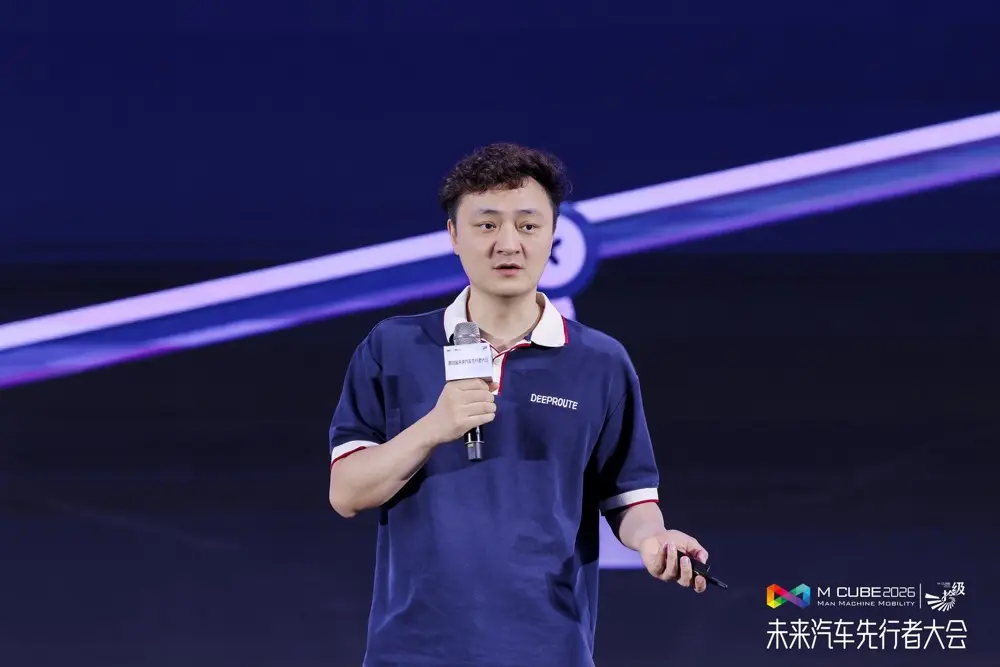
Are legacy machine learning frameworks already obsolete in the race for self-driving supremacy? At the recent Future Car Pioneer Conference, Zhou Guang, CEO of Chinese ADAS trailblazer DeepRoute.ai, issued a chilling wake-up call to the industry: 'Small models have hit a rock bottom ceiling. This path is a dead end.'
As Western automakers struggle to scale basic Level 2+ driver assistance systems, Chinese competitors are already declaring the first generation of AI-driven navigation dead. The industry is rapidly pivoting toward physical AI autonomous driving—a paradigm shift that could widen the competitive moat of Chinese EV makers even further.
The 'Seesaw Effect': Why Current ADAS Architectures Are Failing
For the past few years, the autonomous vehicle industry has celebrated the transition to 'end-to-end' (E2E) neural networks. However, Zhou Guang exposed the critical flaw of these early-stage small models, describing it as the 'seesaw effect.'
- Regional Fragility: Code adjustments made to solve complex driving behaviors in Shanghai frequently degrade the system's performance in Shenzhen.
- Scenario Inconsistency: A system optimized for heavy urban congestion might suddenly struggle on open mountain passes.
- Diminishing Returns: Companies are burning millions in compute resources to eke out fractional percentage improvements in reliability, hitting a technical wall.
This endless loop of patching 'corner cases' is a byproduct of fragmented, modular architectures. To break this cycle, leading Chinese autonomous driving firms are shifting investment away from isolated perception-and-planning pipelines toward unified, large-scale physical AI.
What is Physical AI in Autonomous Driving?
Unlike virtual AI models (like ChatGPT) that operate purely in digital space, physical AI autonomous driving bridges the gap between digital reasoning and real-world physical dynamics. It represents a transition to massive Vision-Language-Action Models (VLAM) that possess spatial-temporal awareness.
Instead of relying on human-coded rules to govern how a car should react to a pedestrian, physical AI trains on vast datasets of real-world physics. According to industry analysis from Bloomberg, this allows the vehicle to 'understand' cause-and-effect relationships in real-time, matching human-like intuition rather than just pattern recognition.
This approach closely mirrors Tesla's Full Self-Driving (FSD) V12 strategy, which relies on a monolithic neural network trained on millions of video clips. However, Chinese players are commercializing these technologies at a fraction of the cost, integrating them into production vehicles priced under $30,000.
[Internal Link Suggestion: Read our deep dive into Xiaomi's rapid ADAS integration and its implications for the global market.]
The Geopolitical and Investment Implications
For global investors and Western OEMs, this rapid paradigm shift highlights the 'China-speed' innovation cycle that threatens to leave legacy manufacturers behind. While Western giants are still debating lidar-versus-vision configurations, Chinese developers are leveraging massive compute alliances. For instance, DeepRoute.ai's deep integration with NVIDIA's Drive Thor platform showcases how quickly these physical AI architectures are being productized.
If physical AI succeeds in eliminating the 'seesaw effect,' the path to cheap, scalable, and highly reliable Level 3 and Level 4 autonomy will shorten significantly. Western OEMs must watch these architectural shifts closely; falling behind on the software stack will render hardware benchmarks irrelevant in the next generation of global automotive competition.