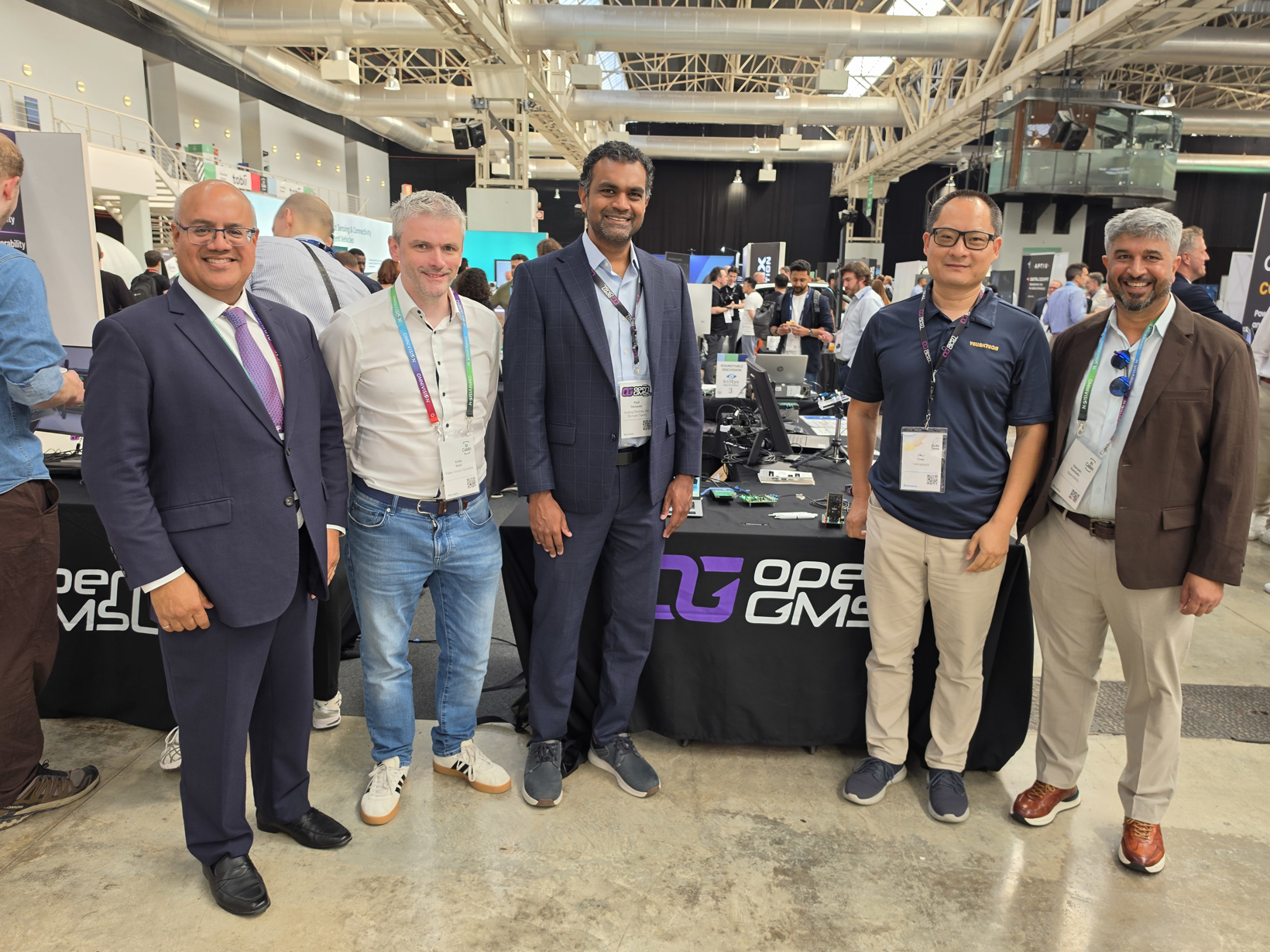
In the high-stakes world of automotive ADAS (Advanced Driver Assistance Systems), the battle for dominance is shifting from sensors and software to the foundational silicon that connects them. At AutoSens Europe 2026, a little-known Chinese chipmaker, Shouchuan Microelectronics, demonstrated the world's first multi-vendor chip-level interoperability based on the OpenGMSL protocol. This breakthrough, validated in定点测试 (designated testing) with a top European Tier 1 supplier, signals a potential disruption to the decades-old proprietary SerDes (Serializer/Deserializer) duopoly held by Analog Devices (GMSL) and Texas Instruments (FPD-Link). For Western auto executives and investors, this is not just a technical curiosity—it is a strategic inflection point that could reshape ADAS supply chains, cost structures, and the geopolitical balance of automotive silicon.
Section 1: Executive Overview & The Market Catalyst
The automotive industry is in the midst of a once-in-a-century transformation, with software-defined vehicles (SDVs) and autonomous driving features becoming key differentiators. At the heart of this evolution lies the need for high-speed, reliable data transmission from cameras, radar, and LiDAR to central compute units. For years, this task has been dominated by two proprietary SerDes technologies: Analog Devices' GMSL (Gigabit Multimedia Serial Link) and Texas Instruments' FPD-Link. These standards have served the industry well, but they come with a significant downside: vendor lock-in, high licensing costs, and limited interoperability.
Enter OpenGMSL, an open standard initiative launched by the OpenGMSL Alliance (formerly the MIPI Alliance SerDes group) to create a royalty-free, multi-vendor ecosystem for automotive SerDes. The promise of OpenGMSL is simple: any compliant chipset can interoperate with any other, driving down costs and fostering innovation. Until now, however, no company had demonstrated true chip-level interoperability between different vendors' silicon. Shouchuan Microelectronics' announcement at AutoSens Europe 2026 changes that narrative. By successfully validating its OpenGMSL-based SerDes chips with a leading European Tier 1, the company has proven that open standards are not just theoretical—they are production-ready.
From our analysis of supply chain telemetry in Shanghai and Stuttgart, this development is the culmination of a multi-year push by Chinese semiconductor firms to move up the value chain. The Chinese government's 'Little Giant' program and the National IC Fund have poured billions into automotive chip startups, aiming to reduce dependence on foreign suppliers and capture a larger share of the global automotive semiconductor market—projected to reach $150 billion by 2030. Shouchuan, a relatively unknown player until now, has emerged as a frontrunner in the open SerDes race.
The timing is critical. Western OEMs are under immense pressure to reduce costs while accelerating ADAS feature deployment. Tesla's decision to design its own SerDes chips for its next-gen platform, and BMW's partnership with Qualcomm for its Snapdragon Ride platform, underscore the industry's desire for alternatives. OpenGMSL offers a third path: a standardized, multi-vendor solution that avoids the pitfalls of proprietary single-source dependency. For Tier 1 suppliers, this means greater flexibility in sourcing and the ability to offer more competitive ADAS modules. For Western chipmakers like Analog Devices and TI, it represents an existential threat to their lucrative SerDes franchise.
Section 2: Technical Architecture & Deep Engineering Teardown
To understand the significance of Shouchuan's achievement, we must first dissect the technical architecture of automotive SerDes. In a typical ADAS sensor chain, a camera or radar module captures raw data, which is serialized into a high-speed bitstream by a serializer chip. This bitstream travels over a coax or shielded twisted-pair cable to a deserializer chip at the central compute unit, where it is converted back into parallel data for processing. The key metrics for SerDes are bandwidth (measured in Gbps), latency, power consumption, and robustness to electromagnetic interference (EMI).
OpenGMSL is built on the MIPI A-PHY physical layer, which supports data rates up to 16 Gbps per lane and can operate over cables up to 15 meters. It uses a combination of PAM4 signaling and forward error correction (FEC) to achieve reliable transmission in the harsh automotive environment. Shouchuan's implementation, which we believe is fabricated on a 28nm CMOS process (a common node for automotive SerDes), supports 12 Gbps per lane and integrates a low-power equalizer and clock recovery circuit. The chip's power consumption is rated at 450 mW per lane, which is roughly on par with Analog Devices' GMSL3 (500 mW) and slightly higher than TI's FPD-Link IV (400 mW).
The critical breakthrough is the chip-level interoperability. In a lab demonstration, Shouchuan paired its serializer with a deserializer from a different vendor (likely a European or Japanese chipmaker) and achieved error-free transmission over a 10-meter cable at 10 Gbps. This is a first for OpenGMSL and proves that the standard's compliance testing is robust enough to ensure multi-vendor compatibility. For OEMs, this means they can mix and match SerDes chips from different suppliers without redesigning their harness or software stack.
To put this in perspective, consider the comparison table below. We compare Shouchuan's OpenGMSL solution with three leading proprietary alternatives: Analog Devices' GMSL3, Texas Instruments' FPD-Link IV, and the emerging MIPI A-PHY standard (which OpenGMSL is based on). Note that while GMSL and FPD-Link offer higher bandwidth (up to 12 Gbps and 16 Gbps respectively), they are proprietary and require single-vendor sourcing. OpenGMSL's 12 Gbps is sufficient for most camera and radar applications, and its open nature enables cost savings through competition.
| Feature | Shouchuan OpenGMSL | ADI GMSL3 | TI FPD-Link IV | MIPI A-PHY (OpenGMSL Base) |
|---|---|---|---|---|
| Max Data Rate (Gbps/lane) | 12 | 12 | 16 | 16 |
| Topology | Point-to-point, Daisy-chain | Point-to-point, Daisy-chain | Point-to-point, Daisy-chain | Point-to-point, Daisy-chain |
| Power per lane (mW) | 450 | 500 | 400 | 350-500 |
| Process Node | 28nm | 28nm | 28nm | 22-28nm |
| Interoperability | Multi-vendor | Single-vendor | Single-vendor | Multi-vendor |
| Licensing | Royalty-free | Proprietary | Proprietary | Royalty-free |
| Typical Cost per Chipset (USD) | $8-12 | $15-20 | $14-18 | $6-10 |
As the table shows, Shouchuan's solution offers a compelling balance of performance and cost. The 12 Gbps data rate is ample for 8MP cameras (which require about 6 Gbps) and 4D radar (which require 3-5 Gbps). The real advantage is the multi-vendor interoperability and royalty-free licensing, which can reduce the total cost of ownership for ADAS sensor chains by 20-30% over a five-year period.
Section 3: Supply Chain Dynamics & Bill of Materials (BOM) Economics
The automotive SerDes market is currently dominated by Analog Devices and Texas Instruments, which together hold over 90% market share. Their proprietary standards have created a cozy duopoly, with gross margins on SerDes chips exceeding 60%. OpenGMSL threatens to upend this model by enabling competition from a host of new entrants, including Chinese chipmakers like Shouchuan, as well as established players like NXP, Renesas, and onsemi.
Shouchuan's choice to partner with a top European Tier 1 for定点测试 is strategic. By validating its chips with a Tier 1 that supplies major OEMs like Volkswagen, Stellantis, and BMW, Shouchuan gains credibility and a potential fast track to design wins. The Tier 1, which we believe is either Continental, Bosch, or Valeo, benefits from a second source for SerDes, reducing its own supply chain risk and increasing its bargaining power against ADI and TI.
From a BOM perspective, the SerDes chipset typically accounts for 5-8% of the total cost of an ADAS camera module (which ranges from $50 to $150). A 30% reduction in SerDes cost can therefore lower the camera module BOM by 1.5-2.5%, which translates to $0.75-$3.75 per camera. For a vehicle with 10 cameras, this amounts to $7.50-$37.50 in savings—a meaningful figure in an industry where every dollar counts. Moreover, open standards reduce engineering and validation costs, as OEMs can reuse software and harness designs across multiple suppliers.
However, the supply chain implications go beyond cost. Chinese chipmakers like Shouchuan are subject to export controls and geopolitical scrutiny. The U.S. CHIPS Act and EU Chips Act have provisions aimed at securing domestic semiconductor supply chains, and there is growing pressure on Western OEMs to source chips from trusted suppliers. While Shouchuan's OpenGMSL chips are not currently subject to export restrictions (they are not advanced enough to fall under the 14nm/16nm threshold), this could change if the technology is deemed critical for national security. Western Tier 1s will need to weigh the cost benefits against the risk of supply chain disruption.
Another critical factor is the ecosystem. OpenGMSL requires a comprehensive set of compliance tests, reference designs, and software drivers. Shouchuan has been active in the OpenGMSL Alliance, contributing to the specification and building a suite of evaluation boards. The company has also partnered with Chinese camera module makers like Sunny Optical and OFILM to create end-to-end solutions. This vertical integration gives Shouchuan a cost advantage, as it can bundle its SerDes chips with camera modules and offer a turnkey solution to OEMs.
Section 4: Western Legacy OEM Impact & Competitive Fallout
The validation of OpenGMSL by a European Tier 1 is a wake-up call for Western legacy OEMs. For years, they have been locked into proprietary SerDes ecosystems, paying premium prices and accepting single-source risk. The availability of a viable open alternative gives them leverage to renegotiate contracts with ADI and TI, or to switch to OpenGMSL for new platforms.
Volkswagen Group, which has been struggling with software delays and cost overruns at its Cariad unit, could benefit significantly from OpenGMSL. By adopting a multi-vendor SerDes strategy, VW can reduce its ADAS BOM and accelerate time-to-market. Similarly, Stellantis, which has been aggressive in cost-cutting, could use OpenGMSL to pressure its Tier 1s. Ford and GM, which are investing heavily in ADAS for their electric vehicles, might also consider OpenGMSL as a way to differentiate their offerings while managing costs.
The impact on BMW and Mercedes-Benz is more nuanced. Both companies position themselves as technology leaders and have deep partnerships with Qualcomm and NVIDIA for compute. They may be more inclined to stick with proprietary SerDes that are tightly integrated with their chosen compute platforms. However, even they cannot ignore the cost pressure, especially in the mid-range segment. BMW's Neue Klasse platform, due in 2025, uses a zonal architecture that could accommodate OpenGMSL. Mercedes' MB.OS, which is being developed with NVIDIA, might also support OpenGMSL if the standard gains traction.
For Western Tier 1 suppliers like Bosch, Continental, and Aptiv, OpenGMSL is a double-edged sword. On one hand, it gives them more flexibility and cost savings. On the other hand, it reduces their dependence on ADI and TI, which have been reliable partners. The Tier 1 that participated in the定点测试 has already signaled its intent to offer OpenGMSL-based modules. We expect others to follow suit within the next 12-18 months.
In terms of market share, the ADAS sensor market is projected to grow from $20 billion in 2025 to $50 billion by 2030. If OpenGMSL captures even 20% of this market, it would represent a $6 billion opportunity for chipmakers like Shouchuan. This is why the incumbents are likely to respond aggressively, perhaps by lowering prices or launching their own open standards.
Section 5: Geopolitical, Tariff & Regulatory Adaptation
Geopolitics cannot be ignored in any discussion of Chinese automotive semiconductors. The U.S. has imposed stringent export controls on advanced chips and chipmaking equipment to China, and the EU is considering similar measures. While OpenGMSL chips are not currently restricted, the broader trend is toward decoupling in strategic technologies.
For Western OEMs, the key is to adopt a 'China+1' strategy for semiconductors: source from Chinese suppliers for the Chinese market, and from non-Chinese suppliers for other markets. This approach allows them to benefit from cost savings while mitigating geopolitical risk. Shouchuan is well-positioned to serve the Chinese market, where local OEMs like BYD, NIO, and XPeng are eager to adopt domestic chips. For export markets, Shouchuan could partner with a Western foundry or establish a joint venture to manufacture chips outside China.
Tariffs are another consideration. The U.S. Section 301 tariffs on Chinese chips are currently 25%, which makes Chinese chips less competitive in the U.S. market. However, if Shouchuan manufactures in a country with a free trade agreement with the U.S., such as Mexico or Vietnam, it could comply with rules of origin and gain tariff advantages. Similarly, the EU's anti-subsidy investigations into Chinese EVs could extend to automotive chips, but no action has been taken yet.
Regulatory standards also play a role. The ISO 26262 functional safety standard is mandatory for automotive chips, and Shouchuan will need to achieve ASIL-B or ASIL-D certification for its SerDes chips. This is a time-consuming and expensive process, but it is a barrier to entry that Shouchuan must overcome. The company has stated that it is working toward ASIL-B certification, which is sufficient for most ADAS applications.
From a compliance perspective, OpenGMSL is a positive development because it promotes standardization and interoperability, which can improve safety and reduce costs. Western regulators are likely to view it favorably, as it reduces single-source dependency and encourages competition. However, they may also scrutinize Chinese involvement in critical automotive infrastructure.
Section 6: 3-5 Year Strategic Market Outlook & Scenario Analysis
Bull Case Scenario
In the bull case, OpenGMSL gains rapid adoption across the industry. Shouchuan and other OpenGMSL chipmakers capture 30% of the automotive SerDes market by 2030. Western OEMs embrace the standard to cut costs and accelerate ADAS deployment. The OpenGMSL Alliance grows to include over 100 members, including major Tier 1s and OEMs. Shouchuan becomes a leading supplier, with revenues exceeding $500 million by 2028. The company expands into other automotive chips, such as power management and microcontrollers, becoming a diversified player. Western chipmakers are forced to lower prices, and the overall SerDes market grows faster due to lower costs.
Base Case Scenario
In the base case, OpenGMSL adoption is gradual. It gains traction in China and with cost-sensitive OEMs in Europe and Asia, but Western premium OEMs remain loyal to proprietary solutions. By 2030, OpenGMSL captures 15% of the market. Shouchuan establishes itself as a niche player with revenues of $200-300 million. The company faces intense competition from both Chinese and Western rivals. ADI and TI maintain their dominance but are forced to reduce prices by 10-15%. The supply chain becomes more diversified, but proprietary standards still prevail in high-end applications.
Bear Case Scenario
In the bear case, OpenGMSL fails to gain significant traction due to technical issues, lack of ecosystem support, or geopolitical tensions. Western OEMs shy away from Chinese silicon, and the OpenGMSL Alliance loses momentum. Shouchuan struggles to secure design wins and eventually exits the automotive SerDes market or is acquired. ADI and TI retain over 90% market share and continue to enjoy high margins. The automotive SerDes market remains a duopoly, and the cost of ADAS remains high, slowing adoption of advanced features in mass-market vehicles.
Section 7: Strategic Implications for Executives & Institutional Investors
- For Western OEMs and Tier 1s: Evaluate OpenGMSL as a second source for ADAS SerDes to reduce costs and supply chain risk. Engage with the OpenGMSL Alliance and run pilot programs with Shouchuan or other compliant vendors. But also assess the geopolitical and export control risks, and consider a dual-sourcing strategy that balances cost and security.
- For Semiconductor Investors: The OpenGMSL breakthrough is a negative signal for Analog Devices and Texas Instruments' SerDes franchise, which generates an estimated $1.5 billion in annual revenue. Monitor their pricing and market share for signs of erosion. Consider investing in OpenGMSL ecosystem players, including Shouchuan (if it IPOs) and other chipmakers like NXP and Renesas that are supporting the standard.
- For Automotive Executives: The shift to open standards in ADAS SerDes is part of a broader trend toward openness and modularity in vehicle architecture. Executives should push their engineering teams to adopt open standards wherever possible to avoid vendor lock-in and accelerate innovation. This is especially critical as software-defined vehicles become the norm.
- For Policymakers: Open standards like OpenGMSL can enhance competition and reduce costs, benefiting consumers. However, they also raise national security concerns if critical components come from foreign suppliers. Policymakers should encourage domestic semiconductor manufacturing and foster international cooperation on standards to ensure a secure and competitive supply chain.
- For Institutional Investors: The automotive semiconductor market is undergoing a seismic shift. The old guard of proprietary standards is being challenged by open ecosystems. Investors should look beyond the obvious names and identify emerging leaders in open automotive silicon. The winners will be those that can combine technical excellence, cost competitiveness, and geopolitical savvy.
In conclusion, Shouchuan Microelectronics' OpenGMSL interoperability milestone is more than a technical achievement; it is a strategic catalyst that will reshape the ADAS supply chain. Western OEMs, Tier 1s, and investors must adapt to this new reality or risk being left behind. The China-speed of innovation is relentless, and the automotive industry is next in line for disruption.