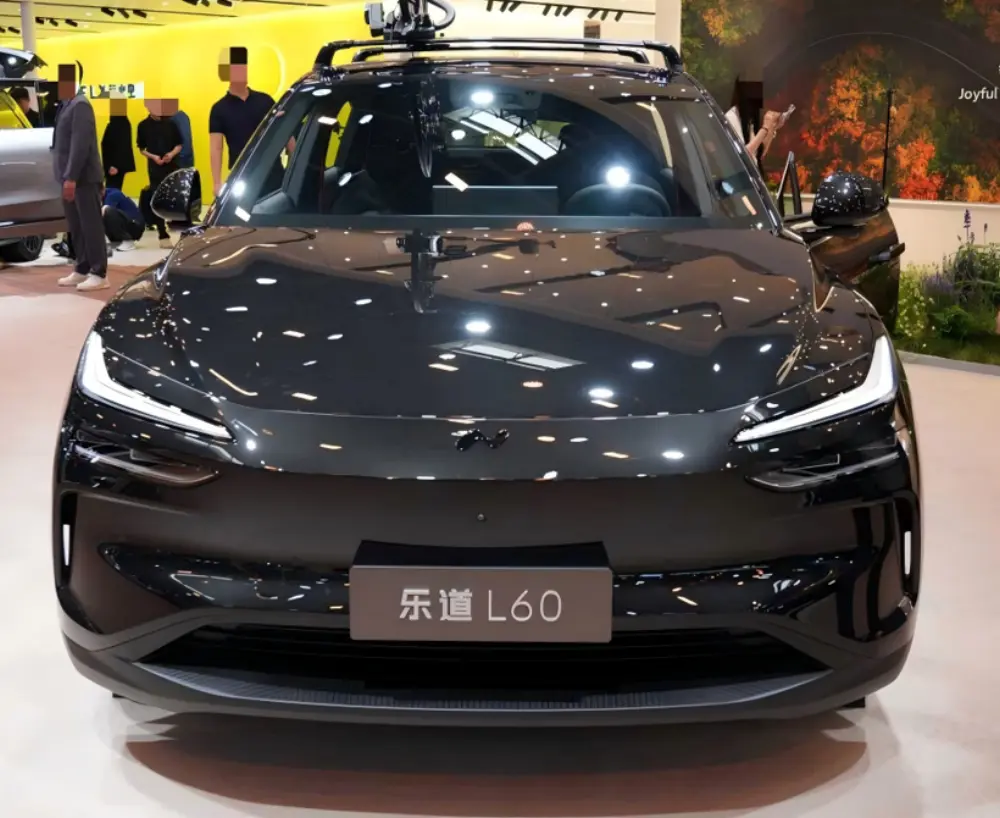
As Western OEMs struggle to produce profitable mass-market electric vehicles, NIO's sub-brand Onvo has executed a tactical masterstroke. The release of the 2026 Onvo L60 highlights how the Onvo L60 900V architecture is bringing elite, ultra-fast charging capabilities and battery-swapping technology down to a mainstream price point.
Democratizing the Ultra-High Voltage EV Era
Until recently, ultra-high voltage architectures (800V and above) were exclusive features of luxury EVs like the Porsche Taycan or NIO's flagship ET9. With the Onvo L60 900V architecture, NIO is shattering this glass ceiling. Operating on a true 900V high-voltage platform, the L60 achieves unprecedented energy efficiency and ultra-fast charging speeds—allowing drivers to recover hundreds of kilometers of range in just over ten minutes.
Crucially, this architecture is coupled with NIO's legendary battery-swapping compatibility. Onvo L60 drivers can swap a depleted battery for a fully charged one in under three minutes at over 1,000 compatible NIO swapping stations. This dual-charging strategy directly addresses the two biggest pain points of mainstream EV adoption: charging anxiety and long-distance travel delays.
Inside the Onvo L60 Supply Chain: Make vs. Buy
How does Onvo achieve a sub-$30,000 starting price while packing premium 900V hardware? The secret lies in a highly calculated 'make vs. buy' supply chain strategy. Rather than developing every component from scratch or outsourcing entirely, NIO has selectively insourced core technical differentiators while partnering with top-tier global suppliers for commodity tech.
Key Component Breakdown of the Onvo L60
| Component Type | Supplier Strategy | Strategic Advantage |
|---|---|---|
| Battery Cells | Outsourced (BYD FinDreams / CALB) | Leverages massive scale to slash battery costs for LFP packs. |
| Electric Drive (SiC) | In-house (NIO Proprietary 900V) | Maintains tight control over drivetrain integration and peak power efficiency. |
| Smart Cockpit Chip | Outsourced (Qualcomm Snapdragon 8295) | Ensures an industry-leading, lag-free user experience for the infotainment system. |
| Smart Driving (ADAS) | Outsourced (Single NVIDIA Orin-X) | A vision-only system that drops expensive LiDAR sensors, cutting ADAS hardware costs by up to 50%. |
Strategic Impact: The Threat to Tesla Model Y and Western OEMs
As a global market analyst, I view the Onvo L60 as a direct shot across the bow of the Tesla Model Y. While Tesla's volume-driver still runs on legacy 400V architecture and requires traditional supercharging times, the Onvo L60 matches or beats its efficiency at a lower price point, bolstered by 900V charging speeds and a 3-minute battery swap.
For Western automotive OEMs and investors, the Onvo L60 supply chain model is an eye-opening case study of 'China-speed' engineering. By outsourcing low-margin, high-scale components (like LFP battery cells from BYD) and focusing in-house budget strictly on the high-voltage silicon carbide (SiC) drivetrain and software integration, NIO has successfully bridged the premium-to-mass-market gap. If Western brands do not accelerate their shift to ultra-high-voltage platforms, they risk structural obsolescence in the hyper-competitive global EV race.