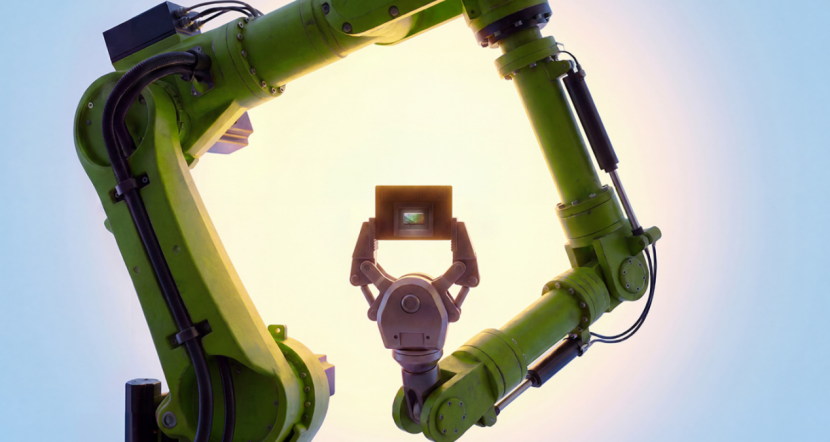
The rapid commercialization of next-generation autonomous systems has received a massive hardware catalyst. The newly announced Nvidia Jetson Thor edge AI platform represents a monumental leap in edge computing, catering to both humanoid robotics and highly advanced driver-assistance systems (ADAS). As automakers in China and globally transition from experimental L2+ driving aids to fully autonomous L3 and L4 solutions, high-performance, centralized compute architectures have shifted from a luxury to an absolute prerequisite.
Unpacking the Technical Blueprint of Jetson Thor
From an architectural standpoint, the Nvidia Jetson Thor edge AI platform leverages Nvidia's state-of-the-art Blackwell GPU architecture, integrated with a powerful Transformer Engine. This enables the localized processing of multimodal AI models directly on the edge, eliminating the latency and security concerns associated with cloud reliance.
High-Performance Computing at the Edge
By delivering 275 TFLOPS of FP8 compute power, Jetson Thor allows developers to deploy highly complex AI models, such as generative physical AI and real-time path planning. For autonomous vehicle manufacturers, this translates to faster reaction times in complex urban environments, better object categorization, and the ability to process multiple high-resolution sensor feeds simultaneously without bottlenecking the system.
The Intersection of Jetson Thor and DRIVE Thor in the EV Market
As a technology strategist tracking the global automotive shift, I observe a profound convergence between industrial robotics and smart vehicles. The underlying silicon architecture of the Nvidia Jetson Thor edge AI platform shares deep DNA with the Nvidia DRIVE Thor SoC (System-on-Chip). This architectural commonality allows EV makers to streamline their R&D efforts, applying robotics training algorithms directly to autonomous driving software.
Leading Chinese OEMs, including BYD, GAC AION, and XPeng, have already signaled their intent to leverage Nvidia's Thor architecture for their upcoming premium vehicles. This cross-border collaboration highlights how essential global supplier expertise is for sustaining 'China-speed' innovation. Rather than relying on fragmented, localized chips, Chinese EV leaders are standardizing on highly scalable global architectures to future-proof their software-defined vehicles (SDVs).
Strategic Implications for Western OEMs and Investors
For Western automakers and institutional investors, the rollout of the Nvidia Jetson Thor edge AI platform poses critical strategic questions. To compete with highly integrated Eastern EV ecosystems, Western OEMs must engage in deep technology integration and strategic sourcing alliances rather than relying solely on proprietary legacy hardware.
Moreover, as geopolitical trade dynamics continue to shift, global automotive companies are focusing on localized regional footprints and strict supply chain compliance. Utilizing standardized, highly adaptable compute platforms like Thor allows automakers to maintain product consistency across diverse regulatory markets while optimizing local manufacturing costs.
Technical Comparison: Orin vs. Thor Architecture
To put this generational leap into perspective, consider how the new architecture compares to the previous-generation Orin platform, which currently powers the majority of premium ADAS configurations worldwide:
| Specification / Feature | Nvidia Orin Platform | Nvidia Thor Architecture (Jetson/DRIVE) |
|---|---|---|
| GPU Architecture | Ampere | Blackwell |
| Max AI Performance | 275 TOPS (INT8) | Up to 1,000 / 2,000 TFLOPS (FP8 / INT8) |
| Transformer Engine | No (Requires manual optimization) | Yes (Native dynamic precision) |
| Target Application | L2+ Autonomous Driving & Industrial Edge AI | L3/L4 Autonomy, Humanoid Robotics, Generative Physical AI |
The Analyst's Verdict
The launch of the Nvidia Jetson Thor edge AI platform is more than an incremental update; it is an inflection point that bridges the physical and digital worlds. By offering unprecedented compute capability at the edge, Nvidia is enabling both industrial robots and autonomous vehicles to execute complex neural networks locally. For Western automotive players, aligning with these advanced chipsets via global technology integration will be vital to remaining competitive against agile, tech-first Chinese automakers.