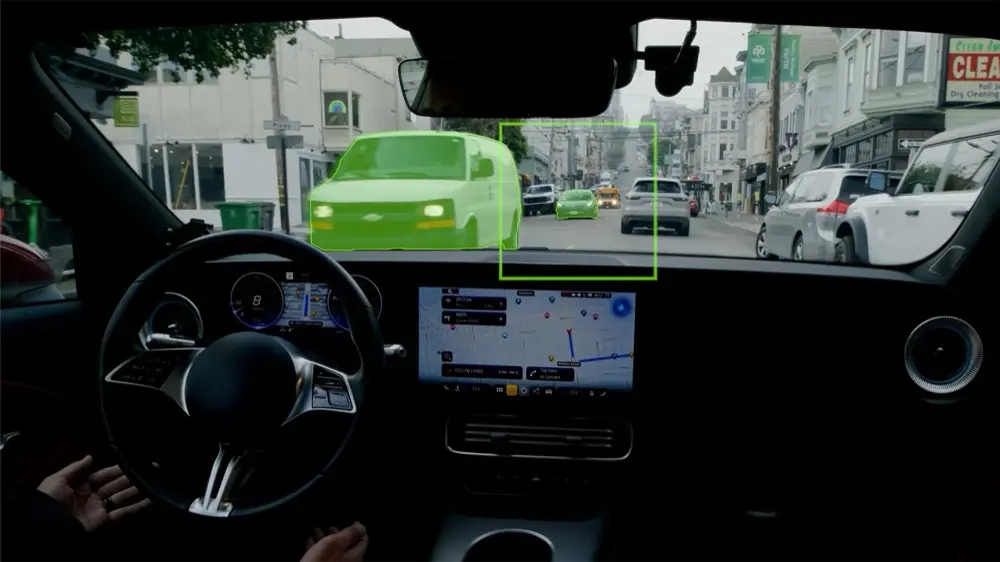
While Western regulators debate the safety of driverless cars, technology giants are quietly handing autonomous vehicle developers the ultimate cheat code. On May 31, NVIDIA shook up the global autonomous vehicle (AV) landscape by releasing NVIDIA Alpamayo 2 Super—a massive 32-billion-parameter Vision-Language-Action (VLA) model designed specifically to power Level 4 (L4) autonomous driving and robotaxis.
For investors and industry strategists tracking the fast-moving global EV space, this isn't just a minor product update. It represents a major leap forward in democratizing highly advanced AI models for automakers who lack the resources to build proprietary systems from scratch. By bridging real-world sensory inputs with direct driving actions, the NVIDIA Alpamayo 2 Super serves as the brains behind the next generation of driverless fleets.
Decoding the Tech: Inside the NVIDIA Alpamayo 2 Super VLA Model
What makes the NVIDIA Alpamayo 2 Super stand out in a crowded autonomous driving market is its end-to-end open physical AI framework. Rather than acting as a simple perception system, a Vision-Language-Action (VLA) model synthesizes visual data, translates it into contextual understanding, and maps it directly to physical driving actions. This allows a robotaxi to understand complex, unscripted road scenarios in real time.
The Comprehensive L4 Toolchain
Alongside the 32B parameter model, NVIDIA released a comprehensive suite of simulation and training tools to streamline deployment:
- NVIDIA AlpaGym: A physical reinforcement learning framework designed to train robotic and vehicle agents in complex environments.
- NVIDIA OmniDreams: A generative AI tool utilizing physical datasets to simulate rare edge cases (e.g., unpredictable pedestrians or extreme weather conditions).
- NVIDIA Omniverse NuRec: A new model integrated within the Omniverse ecosystem to close the loop between virtual training simulations and real-world, on-board hardware deployment.
The China Connection: Why This Speeds Up 'China-Speed' Innovation
While NVIDIA is an American tech titan, the primary battleground for its hardware and software is China. According to Reuters automotive analysis, Chinese automakers and robotaxi operators—such as WeRide, Pony.ai, BYD, and Xiaomi—rely heavily on NVIDIA's DRIVE Orin and DRIVE Thor system-on-chips (SoCs) to run their ADAS features.
By releasing the NVIDIA Alpamayo 2 Super as an open model, NVIDIA is effectively giving Chinese OEMs a highly optimized, out-of-the-box framework to train their vehicles. This will dramatically lower the barriers to entry for L4 autonomous driving commercialization. Western investors should note that this could allow Chinese EV giants to launch functional robotaxis globally years ahead of local legacy OEMs.
(Related reading: To understand how these hardware shifts affect local compliance, check out our deep dive on Chinese ADAS standards and regulatory frameworks.)
Strategic Implications: The Global Robotaxi Race Heated Up
The release of the NVIDIA Alpamayo 2 Super highlights a shifting dynamic in the global AV sector. Tesla continues to bet heavily on its proprietary Full Self-Driving (FSD) system and End-to-End neural network model. Meanwhile, Waymo maintains a tightly integrated, closed ecosystem.
NVIDIA's strategy is the exact opposite: open collaboration. By providing the model, the simulation environment (Omniverse), and the hardware, they are enabling an entire ecosystem of competitors to challenge closed-source leaders. For Tier 1 auto suppliers and legacy OEMs in the US and Europe, adopting NVIDIA's newly democratized software stack may be the only viable way to survive the rapid innovation pacing out of the Chinese market.