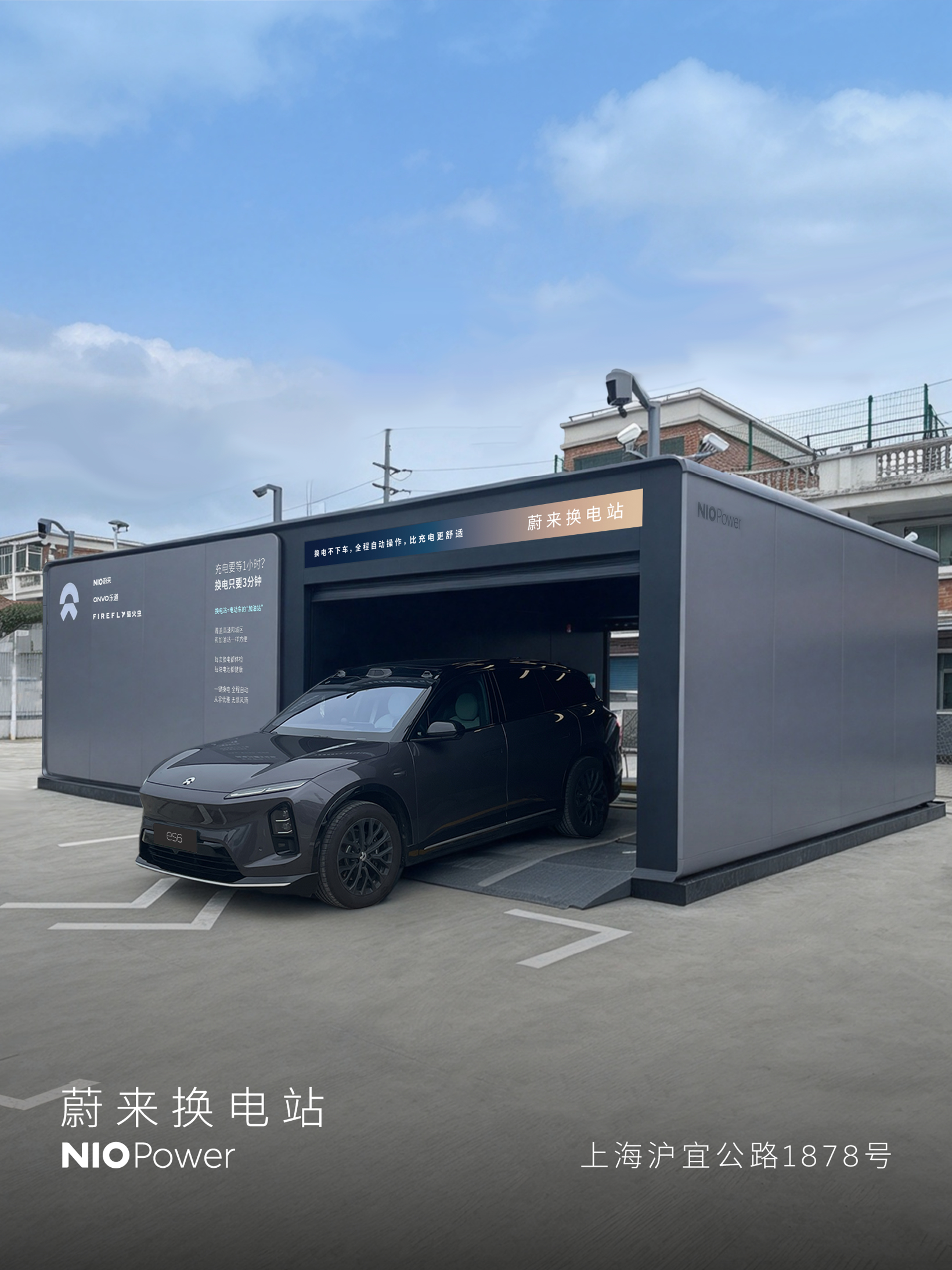
On September 30, NIO Power activated 28 new stations in a single day — 19 battery-swap facilities and 9 supercharging stations — pushing its nationwide network to 9,492 sites across China. The headline number sounds like a victory lap for battery swapping. But dig into the unit economics, the capital intensity, and the chemistry constraints, and a more complicated picture emerges. Battery swapping is no longer a science experiment. It is now a capital-allocation strategy that tests whether NIO can convert infrastructure density into durable margins before cash reserves run thin.
The strategic logic behind battery swapping has always been seductive: decouple the battery from the vehicle, reduce upfront purchase price, enable 3-minute energy replenishment, and create a recurring subscription revenue stream. NIO founder William Li has repeatedly framed the swap network as a 'moat' — a physical infrastructure asset that no software update can replicate. But moats require maintenance. And NIO's moat is consuming capital at a pace that demands scrutiny. The company reported a net loss of RMB 5.5 billion ($760 million) in the second quarter of 2024 alone, with infrastructure investment cited as a primary driver. The question for Western investors, auto executives, and supply chain strategists is not whether NIO can build swap stations — it clearly can. The question is whether the unit economics of each station can ever justify the balance sheet burden.
To understand why the 9,492-station milestone matters beyond the headline, we need to separate the engineering from the financial engineering. Battery swapping is not simply an alternative to fast charging; it is an entirely different architecture for energy replenishment that imposes unique constraints on battery chemistry, vehicle design, and grid interaction. NIO's fourth-generation stations, introduced in 2024, support a claimed 640 kW peak power and can complete a swap in approximately 2 minutes and 30 seconds under ideal conditions. Those specifications are impressive on paper. Whether they translate into a defensible business remains an open question.
Inside the Fourth-Generation Swap Station: Engineering Tradeoffs and Chemistry Constraints
NIO's fourth-generation battery-swap station represents an evolution in throughput and automation, not a revolution in fundamental physics. The station houses up to 23 battery packs in a climate-controlled enclosure, with a gantry-style robotic system that removes the depleted pack and installs a charged one. The entire process — vehicle positioning, pack extraction, pack insertion, and system verification — is designed to complete in under 3 minutes. NIO claims a peak service rate of 480 swaps per day per station under continuous operation, though real-world utilization in most locations is far lower.
The battery packs themselves are the critical constraint. NIO currently deploys three battery chemistries across its swap network: a 75 kWh LFP (lithium iron phosphate) pack, a 100 kWh ternary NCM (nickel cobalt manganese) pack, and a 150 kWh semi-solid-state pack introduced in 2024. The LFP pack dominates volume due to cost — approximately RMB 0.55–0.65 per Wh at the pack level, versus RMB 0.85–0.95 per Wh for the NCM pack. But LFP has a lower energy density, roughly 160–180 Wh/kg at the pack level, which limits range in cold climates. The swap network mitigates this by allowing customers to temporarily upgrade to a larger pack for long trips or winter driving, a flexibility that fixed-battery EVs cannot match.
| Specification | NIO Fourth-Gen Swap Station | Tesla V4 Supercharger | CATL Evogo Swap (Partnered) |
|---|---|---|---|
| Peak Service Rate | 480 swaps/day (claimed) | N/A (charging only) | ~400 swaps/day (claimed) |
| Energy Replenishment Time | 2.5–3.0 minutes | 15–25 minutes (10–80% SOC) | ~3.0 minutes |
| Battery Capacity Range | 75–150 kWh (three chemistries) | Vehicle-integrated (no swap) | Fixed 70–100 kWh (standardized) |
| Station Capital Cost | Est. RMB 1.5–2.0 million | Est. RMB 1.0–1.5 million | Est. RMB 0.8–1.2 million |
| Grid Connection Requirement | ~500–800 kVA (with buffer storage) | ~350–500 kVA | ~300–500 kVA |
| Battery Ownership Model | NIO-owned or BaaS subscription | Customer-owned | CATL-owned (swap-as-a-service) |
The comparison reveals a fundamental tradeoff. NIO's swap stations offer the fastest energy replenishment time — roughly 2.5 to 3 minutes, compared to 15 to 25 minutes for even the fastest DC fast chargers — but at significantly higher capital cost per station. The fourth-generation station requires a grid connection of approximately 500–800 kVA, often necessitating local substation upgrades or dedicated buffer battery energy storage systems (BESS). Tesla's V4 Supercharger, by contrast, requires roughly 350–500 kVA and no robotic swap infrastructure. CATL's Evogo, which is being deployed in partnership with various OEMs including NIO competitors, attempts to standardize the battery pack across brands, reducing per-station battery inventory costs. NIO's proprietary standard means its stations can only serve NIO vehicles, a constraint that limits addressable market and throughput.
The chemistry constraint is equally significant. NIO's 75 kWh LFP pack is cost-effective but delivers approximately 450–500 km of CLTC range, which translates to roughly 350–400 km in real-world mixed driving. The 100 kWh NCM pack extends range to approximately 600–650 km CLTC but costs significantly more. The 150 kWh semi-solid-state pack, introduced in 2024, claims over 1,000 km CLTC range, but production volumes are extremely limited and the pack reportedly costs more than RMB 200,000 ($28,000) — nearly the price of an entire entry-level EV in China. The swap network allows NIO to offer all three chemistries to customers on a flexible basis, but it also means the company must maintain inventory of multiple pack types across thousands of stations, multiplying working capital requirements.
Who Actually Profits from 9,492 Stations? The Supply Chain and Cost Structure
NIO does not build its swap stations alone. The key suppliers include:
- Sichuan Zhixing (publically listed as Beijing Zhixing): A robotics and automation company that supplies the gantry and battery-handling systems for NIO's swap stations. NIO has also invested in Zhixing to secure supply chain priority.
- CATL: Despite competing through its own Evogo swap standard, CATL supplies LFP and NCM battery cells to NIO for its swappable packs. This dual relationship — supplier and competitor — is a structural tension in the Chinese EV supply chain.
- State Grid Corporation of China and China Southern Power Grid: The two state-owned utilities provide grid connections and, in some cases, co-invest in the electrical infrastructure for swap stations. NIO has signed strategic cooperation agreements with both to accelerate station deployment.
- Local government investment vehicles: Many NIO swap stations are built with local government subsidies covering 20–30% of capital costs, particularly in cities seeking to promote EV adoption and reduce charging congestion.
Industry estimates suggest the bill of materials (BOM) cost for a fourth-generation swap station is approximately RMB 1.2–1.6 million ($170,000–$225,000), excluding land acquisition and grid upgrade costs. The battery inventory — 15 to 23 packs per station — adds another RMB 1.0–2.5 million depending on chemistry mix. This means a single station represents a total capital outlay of RMB 2.5–4.0 million ($350,000–$560,000), including batteries. Amortizing this over a 7-year useful life yields a daily capital cost of approximately RMB 1,000–1,600 ($140–$225) per station, before electricity, labor, maintenance, and battery degradation costs.
On the revenue side, NIO charges customers for battery swapping either through a per-swap fee (approximately RMB 80–120 per swap in urban areas) or through the Battery as a Service (BaaS) subscription, which bundles the battery lease and swap access for a monthly fee of RMB 980–1,680 ($140–$240), depending on battery capacity. For a station to break even on a cash basis, it needs to process approximately 60–80 swaps per day, assuming an average revenue of RMB 100 per swap and operating costs of RMB 3,000–4,000 per day (including electricity at RMB 0.6–0.8 per kWh, labor, and maintenance).
NIO does not disclose station-level utilization rates, but third-party estimates based on traffic patterns and vehicle density suggest that top-tier urban stations in Shanghai, Beijing, and Shenzhen may achieve 80–120 swaps per day, while stations in lower-tier cities or along highways may see only 20–40 swaps per day. This implies that a significant portion of NIO's 9,492 stations — likely more than half — are operating below breakeven utilization. The company is effectively subsidizing rural and highway coverage to provide a seamless user experience, a strategy that builds brand loyalty but drains cash.
Competitive Impact: Who Gets Hurt When Swapping Scales?
NIO's swap network creates asymmetric competitive pressure. The most immediate losers are conventional charging network operators in China, such as TELD and Star Charge, which have built large DC fast-charging networks but lack the swap option. For NIO owners, swap stations reduce reliance on public charging, lowering the revenue pool available to third-party operators. However, the impact is limited because NIO's vehicles represent a small fraction of China's total EV fleet — roughly 2–3% of the more than 20 million new energy vehicles on Chinese roads.
Among Chinese EV competitors, the response has been mixed. BYD, China's largest EV maker, has publicly dismissed battery swapping as 'not economically viable' for mass-market vehicles, preferring to invest in ultra-fast charging and its own Blade Battery LFP technology. BYD's argument is that as charging speeds increase — its new e-Platform 3.0 Evo claims 10–80% charge in 25 minutes — the marginal value of swapping diminishes. XPeng and Li Auto have similarly focused on fast charging, with XPeng's S4 ultra-fast chargers delivering up to 480 kW and Li Auto's 5C麒麟 battery claiming 500 kW peak charging. These approaches avoid the capital burden of swap infrastructure but depend on grid upgrades and battery chemistry advances that may arrive slower than promised.
The competitive dynamic in Europe is particularly interesting. NIO has begun deploying swap stations in Norway, Germany, and the Netherlands, with plans to expand to more EU markets. The European market is less dense than China, and swap station utilization is likely to be lower initially. However, NIO's swap network could become a differentiator against Tesla, which relies exclusively on Superchargers. If European consumers value the speed and convenience of swapping — and if NIO can secure sufficient vehicle sales to drive utilization — the network could provide a foothold in a market where Chinese brands have struggled to gain traction. The risk is that NIO's European expansion spreads capital even thinner, delaying profitability in its home market.
For Western OEMs, the swap network is both a threat and a potential partnership opportunity. Companies like Volkswagen and Stellantis have explored battery-swapping partnerships in China, recognizing that NIO's infrastructure could help them comply with local market expectations without massive capital expenditure. However, such partnerships would deepen their dependence on Chinese technology and infrastructure, a politically sensitive issue in both the US and EU. The alternative — building proprietary swap networks — is prohibitively expensive for OEMs with limited EV volumes in China.
The Reality Check: Is Battery Swapping a Viable Mass-Market Solution or a Capital-Intensive Niche?
The press release says NIO now operates 9,492 stations. The engineering and financial reality suggests that a significant portion of this network is underutilized and that NIO has not demonstrated a path to station-level profitability. Battery swapping is not a technology problem — it works, and it works well for NIO owners. It is an economics problem. Each station is a capital-intensive asset that requires high throughput to justify its existence. NIO's decision to build stations in lower-demand areas to support its brand promise means that the network as a whole is likely cash-flow negative.
Several specific claims warrant scrutiny. NIO's claim of 480 swaps per day per station is a theoretical maximum, not an average. Real-world utilization in China's top cities is likely 80–120 swaps per day, and in lower-tier cities 20–40. The 2.5-minute swap time is achievable under ideal conditions but may extend to 4–5 minutes during peak hours or in adverse weather. The 150 kWh semi-solid-state pack, while technically impressive, is not produced at scale and costs more than many complete vehicles, making it a niche offering rather than a volume solution.
From a grid physics perspective, the swap station's buffer BESS helps mitigate peak demand, but the aggregate load of thousands of stations is significant. If NIO's network reaches 10,000 stations and each draws an average of 200 kW during charging cycles, the total connected load could exceed 2 GW — roughly the output of two large natural gas power plants. The Chinese grid can absorb this, but it requires coordination with state utilities and may limit deployment speed in regions with constrained transmission capacity.
Finally, the competitive response from fast-charging technology should not be underestimated. If BYD, CATL, or Tesla succeed in commercializing 5C–6C charging batteries that can replenish 80% SOC in 10–12 minutes without excessive degradation, the convenience gap between swapping and charging narrows considerably. At that point, the extra capital cost of swap stations becomes harder to justify. NIO's bet is that charging physics will improve slower than swapping economics — a bet that may or may not pay off.
Regulatory and Geopolitical Crosscurrents: Swapping in a Fragmenting World
Battery swapping faces a patchwork of regulatory treatment across key markets. In China, the government has been broadly supportive, including swap stations in its 'new infrastructure' stimulus programs and encouraging standardization through GB/T standards. The Ministry of Industry and Information Technology (MIIT) has published guidelines for swap station safety and interoperability, though NIO's proprietary standard remains outside the national standard for passenger vehicles. This means NIO swap stations cannot serve other brands without retrofitting, limiting their strategic value as shared infrastructure.
In the European Union, battery swapping is not explicitly prohibited, but it faces regulatory headwinds related to battery traceability and the EU Battery Regulation, which requires detailed carbon footprint declarations and due diligence on raw materials. Each swappable battery pack must be individually registered and tracked, adding administrative complexity. Furthermore, EU type approval rules generally assume a fixed battery installation; NIO has had to work with regulators in each member state to certify its swap-equipped vehicles. This process is slow and expensive, and it may delay NIO's European expansion.
In the United States, the situation is more restrictive. The Inflation Reduction Act's (IRA) Foreign Entity of Concern (FEOC) rules effectively exclude Chinese-made batteries from qualifying for consumer tax credits. NIO's swappable packs, sourced from CATL and other Chinese suppliers, would not qualify. Moreover, US Section 301 tariffs on Chinese EVs and batteries make importing NIO vehicles economically unattractive. As a result, NIO has no near-term plans to bring its swap network to the US, ceding the market to Tesla's Supercharger network and whatever other charging solutions emerge.
The geopolitical implication is that battery swapping may remain a China-centric and selectively European phenomenon. NIO's ability to leverage its swap network as a global differentiator is constrained by trade barriers and regulatory fragmentation. For Western OEMs considering similar technology, the lesson is that infrastructure strategy cannot be divorced from trade policy and regulatory compliance. Strategic localization — building swap stations with non-Chinese components in markets where NIO competes — may be necessary for any Western OEM to adopt swapping at scale.
Strategic Outlook and Investor Implications: Three Scenarios for NIO Power
Bull Case
NIO achieves 60–80 swaps per day per station across 70% of its network by 2027, driven by higher vehicle sales and partnerships with other OEMs that adopt NIO's swap standard. BaaS subscription penetration exceeds 80%, providing predictable recurring revenue. Station-level profitability is reached, and the swap network becomes a standalone profitable business unit. NIO's European expansion succeeds, with 500+ stations in Germany, Norway, and the Netherlands, and swap partnerships with a major Western OEM. The stock re-rates as investors recognize the network's cash-generating potential.
Base Case
NIO's vehicle sales grow modestly, and station utilization improves to 50–60 swaps per day at top-tier locations but remains below breakeven elsewhere. The company continues to fund the network from its balance sheet, delaying overall profitability until 2028. Some European expansion occurs, but at a slower pace than planned. Competitors' fast-charging advances erode the convenience premium of swapping, but NIO's loyal customer base sustains the network. The network is viewed as a brand-strengthening asset rather than a profit center.
Bear Case
NIO's sales stagnate amid intense price competition in China. Station utilization remains below 40 swaps per day, and the network becomes a cash drain that forces NIO to seek external funding or sell a stake in NIO Power. European expansion is delayed or cancelled due to regulatory hurdles and low demand. A major battery chemistry breakthrough by CATL or BYD enables 10-minute charging, making swapping redundant for most consumers. NIO's balance sheet deteriorates, and the company is forced to scale back infrastructure investment, damaging its brand promise.
Strategic takeaways for executives and investors:
- Watch utilization, not station count. NIO's headline number of 9,492 stations is meaningless without disclosure of swaps per station per day. Investors should pressure the company to report this metric, which is the single best indicator of network health.
- Battery chemistry advances are the core risk. If 5C–6C fast charging becomes mainstream within three years, the economic rationale for swapping weakens significantly. Monitor CATL, BYD, and Tesla battery roadmaps for signs of rapid charging breakthroughs.
- Partnerships with other OEMs are essential. NIO's proprietary standard limits throughput. If NIO can convince even one major Western or Chinese OEM to adopt its swap standard, utilization could rise materially. Without partnerships, the network is a single-brand infrastructure with a capped ceiling.
- Regulatory fragmentation will limit global scale. Battery swapping faces a favorable but not uniform regulatory environment. Success in China does not guarantee success in Europe or the US. Investors should discount NIO's global swap ambitions and focus on China and select European markets.
- Balance sheet capacity is the ultimate constraint. NIO's cash position and access to capital will determine how long it can sustain negative free cash flow from the swap network. Any deterioration in credit markets or a slowdown in vehicle sales could force a strategic retrenchment.
NIO Power's 9,492-station milestone is a testament to engineering execution and brand conviction. But in the brutal economics of EV infrastructure, execution without utilization is just expensive. The next 12–18 months will reveal whether NIO's swap bet is a durable moat or a cautionary tale about scaling too far ahead of demand.