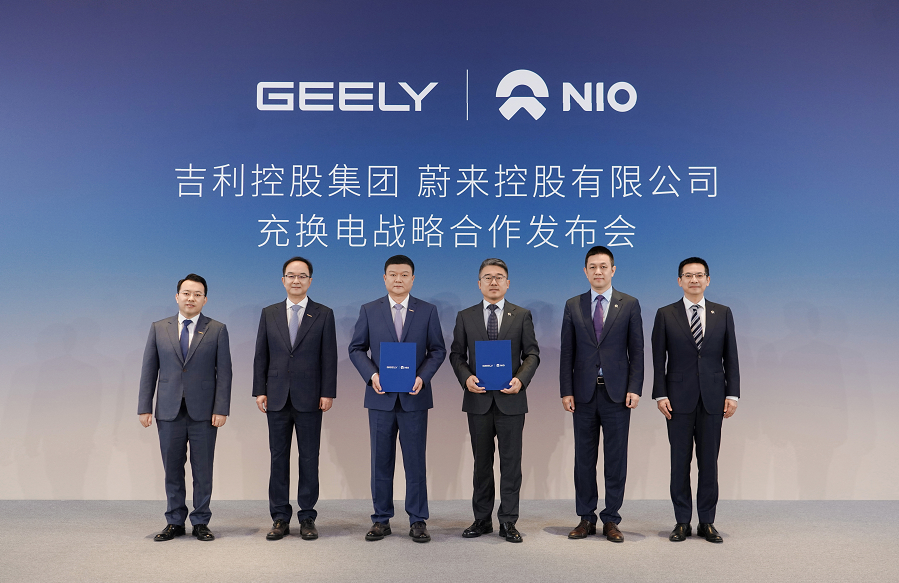
When Zhejiang Geely Holding Group formally executed a strategic cooperation agreement with NIO to standardize and co-develop electric vehicle battery swapping architecture, the headline reverberated through global boardroom corridors as a watershed validation of NIO’s capital-intensive infrastructure bet. For years, Western and Chinese legacy OEMs dismissed battery swapping as an engineering dead end—a logistical nightmare of inventory depreciation, mismatched pack geometries, and catastrophic capital expenditure that drove pioneering startups like Better Place into bankruptcy. Yet, by securing Geely—China’s multi-brand automotive powerhouse controlling Volvo, Polestar, Zeekr, and Lotus—NIO has pivoted its swapping network from a bespoke, high-cost luxury amenity into an aspiring open-standard national utility.
To grasp the significance of this consolidation, one must step back to examine the structural gridlock defining modern EV charging dynamics. While global OEMs pour billions into ultra-fast 800V and megawatt-class DC fast-charging networks, they are increasingly slamming against physical transmission boundaries, thermal runaway constraints, and municipal substation overloads. NIO’s alternative philosophy—physical kinetic replenishment via a three-minute automated pack swap—has logged tens of millions of swaps across China, yet has historically bled immense operating cash flows. Geely’s entry represents a critical mass inflection point, transforming a localized proprietary moat into a potential pan-industry standard, while simultaneously exposing severe unresolved questions about battery degradation accounting, standardization friction, and balance sheet exposure.
The Dual-Architecture Dilemma: Dissecting the Geely-NIO Engineering Protocol
The technical core of the NIO-Geely pact centers on two distinct operational tracks: co-developing public battery-swapping network standards for passenger vehicles, and constructing standardized swappable battery systems compatible with diverse chassis platforms. Historically, NIO designed its high-end swapping stations exclusively for its internal unibody architecture, relying on a unified battery pack dimension across its luxury SUVs and sedans (ranging from 70/75 kWh LFP/NCM hybrid packs to 100 kWh and 150 kWh semi-solid-state chemistry). In contrast, Geely’s swapping footprint, operated largely via its subsidiary Yiyi Power (and commercial B2B fleets under the CaoCao Mobility umbrella), utilized proprietary bottom-swap mechanisms engineered for low-cost, high-duty-cycle urban commercial fleets.
Bridging these two fundamentally divergent engineering philosophies presents profound mechanical and electrical challenges. NIO’s fourth-generation swapping stations (Power Swap Station 4.0) integrate 23 ultra-fast liquid-cooled charging bays, an array of four roof-mounted LiDAR sensors, and dual Orin X computing platforms delivering 1,016 TOPS to orchestrate fully autonomous, driverless pull-in swapping. Achieving interoperability between Geely's multi-brand portfolio—spanning Zeekr's performance-oriented Sustainable Experience Architecture (SEA) and mass-market B2B chassis—demands an unprecedented compromise in mechanical pack design, cooling connector tolerances, and busbar locking mechanisms.
| Metric / System Component | NIO Swapping Architecture (Gen 4) | Geely / Yiyi Power Swapping System | Tesla Supercharger / 800V HPC Architecture |
|---|---|---|---|
| Swap / Replenishment Duration | 144 to 180 seconds (Fully Automated) | 60 to 90 seconds (Commercial Bolt/Slide) | 15 to 25 minutes (10%–80% SOC via 250-350kW DC) |
| Standardized Pack Form Factors | Unified external shell (75 kWh, 100 kWh, 150 kWh) | Segmented fleet packs (50 kWh to 68 kWh) | Non-swappable structural pack (4680 / Prismatic cells) |
| Pack Locking Mechanism | Patented Bayonet / Quick-Release Bolts | Lateral mechanical latching / hydraulic pins | Direct structural bonding (Cell-to-Chassis CTC) |
| Peak Grid Demand per Station | Buffered via internal battery energy storage (BESS) | Direct grid connection with localized buffering | 2.0 MW to 4.0 MW localized direct grid draw |
| Chassis Flexibility Impact | Constrained to standardized pack bay footprint | Low-cost chassis adaptation for taxi/fleet duty | Maximum freedom for structural pack integration |
| Cooling Interface Coupling | Dry-break blind-mate liquid cooling connectors | Quick-connect hydraulic/liquid cooling circuits | Permanent internal liquid cooling manifold |
As illustrated in the comparative breakdown above, reconciling high-end consumer demands with robust commercial-fleet cycling exposes structural trade-offs. The primary engineering bottleneck lies in the blind-mate hydraulic thermal coupling and electrical busbars. Every battery swap requires physical disengagement and re-engagement of high-voltage DC terminals and high-pressure liquid-coolant conduits. Over thousands of swaps across diverse real-world environments—subjected to road grit, corrosive de-icing salts, and chassis flex—the integrity of these mechanical couplings must remain hermetic to prevent coolant ingress, arcing, or catastrophic thermal runaway events.
Balance Sheet Telemetry: CAPEX Amortization and the Supply Chain Math
The economic imperative driving this alliance is ruthlessly straightforward: NIO cannot carry the capital expenditures of a nationwide energy network alone. Constructing a single modern battery swap station costs between 1.5 million and 2.5 million RMB ($210,000 to $350,000 USD), excluding land leasing overhead, transformer upgrades, and the capital locked up in float inventory. For a station to maintain a seamless user experience, it must warehouse between 13 and 23 active battery packs, each representing an idle asset value of $8,000 to $15,000 depending on cell chemistry.
By bringing Geely into the fold, the operational economics undergo an immediate mathematical pivot from a niche luxury service to a high-throughput public utility. In tier-1 Chinese supply chains, the primary cell suppliers backing this ecosystem are CATL and CALB, both of which have introduced their own proprietary swap architectures (such as CATL’s EVOGO Choco-SEB). The NIO-Geely coalition establishes an alternative power center, compelling upstream battery manufacturers to produce standardized structural enclosures that conform to an open OEM consortium rather than proprietary cell-maker designs.
- Asset Utilization Thresholds: Internal equity telemetry suggests that a standard NIO swap station requires roughly 50 to 60 swaps per day to reach operational EBITDA break-even. With only proprietary NIO vehicles accessing the network, regional stations in lower-tier cities frequently hover below 25 to 30 swaps daily, acting as a structural drag on cash flow. Infusing Geely’s commercial and private fleet volumes instantly accelerates stations past the critical 60-swap inflection point.
- BOM and Pack Assembly Reductions: Harmonizing battery pack shells across multiple vehicle lines unlocks profound economies of scale. Industry estimates suggest that joint sourcing of high-voltage contactors, BMS controllers, and specialized blind-mate quick-connect couplings can drive sub-assembly BOM costs down by 14% to 18% compared to isolated low-volume bespoke sourcing.
- Energy Arbitrage and Grid Services: The combined network functions as an aggregated distributed Battery Energy Storage System (BESS). By charging idle packs during off-peak valley hours (0.25 to 0.35 RMB per kWh) and discharging or pausing during peak hours (1.10 to 1.30 RMB per kWh), the consortium monetizes frequency regulation ancillary services, opening revenue streams unavailable to traditional passive charging operators.
Competitive Fallout: Shifting Power Dynamics Across Western and Domestic OEMs
The NIO-Geely axis fundamentally upends competitive assumptions across both the Chinese domestic landscape and Western legacy OEM strategy. For years, pure-play charging advocates argued that 800V Silicon Carbide (SiC) high-voltage platforms would render battery swapping obsolete. Charging champions like XPeng, Li Auto (with its 5C Mega architecture), and Porsche have staked their engineering narratives on rapid electron transfer. Yet the physical reality of grid constraints is asserting itself, forcing a strategic reassessment.
For Western OEMs operating in China—specifically Volkswagen, General Motors, and Mercedes-Benz—the expansion of an open, standardized swapping network threatens to widen an already perilous operational wedge. Western legacy platforms, predominantly engineered around static structural packs (such as VW’s MEB or GM’s Ultium), are physically incapable of participating in battery swapping without massive, multi-year chassis redesigns. As Chinese corporate fleet managers and mainstream consumers grow accustomed to 3-minute replenishment, foreign models confined to 30-minute fast-charging face heightened friction in high-density urban environments where private parking and home charger installations are virtually nonexistent.
Conversely, independent global automakers that have decoupled their product architecture from Chinese domestic infrastructural eccentricities—most notably the Hyundai Motor Group with its dedicated E-GMP 800V charging platform—remain effectively shielded from this specific infrastructural lock-in. By focusing their core engineering on high-margin export territories across North America, Europe, and India, these decoupled manufacturers avoid the brutal, margin-crushing domestic capital warfare required to maintain Chinese infrastructural parity.
The Reality Check: Physics, Mechanical Degradation, and the PR Disconnect
While executive press releases paint an idealized vision of universal, frictionless energy sharing, rigorous engineering interrogation reveals severe vulnerabilities that corporate communiqués routinely obscure. The narrative that battery swapping solves all EV consumer friction relies on sweeping several physical and legal compromises under the rug.
First and foremost is the unresolved question of cross-brand battery degradation liability. In a closed single-brand ecosystem like NIO’s, the OEM owns the balance sheet risk of battery degradation through its Battery-as-a-Service (BaaS) subsidiary, Miradu. However, when an owner of a premium $60,000 Zeekr vehicle swaps a pristine, 6-month-old pack and receives a 3-year-old degraded pack previously driven 150,000 kilometers in a high-mileage commercial CaoCao taxi, consumer trust evaporates. Establishing automated, legally binding, real-time State-of-Health (SOH) electrochemical evaluations during a 3-minute mechanical swap is an extraordinary computational and electrochemical challenge. Diagnostic impedance spectroscopy typically requires thermal stabilization and dynamic rest periods; assessing internal lithium plating or micro-dendrite formation in seconds across diverse third-party cell chemistries borders on the impossible.
Secondly, the structural packaging penalties inherent to swappable battery systems directly contradict modern structural design trends. The global EV frontier is moving aggressively toward Cell-to-Chassis (CTC) and Cell-to-Body (CTB) integration—as pioneered by BYD, Tesla, and Leapmotor—where battery cells serve as internal torsional stiffening members for the vehicle frame. Swappable architectures inherently require a 'box-within-a-box' structure: an internal reinforced pack casing nesting inside an external chassis cradle, coupled with mechanical locking bolts. This redundant structural overhead imposes a weight penalty of 40 to 80 kilograms and robs the cabin of 15 to 25 millimeters of vertical Z-axis space, directly penalizing vehicle aerodynamics, energy consumption (kWh/100km), and interior packaging efficiency.
Finally, the infrastructure deployment timeline cited by executives frequently ignores real-world utility physics. Connecting a Gen-4 swapping station housing 23 packs capable of simultaneous high-rate charging requires a localized grid drop of 1,000 kVA to 1,500 kVA. In tier-1 metropolitan centers like Shanghai, Beijing, or Shenzhen, municipal commercial transformers are already operating near peak thermal headroom. Securing local State Grid approval and installing dedicated subterranean medium-voltage substations often incurs delays ranging from 6 to 18 months, rendering aggressive station-count PR targets deeply questionable without massive state-directed intervention.
Regulatory Mechanics, Sovereign Standards, and Cross-Border Boundaries
The geopolitical and regulatory context surrounding the Geely-NIO alignment is inextricably tied to Beijing’s deliberate drive for national infrastructure standardization. Under the guidance of China's Ministry of Industry and Information Technology (MIIT), swapping has long been championed within the National New Energy Vehicle Development Plan (2021–2035) as a critical lever for energy security, grid demand-side management, and raw material sovereignty.
By establishing an alliance that aggregates China’s most prominent luxury startup (NIO) with its largest private automotive conglomerate (Geely), the participants are effectively authoring the de facto technical blueprint for China's upcoming mandatory national swapping standards. This regulatory defensive perimeter creates a significant barrier to entry for foreign imports. Western OEMs wishing to compete in China’s fleet, taxi, and entry-level passenger segments may soon find themselves compelled to adopt mechanical standards governed entirely by their direct domestic competitors.
However, this regulatory advantage hits a definitive geopolitical wall at China’s borders. Under the United States’ Inflation Reduction Act (IRA) Foreign Entity of Concern (FEOC) rules and Section 301 tariffs, combined with the European Union’s countervailing anti-subsidy duties, the capital assets, battery packs, and cloud control systems anchoring this swapping ecosystem face extreme scrutiny. Transporting NIO and Geely's swapping network to Europe—where NIO has deployed only a few dozen operational stations in Norway, Germany, and the Netherlands—confronts astronomical labor, civil engineering, and permitting costs. Deploying a single swap station in Western Europe can exceed €600,000 to €800,000, three times the domestic Chinese cost, virtually invalidating the economic model without immense local scale.
Strategic Forecast and Investment Scenarios
The unification of Geely and NIO under a shared swapping tent marks a decisive fork in the road for global automotive capital allocation. How this consortium executes its technical harmonization will determine whether battery swapping matures into a durable global alternative to stationary charging or remains a localized Chinese anomaly. Below are the three plausible trajectories over the next 24 to 36 months.
Bull Case
Standardized pack specifications are successfully codified under MIIT auspices, prompting other domestic players (such as Changan, FAW, or Chery) to formally enter the network. Station throughput surges past 80 swaps per day, transforming NIO Power into a cash-flow-positive, spin-off-ready infrastructure giant akin to an electric pipeline utility. The shared BaaS ecosystem mitigates consumer battery anxiety, drives down initial vehicle acquisition sticker prices by 20% to 30%, and solidifies Geely and NIO’s dominance across both premium and commercial urban mobility segments in China and select emerging markets.
Base Case
The engineering integration advances along fragmented lines: Geely limits swapping compatibility primarily to its commercial, fleet-focused sub-brands (CaoCao, Yiyi) and entry-level passenger offerings, while premium brands like Zeekr and Polestar prioritize 800V/5C extreme fast-charging on SEA architectures to maintain global chassis commonality. Station utilization improves incrementally, stemming NIO's infrastructure cash burn, but deep technical friction over pack ownership, software telemetry sharing, and consumer brand tiering prevents complete structural consolidation. The swapping network remains a potent domestic advantage, but struggles to achieve meaningful traction in Western export territories.
Bear Case
Consumer friction over cross-brand battery pack degradation and SOH transparency triggers intense brand backlash, alienating NIO’s premium customer base while fleet integration cannibalizes luxury brand equity. Station deployment stalls due to municipal grid constraints and soaring commercial real estate leasing fees. Meanwhile, rapid advancements in solid-state chemistry and localized 600kW+ flash-charging dramatically compress fast-charging times down to 8 minutes across global markets, rendering the mechanical complexity, weight penalty, and immense stationary CAPEX of battery swapping economically obsolete.
Strategic Takeaways for Automotive Leadership
- Infrastructural Decoupling is Accelerating: The Chinese EV market is actively developing divergent physical and mechanical replenishment pathways that are incompatible with Western structural CTC chassis standards. Western legacy OEMs must urgently evaluate whether to localize platform engineering exclusively for China or forfeit market presence entirely.
- Capital Amortization Dictates Architecture: No single automaker possesses the balance sheet resilience to fund proprietary national energy distribution networks in isolation. Collaborative consortia or utility-led open models are the only mathematically viable paths toward infrastructure profitability.
- Separation of Asset and Sheet: The BaaS financial model—decoupling the physical chassis from the high-depreciation electrochemical battery asset—is transitioning from a consumer sales gimmick into an institutional imperative for lifecycle management and circular material recovery.
- Mechanical Standardization Imposes Packaging Penalties: Committing to swappable architecture forces engineering leadership to accept permanent vehicle weight, height, and energy efficiency penalties. Product planners must rigorously weigh whether 3-minute physical replenishment offsets the dynamic and range benefits of rigid structural pack integration.