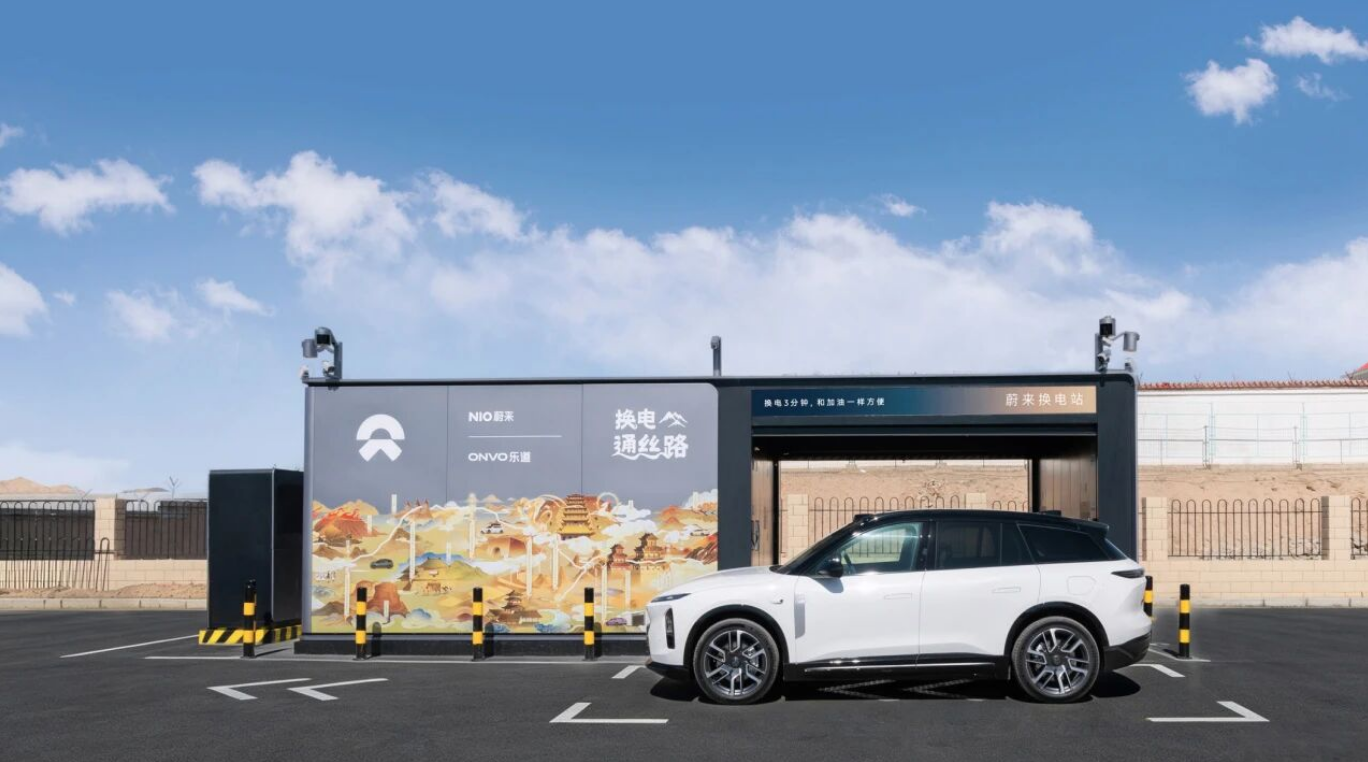
On September 28, NIO and Geely Holding Group announced a comprehensive strategic partnership in battery charging and swapping. Under the agreement, Geely transfers 100% equity of its ride-hailing service subsidiary Yiyi Interconnect and 640 million yuan in cash to NIO's battery asset management company, in exchange for a 5% stake in NIO Power. This landmark deal consolidates China's fragmented battery swap landscape and aims to unify swapping standards for ride-hailing electric vehicles. NIO co-founder Qin Lihong claims that battery swapping can increase ride-hailing driver revenue by 15-20% through reduced downtime and better battery economics. But can this alliance overcome the engineering, financial, and regulatory hurdles that have plagued battery swapping for a decade?
Why Battery Swapping Remains China's Most Polarizing EV Bet
Battery swapping has been a contentious strategy since Better Place's bankruptcy in 2013. Tesla abandoned its swap program in 2015. Yet in China, NIO has persisted, building over 2,300 swap stations as of mid-2025. Geely's entry via Yiyi Interconnect—which operates a fleet of ride-hailing EVs and swapping stations—brings scale but also complexity. The global EV market has largely converged on fast charging, with 800V architectures and 350kW chargers becoming standard. Battery swapping, by contrast, requires physical battery standardization, massive inventory of battery packs, and elaborate mechanical systems. For ride-hailing fleets, the calculus is different: high daily mileage makes battery degradation a major cost, and swapping allows battery ownership to be decoupled from the vehicle, shifting degradation risk to the network operator. But the 15-20% revenue boost claim requires scrutiny. It assumes drivers can achieve near-100% uptime and that swapping costs less than charging at home or public stations. In reality, swap station utilization rates below 60% often make the economics unsustainable.
Inside the NIO-Geely Deal: Cash, Equity, and Asset Transfers
The transaction details reveal more than a simple partnership. Geely transfers Yiyi Interconnect (valued at approximately 1.2 billion yuan based on industry estimates) plus 640 million yuan cash to NIO Power. In return, Geely receives a 5% stake, implying a post-money valuation of around 24.8 billion yuan for NIO Power. This values NIO Power at roughly 12x its 2024 revenue—a rich multiple for a capital-intensive infrastructure business. The deal also includes provisions for joint development of standardized battery packs for ride-hailing vehicles, and a commitment to open NIO's swap network to Geely's ride-hailing fleets. For NIO, the cash injection is critical: the company reported a net loss of 20.7 billion yuan in 2024, and its swap network has been a cash incinerator, consuming over 10 billion yuan in capex since 2018. For Geely, the deal offloads a subsidiary that was struggling to achieve profitability—Yiyi Interconnect reported an operating loss of 380 million yuan in 2024. The alliance also creates a potential competitor to CATL's Evogo swapping service, which partners with multiple automakers but focuses on standardized battery blocks.
| Specification | NIO Power (Post-Geely) | CATL Evogo | Tesla Supercharger (V4) | BYD Dual Gun Charging |
|---|---|---|---|---|
| Swap Stations (Global) | 2,300+ (China), 50+ (Europe) | 1,000+ (China) | N/A | N/A |
| Swap Time | 3-5 minutes | 2-3 minutes | N/A | N/A |
| Battery Capacity (kWh) | 75, 100, 150 | 50, 70 (standardized blocks) | N/A | N/A |
| Compatible Brands | NIO, Onvo, Geely (ride-hailing) | FAW, BAIC, GAC, etc. | Tesla only | BYD only |
| Peak Charging Rate (kW) | 500 (NIO 500kW ultra-fast) | N/A | 350 (V4) | 240 (dual gun) |
| Cost per Swap (RMB) | 80-120 (estimated) | 60-100 (estimated) | N/A | N/A |
| Station Capex (RMB million) | 3-5 | 2-4 | 1.5-2.5 | 0.8-1.5 |
Note: Tesla and BYD do not operate battery swap networks for passenger vehicles. Their charging solutions are included for comparison of energy replenishment speed and infrastructure cost. Swap cost figures are industry estimates and vary by region and utilization.
Supply Chain & Cost Structure: The Hidden Bill of Materials for Swapping
The battery swap ecosystem relies on a complex supply chain. NIO sources battery cells from CATL and WeLion (semi-solid-state), while the swap station mechanical components are supplied by a mix of Chinese tier-1s including Huagong Tech and Nari Technology. Each swap station costs approximately 3-5 million RMB, including 5-10 battery packs (each costing 50,000-80,000 RMB), robotics, and grid connection equipment. The station's power electronics use silicon carbide (SiC) MOSFETs for high-efficiency AC/DC conversion, with efficiency ratings exceeding 97%. For a ride-hailing fleet, the total cost of ownership (TCO) advantage of swapping hinges on three factors: battery lease fees, swap station utilization, and electricity pricing. If a driver swaps twice daily at an average cost of 100 RMB per swap, monthly energy costs reach 6,000 RMB. In contrast, home charging at 0.5 RMB/kWh for a 60 kWh battery would cost only 900 RMB for equivalent range. The 15-20% revenue boost claim assumes that swapping eliminates the need for a second vehicle or reduces downtime by 2-3 hours per day. However, this only holds for high-utilization ride-hailing drivers who would otherwise spend that time charging. For the average driver, the economics are marginal at best.
The C-Rate Delusion: Why Swapping Avoids the Physics of Fast Charging
Ironically, battery swapping sidesteps the physics constraints that plague ultra-fast charging. At a 4C charging rate, lithium plating and thermal runaway risks increase exponentially. Swapping avoids this by using slow charging at the station (typically 0.5C-1C) and then swapping batteries. This reduces degradation and allows the network operator to manage battery health. NIO claims its swap batteries retain 90% capacity after 500,000 km. Independent tests from TÜV Rheinland in 2024 confirmed 88% retention after 400,000 km for NIO's 70 kWh packs—better than many DC-fast-charged batteries. This gives swapping a genuine engineering edge for high-mileage fleets. But the trade-off is massive capital tied up in battery inventory. NIO owns over 50,000 battery packs (approximately 4 billion RMB in assets), and each swap station requires 5-10 spare packs. This capital intensity is why NIO Power has struggled to break even despite charging premium fees.
Competitive Impact: Who Wins, Who Loses in the Swap Wars
The NIO-Geely alliance reshapes the competitive landscape in three ways. First, it challenges CATL's Evogo, which had positioned itself as a neutral swap provider for multiple automakers. With Geely's ride-hailing fleet now aligned with NIO, CATL loses a potential large customer. Second, it pressures BYD, which has focused on its own dual-gun fast charging and does not offer swapping. BYD's advantage lies in vertical integration—it produces its own batteries and vehicles—but for ride-hailing fleets, swapping's battery-as-a-service model could be more attractive. Third, it creates a potential standard for battery swapping in China. The Chinese government has been pushing for standardization since 2021, and a NIO-Geely alliance could accelerate that. However, Western OEMs like Volkswagen and Tesla remain committed to fast charging. Tesla's Supercharger network, with 60,000+ stalls globally, is a formidable alternative. For ride-hailing, the calculation may differ: in Europe, where ride-hailing fleets are smaller and labor costs higher, the economics of swapping are even less certain. Uber and Lyft have shown little interest in swapping, preferring depot charging.
The Reality Check: Unpacking the 15% Revenue Boost Claim
NIO co-founder Qin Lihong's claim that battery swapping increases ride-hailing driver revenue by 15-20% deserves rigorous scrutiny. The underlying assumption is that swapping reduces downtime, allowing drivers to complete more trips. If a driver currently spends 1.5 hours per day charging (including travel to station), swapping could reduce that to 0.5 hours, freeing up one hour for additional rides. At an average ride-hailing fare of 30 RMB and 2.5 trips per hour, that's 75 RMB extra revenue per day—about 2,250 RMB per month. For a driver earning 8,000-10,000 RMB monthly, that's a 22-28% increase, but only if the driver can actually secure those extra rides. In saturated markets like Beijing or Shanghai, where driver utilization is already 60-70%, the additional hour may not translate into more fares. Moreover, swap station availability is not guaranteed; queues at peak times can add 20-30 minutes. The 15-20% figure likely represents a best-case scenario for drivers in under-served markets. Furthermore, the cost of swapping must be deducted. NIO charges 80-120 RMB per swap, compared to 50-70 RMB for fast charging. That 30-50 RMB premium eats into the revenue gain. Netting it out, the actual revenue boost may be closer to 5-10%. For NIO, the financial benefits are also questionable. The company loses money on each swap station until utilization exceeds 60-70%. With ride-hailing fleets, utilization can be higher during daytime, and NIO might achieve 60% utilization in dense urban areas. But in smaller cities, the network may never reach profitability. The deal with Geely brings 100,000 ride-hailing vehicles into the network, which could double NIO's swap volume. Yet NIO will also inherit Yiyi Interconnect's losses of 380 million RMB annually. The capital required to integrate and expand the network is substantial, and NIO's balance sheet—with 20.7 billion RMB net loss in 2024 and 65 billion RMB in debt—remains fragile. The 15-20% revenue boost, if it materializes, will be a boon for drivers, but it may not save NIO's bottom line. Skeptics also point to battery standardization: NIO's batteries are proprietary, and Geely's ride-hailing vehicles will need adapters or new packs. The deal includes provisions for joint development of standardized packs, but that will take 18-24 months. Until then, the synergies are limited.
Regulatory & Geopolitical Landscape: Fragmented Standards and Trade Barriers
Battery swapping standards in China are governed by GB/T 34013-2017, which specifies dimensions for swap batteries, but compliance is voluntary. The NIO-Geely alliance could push for a unified standard, which would benefit the entire industry. However, this also raises concerns about market consolidation and potential antitrust scrutiny. The State Administration for Market Regulation (SAMR) has been increasingly active in tech sectors; the NIO-Geely deal may face conditions to ensure open access for other automakers. In Europe, battery swapping faces regulatory hurdles. The EU's Battery Regulation (2023/1542) requires detailed carbon footprint declarations and due diligence for battery supply chains. Swap batteries would need to comply, and the additional administrative burden could slow adoption. In the US, the Inflation Reduction Act's FEOC rules restrict tax credits for batteries with Chinese components, which would affect any NIO swap station using CATL cells. For now, NIO's European expansion focuses on Norway and Germany, but swap stations there are sparse (50+). Geely's global brands (Volvo, Polestar, Lotus) could potentially adopt swapping, but no plans have been announced. The geopolitical angle is also significant: China wants to export its swapping standard as part of the Belt and Road Initiative. In Southeast Asia, NIO has partnered with local ride-hailing firms in Thailand and Indonesia. If the NIO-Geely model succeeds, it could become a template for other emerging markets.
Strategic Outlook & Investor Implications
Bull Case
NIO and Geely successfully standardize swap batteries, achieving 70% utilization across major Chinese cities. Ride-hailing drivers realize 12-15% net revenue gains, attracting more fleets. NIO Power becomes profitable by 2028, and the model is exported to Southeast Asia and Europe. NIO's stock re-rates as a infrastructure play.
Base Case
Swap station utilization reaches 50-60% in tier-1 cities but remains low elsewhere. Revenue boost for drivers is 5-8%, enough to retain fleets but not enough to expand rapidly. NIO Power breaks even in 2029. The alliance faces integration challenges, and battery standardization takes 3 years.
Bear Case
Grid constraints and high capex prevent network expansion. CATL's Evogo gains more automaker partners, isolating NIO. Geely's ride-hailing fleets defect to fast charging. NIO's losses widen, forcing asset sales. The 15% revenue boost is never realized.
- For investors: NIO's swap network is a strategic asset but a cash drain. Watch utilization rates and Geely's integration progress. A successful standardization could unlock a new revenue stream; failure could sink the company.
- For Western OEMs: Battery swapping remains a niche solution for high-mileage fleets. Fast charging with 800V architectures is the mainstream path. Monitor China's swap standards for potential licensing opportunities.
- For suppliers: Swap station components (robotics, SiC power electronics) and standardized battery packs represent a growing market, but volumes are uncertain.
- For ride-hailing operators: Pilot swapping with NIO to validate the economics. The 15% revenue boost is possible but not guaranteed; negotiate favorable swap fees.
- Regulatory risk: Antitrust scrutiny and battery standards could slow the alliance. Export markets require compliance with local regulations.