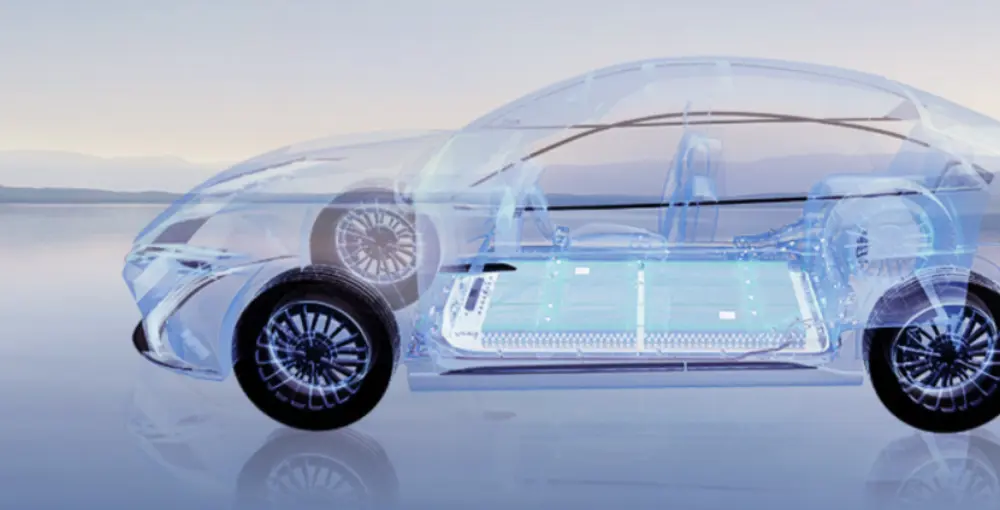
The global automotive supply chain is reaching a critical inflection point in 2026. As Western legacy automakers struggle to stabilize their supply chains, Chinese manufacturers are aggressively diversifying their energy portfolios. This technical evolution goes far beyond standard Lithium-iron-phosphate (LFP) chemistries. Today, multiple battery technologies—all-solid-state, semi-solid-state, sodium-ion, and advanced lithium-manganese-iron-phosphate (LMFP)—are competing for dominance in the next-gen Chinese EV battery technology ecosystem.
The Multi-Route Technical Battleground in 2026
As a senior market analyst monitoring East Asian automotive supply chains, it is clear that China has abandoned the concept of a single 'winner-take-all' chemistry. Instead, Chinese giants like CATL, BYD, WeLion, and QingTao Energy are scaling up parallel production lines to de-risk material bottlenecks and capture distinct market segments simultaneously.
1. All-Solid-State and Semi-Solid Batteries: The Premium Frontier
Solid-state chemistry remains the holy grail of EV engineering due to its thermal stability and high energy density. However, commercialization has historically faced major manufacturing bottlenecks. In response, Chinese players adopted a pragmatic intermediate step: semi-solid-state batteries. Partners like WeLion (supplying NIO's 150 kWh pack) have proved that 1,000 km range is commercially viable today. Meanwhile, pilot production lines for true all-solid-state batteries (targeting >400 Wh/kg) are coming online in 2026, with SAIC and GAC promising fleet integration by 2027.
2. Sodium-Ion (Na-Ion) Batteries: The Volatility Hedge
While solid-state targets the premium market, sodium-ion technology is designed to insulate the supply chain from lithium price volatility. Relying on abundant sodium reserves, these cells offer incredible low-temperature performance and safety, albeit at a lower energy density (~150-160 Wh/kg). For Western investors, tracking sodium-ion's integration into micro-mobility and mass-market vehicles (such as BYD's Seagull variants) is crucial for forecasting global lithium demand drops.
3. Advanced Lithium (LMFP & High-Silicon Anodes)
Standard LFP is undergoing its own upgrade. By adding manganese to create LMFP, Chinese manufacturers are boosting cell voltage and energy density by 15-20% without the cost penalties of high-nickel ternary chemistries. This serves as the pragmatic middle-ground that will power mid-range global EVs over the next three years.
Comparing Next-Gen Chinese Battery Chemistries
To assist strategic planners and portfolio managers, we have mapped out the key characteristics of these competing battery tracks based on 2026 production metrics:
| Battery Type | Energy Density | Target Market | Key Chinese Players | Commercial Maturity (2026) |
|---|---|---|---|---|
| Semi-Solid-State | 300 - 360 Wh/kg | Premium EV (High-range) | WeLion, QingTao Energy | Active Commercial Use |
| All-Solid-State | 400 - 500 Wh/kg | Supercars, Luxury EVs | CATL, GAC, SAIC | Pilot Production & Testing |
| Sodium-Ion | 140 - 160 Wh/kg | Entry-Level EVs, ESS | HiNa Battery, CATL, BYD | Mass Production Scaled |
| LMFP | 200 - 240 Wh/kg | Mass-Market EVs | CATL (Shenxing), Gotion | Dominant Mid-range Market Share |
Geopolitical Implications for Western OEMs
For Western OEMs (Tesla, VW, Ford) and tier-1 suppliers, the rapid maturation of next-gen Chinese EV battery technology poses a strategic challenge. While the US and EU focus heavily on building out localized standard lithium-ion gigafactories, China is already moving its industrial base to next-generation chemistries. This means that by the time Western gigafactories reach full capacity, they may find themselves producing legacy chemistries that are economically or technically uncompetitive. To maintain market share, Western players must either accelerate local solid-state R&D or establish joint ventures with advanced Chinese battery material suppliers.