Is China’s new 3D sensing technology about to revolutionize autonomous driving? Let’s dive into the details.
The Challenge: Reflective Surfaces and 3D Sensing
Autonomous vehicles and surgical robots often struggle with surfaces that have varying reflectivity. When transitioning from a matte brick wall to a shiny metal bumper, or from dull tissue to reflective bodily fluids, these technologies can lose their way. Current 3D sensors typically can only read one type of reflectivity, and if forced to identify two simultaneously, they fail. This is a significant challenge for the reliability of autonomous navigation, robotic surgery, and industrial inspection.
Breakthrough at the University of Arizona
Researchers at the University of Arizona have made a significant breakthrough in 3D sensing technology. The team, led by Florian Willomitzer, an associate professor at the Wyant College of Optical Sciences, has developed a method that uses laser scanners and event cameras to capture image details more quickly and clearly, without being disrupted by complex reflective surfaces. This innovation could be a game-changer for the automotive and medical industries.
How It Works
-
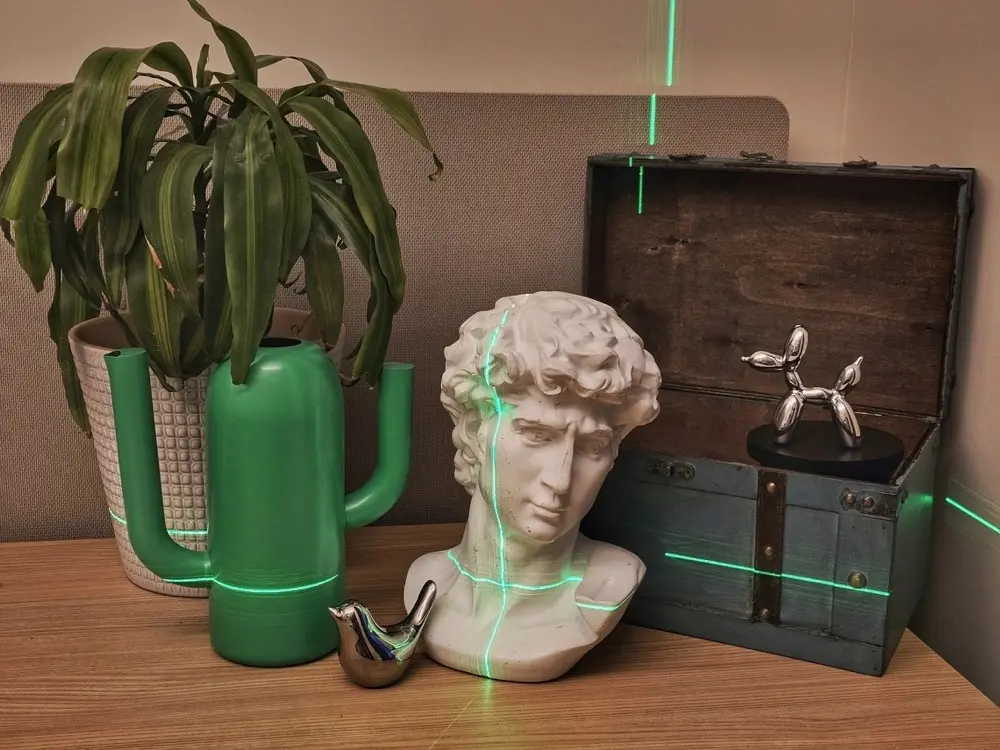
Laser Scanners and Event Cameras: The system uses laser scanners to capture the entire room, including objects with various surface types (matte, glossy, and reflective). An algorithm then separates diffuse and specular reflections, allowing the system to use the diffuse parts as a virtual screen for deflectometry on the specular parts.
-
Neuromorphic Cameras: Traditional cameras capture images frame by frame, which is not suitable for high-speed applications. Neuromorphic cameras, on the other hand, can capture high-speed events, making them ideal for dynamic environments like moving vehicles or surgical instruments.
Why This Matters for Western Investors and Auto Industry Pros
This new 3D sensing technology addresses a critical issue in the development of autonomous vehicles. By overcoming the challenges posed by reflective surfaces, it enhances the reliability and accuracy of 3D sensing, which is essential for safe and efficient autonomous driving. For Western investors and auto industry professionals, this breakthrough could mean a significant competitive advantage, especially as the Chinese market continues to lead in EV and ADAS innovations.
Industry Impact
-
Enhanced Safety: Improved 3D sensing can lead to safer autonomous vehicles, reducing the risk of accidents caused by sensor confusion.
-
Cost Reduction: The new method significantly reduces the need for large, expensive hardware setups, making it more practical and cost-effective for widespread adoption.
-
Competitive Edge: Companies that adopt this technology early could gain a significant edge in the rapidly evolving autonomous vehicle market.
Recent Developments in 3D Sensing
Recent articles from Reuters and Bloomberg highlight similar advancements in 3D sensing, but the University of Arizona’s approach stands out for its simplicity and effectiveness. Unlike traditional methods that require large, static screens, this new technique can adapt to dynamic environments, making it particularly useful for autonomous vehicles and robotic surgery.
See our analysis on Advancements in ADAS Technology for more insights into how these innovations are shaping the future of the automotive industry.