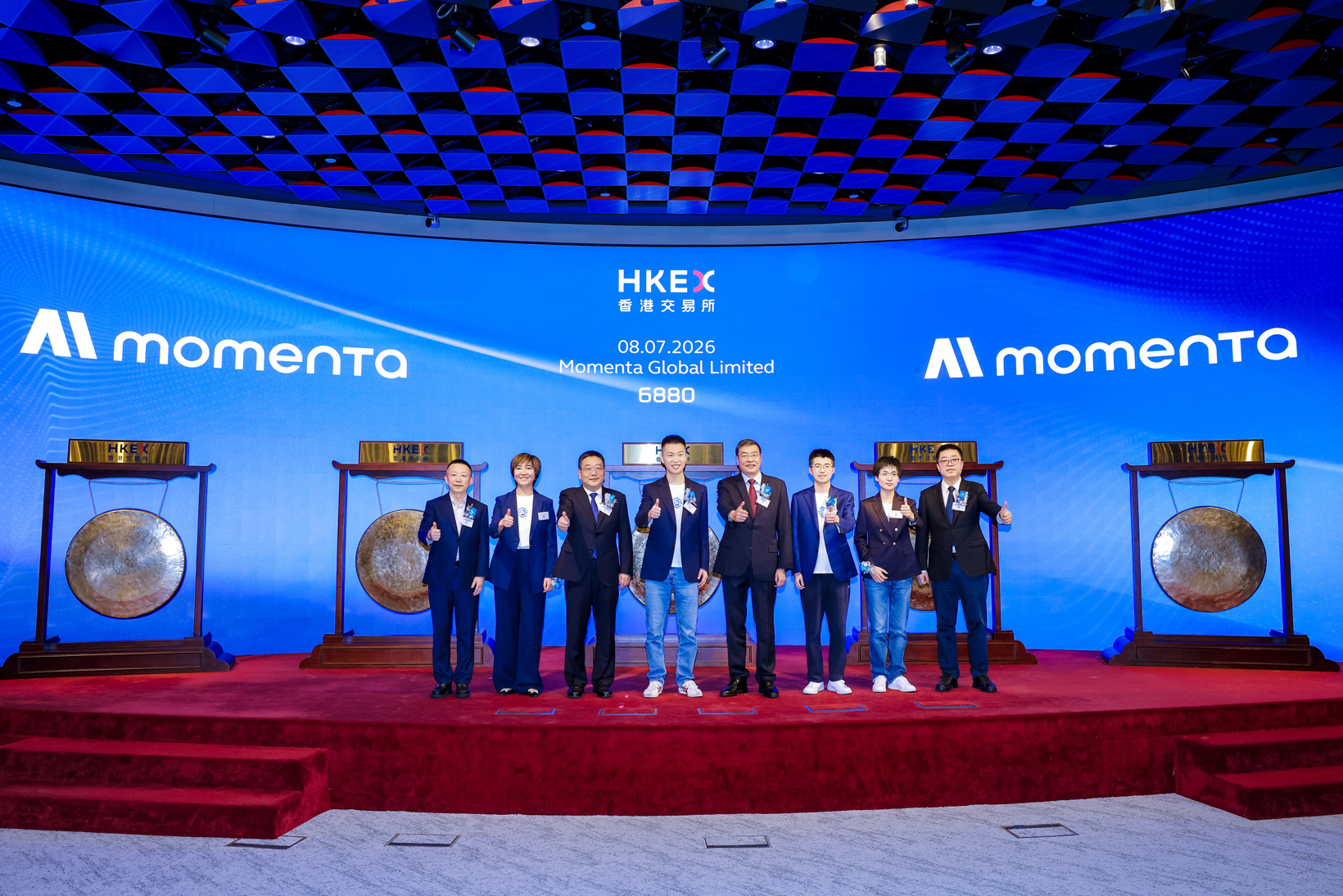
On July 8, 2026, the Hong Kong Stock Exchange (HKEX) welcomed a landmark event in the global deep-tech sector. The Momenta autonomous driving IPO officially launched under the stock code 06880, with shares debuting at HK$301 after pricing at HK$295.6, instantly propelling the company to a massive HK$70 billion market capitalization. This milestone is not just a win for the company, but a critical diagnostic signal for global investors analyzing the commercial viability of autonomous driving (AD) technology.
As a market analyst tracking the rapid evolution of APAC's intelligent mobility sector, I see Momenta’s public listing as a strategic inflection point. While Western autonomous vehicle players face fragmented capitalization routes, Momenta has leveraged China's aggressive EV market penetration to build a sustainable, revenue-generating model powered by AI scalability.
The Flywheel of Physical AI: Why Momenta Commanded a HK$70 Billion Valuation
At the core of Momenta’s market positioning is its narrative of "Physical AI." Unlike purely digital AI models that operate in virtual environments, Physical AI must interact seamlessly with the unpredictable physical world. For Momenta, this is executed through their signature "Flywheel" strategy: combining mass-production autonomous driving software (L2+) with fully autonomous driving technology (L4).
This strategy addresses the primary bottleneck of autonomous vehicle development: data acquisition. By deploying L2+ solutions on thousands of consumer vehicles already on the road, Momenta continuously collects high-quality, real-world driving data. This data is fed back into their AI models to train and refine L4 algorithms, drastically reducing the cost and time required for closed-loop R&D. The HK$70 billion valuation reflects the stock market’s confidence in this self-reinforcing loop as a sustainable path to true Level 4 autonomy.
Strategic Global Alliances: Cross-Border Technology Integration
Momenta's path to IPO has been paved by strategic collaborations with major global automotive players. Rather than operating in isolation, the company has positioned itself as a key supplier for international brands seeking to localize and enhance their automated driving portfolios in highly competitive markets.
- Mercedes-Benz Group: A key early investor and strategic partner, leveraging Momenta's software expertise for next-generation ADAS architectures.
- BYD & SAIC Motor: Strategic integrations across high-volume domestic models, ensuring a consistent pipeline of real-world fleet data.
- Audi: Ongoing technological integration to optimize localized driving assist systems for international premium markets.
These alliances highlight a broader industry shift: instead of trying to develop proprietary full-stack solutions entirely in-house, Western and domestic OEMs are increasingly adopting a model of collaborative technology integration. By leveraging localized supplier expertise, global automakers can rapidly integrate state-of-the-art ADAS capabilities tailored to regional driving dynamics and regulatory landscapes.
Valuation Comparison: Momenta vs. Global Autonomous Driving Competitors
To understand the weight of the Momenta autonomous driving IPO, it is essential to compare its positioning with global peers navigating different regulatory and commercial environments.
| Company | Key Strategy | Estimated Valuation / Cap | Primary Market Focus |
|---|---|---|---|
| Momenta | Dual-Loop Flywheel (L2+ & L4) | HK$70 Billion (~US$9.0 Billion) | Global / APAC Localized |
| Mobileye | Vision-First chip-based ADAS | ~US$11 Billion (Public) | Global OEM Networks |
| Waymo | Pure-play Robotaxi Fleet (L4) | US$30+ Billion (Private parent rounds) | North America Urban Centers |
Key Risks and Strategic Investor Takeaways
While the market debut has been highly successful, long-term investors must keep two critical variables in mind:
1. The Transition from L2+ Revenue to L4 Commercialization
Currently, Momenta's primary revenue driver is software licensing for passenger vehicle ADAS (L2+). The true alpha of the stock, however, lies in its transition to fully driverless L4 services. Investors must closely monitor the timeline for regulatory approvals and commercial fleet rollouts to ensure the "Physical AI" vision translates into bottom-line profitability.
2. Supply Chain Compliance and Intellectual Property Protection
As autonomous vehicles rely heavily on high-performance semiconductors and cross-border data transfer, navigating international supply chain compliance is crucial. Momenta's ability to maintain high-level, compliant localized operations across APAC, Europe, and potentially North America will determine its viability as a truly global Tier 1 supplier.