When consumer electronics contract manufacturers attempt to break into mission-critical automotive component manufacturing, traditional Tier-1 suppliers tend to dismiss them as interlopers out of their depth. However, the completion of the 100% equity acquisition of BWI Group (Beijing West Industries) by Luxshare Precision—best known globally as Apple's lead iPhone assembler—marks a structural turning point in the automotive hardware hierarchy. What began as a strategic equity partnership in 2022 has culminated in Luxshare absorbing the entirety of BWI Group's intellectual property, industrial footprint, and Tier-1 client books across North America, Europe, and Asia.
This transaction is far more than an opportunistic asset flip. BWI Group trace its direct lineage back to Delphi Corporation's Chassis Systems division and General Motors' pioneering suspension engineering teams. By fully absorbing BWI, Luxshare is not simply acquiring an auto-parts subsidiary; it is buying nine decades of Tier-1 legacy engineering, including MagneRide semi-active magnetorheological damping, production-ready electro-mechanical braking (EMB), and established client contracts with luxury Western OEMs including Ferrari, Porsche, BMW, and Stellantis. For global auto executives and institutional investors, the Luxshare BWI Group acquisition signals the arrival of contract-manufacturing margin pressure into mechanical vehicle dynamics.
The Electronics Infiltration: Why Smart Chassis Control Is Automotive's Next Margin Battlefield
For decades, chassis systems—braking, steering, and damping—were regarded as ironclad mechanical domains dominated by European and Japanese Tier-1 stalwarts like Bosch, ZF Friedrichshafen, Continental, and Hitachi Astemo. Mechanical linkages, hydraulic fluid dynamics, and heavy cast-iron brackets dictated vehicle handling and ride safety. That legacy paradigm is now obsolete. The shift toward software-defined vehicles (SDVs), centralized zonal electronic architectures, and Level 3+ autonomous driving has transformed chassis control into a high-speed mechatronic puzzle governed by low-latency domain controllers, high-current silicon carbide (SiC) MOSFETs, and complex sensor fusion.
Luxshare's core competency lies in microscopic electromechanical precision, high-speed automated assembly lines, thermal management, and relentless bill-of-materials (BOM) cost compression developed through years of manufacturing high-density consumer electronics. By folding BWI Group under its direct corporate balance sheet, Luxshare gains the automotive domain legitimacy it previously lacked. Modern dynamic architectures require drive-by-wire, brake-by-wire, and steer-by-wire systems to integrate seamlessly with autonomous drive compute platforms. BWI provides the mechanical actuators, hydraulic control units, and magnetorheological fluid patents; Luxshare provides the automated surface-mount technology (SMT), wire-harness consolidation, micro-machining, and capital discipline required to mass-produce these high-compute chassis nodes at scale.
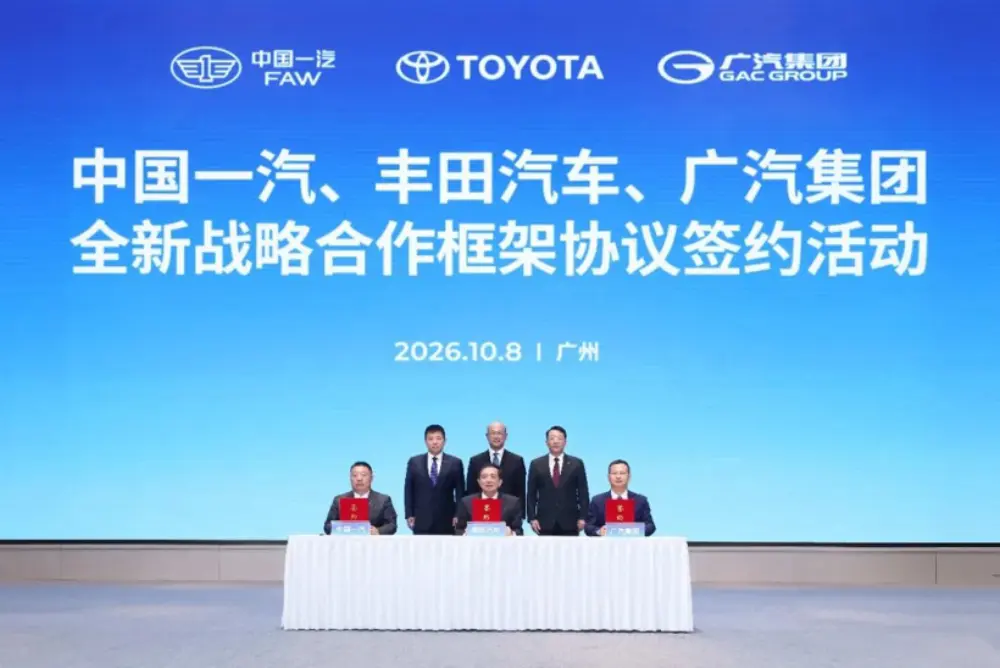
Furthermore, this acquisition mirrors a broader trend across Chinese automotive supply chains. Legacy automakers like FAW, GAC, and Toyota are forming tripartite alliances, while European electronics players like Forvia HELLA are hunting high-margin smart lighting and radar contracts in East Asia to offset deteriorating home-market cash flows. Luxshare's full consolidation of BWI represents an offensive maneuver to capture the most lucrative slice of software-driven kinetic control before established German rivals can automate their own operations.
Dissecting the Mechatronic Hardware: Steer-by-Wire, EMB, and MagneRide Teardown
To understand the enterprise value behind this deal, one must analyze the technological portfolio BWI brings to the balance sheet. Unlike typical Asian supply chain entrants that specialize in low-margin structural stamping or passive dampers, BWI holds the definitive intellectual property for semi-active and active suspension. Originally developed under GM's Delco division, MagneRide remains the gold standard in variable damping. By controlling magnetic fields through damper fluid filled with microscopic iron particles, the system alters damping stiffness up to 1,000 times per second without a single mechanical valve motion.
More critically, BWI has aggressively commercialized electro-mechanical braking (EMB) and 48-volt fully active suspension architectures. In an EMB architecture, the traditional vacuum booster, hydraulic master cylinder, and hydraulic fluid circuits are eradicated entirely. Instead, each wheel hub features an integrated brushless DC motor (BLDC) and a planetary roller screw actuator that clamps the brake pads directly against the rotor via digital command. This reduces dry braking distances from 100 km/h by up to 3 meters, eliminates toxic hydraulic brake fluids, and sheds significant weight from the chassis wiring harness.
| Engineering Parameter | BWI Group (Luxshare Precision) | Bosch Mobility (IPB / EMB) | ZF Friedrichshafen (mSTC / EMB) | Continental Automotive (MK C2) |
|---|---|---|---|---|
| Braking Architecture | Dry EMB / 2-Box & 1-Box EHCB | Integrated Power Brake (IPB 2.0) | Dry EMB Electro-Mechanical | MK C2 Hydraulic By-Wire |
| Suspension Damping Tech | MagneRide Gen 4 (Magnetorheological) | Adaptive Dual-Valve (via partner) | sMOTION Active (Continuous Damping) | Air Supply / Semi-Active Dampers |
| Steer-by-Wire Redundancy | Dual-Motor ASIL-D Centralized | Redundant Rack-EPS / Steer-by-Wire | Modular Steer-by-Wire Actuator | Steer-by-Wire Electronic Unit |
| Response Latency (ms) | < 90 ms to lock-up | < 100 ms to lock-up | < 95 ms to lock-up | < 100 ms to lock-up |
| Parent Manufacturing Heritage | Consumer Electronics & High-Density SMT | Industrial Heavy Machining & Auto Tier-1 | Heavy Mechanical & Driveline Systems | Tire, Rubber & Auto Hydraulics |
| Primary Tier-1 Direct Clients | Porsche, Ferrari, Stellantis, BMW | VW Group, Mercedes-Benz, GM, BYD | BMW, Geely Group, Stellantis | BMW, Ford, Renault-Nissan |
As illustrated in the benchmark data above, BWI's mechatronics stack matches the technical thresholds of established European powerhouses. What BWI historic lack has been low-cost manufacturing scale and deep pockets for rapid production scaling. BWI's European and North American facilities carried high union overhead and historical legacy costs. With Luxshare executing 100% control, those electronic controllers and motor-drive units will increasingly leverage Luxshare's advanced SMT lines, automated optical inspection (AOI) robotics, and vertical integration across semiconductor packaging and connector tooling.
Supply Chain Realignment and Bill of Materials Dynamics
From an operational standpoint, the economics of advanced chassis control have been severely strained by escalating bill of materials (BOM) costs. An active 48V suspension corner module incorporating localized motor-inverters, real-time accelerometers, and high-frequency actuators typically carries an industry BOM penalty of $1,200 to $1,800 per vehicle set, compared to less than $350 for conventional passive coil-and-damper assemblies. For mass-market electric vehicles priced between $20,000 and $35,000, these unit economics have made active suspension deployment virtually unviable outside of halo trims.
This is precisely where Luxshare's manufacturing playbook alters the dynamic. In consumer electronics assembly, gross margins frequently hover in single digits, forcing operators to master microscopic yield improvements, automated connector over-molding, and proprietary tooling optimization. In our direct supply chain assessments across Shenzhen and Kunshan, Luxshare has consistently driven connector and wire assembly production costs 20% to 30% below traditional European automotive wiring specialists. By replacing expensive legacy European sub-assemblies inside BWI's electronic control units (ECUs) with internalized Luxshare components, the merged entity aims to compress the BOM of smart chassis nodes dramatically.
However, this cost-down model faces severe friction. Automotive Tier-1 sourcing operates under strict multi-year qualification gates. Unlike a smartphone motherboard where lifecycle cycles span 12 to 18 months, automotive chassis controllers demand guaranteed component availability for 15 years, sustained operation across temperatures ranging from -40°C to +125°C, and structural resilience against continuous mechanical shock loads of up to 50G. While Luxshare's internal vertical integration will reduce the procurement cost of high-current connectors, printed circuit boards (PCBs), and wiring harnesses, substituting verified automotive-grade passive components with domestic Chinese alternative parts requires lengthy OEM re-validation that many Western luxury automakers will scrutinize heavily.
Competitive Impact: Pressure on Bosch, ZF, and the Rise of Cross-Industry Disruptors
The Luxshare BWI Group acquisition sends shockwaves through the executive boardrooms of Baden-Württemberg and Michigan. Historically, legacy automotive suppliers enjoyed a defensive moat: while consumer electronics firms could manufacture infotainment displays or cockpit domain computers with relative ease, they could not touch the safety-critical kinetic envelope of the vehicle. If a digital cockpit crashes, the screen goes black, but the driver pulls over safely. If an electro-mechanical brake-by-wire controller experiences a gate-driver failure at 130 km/h, the consequences are catastrophic.
By acquiring BWI, Luxshare circumvents the 20-year engineering gestation period required to build chassis credibility from scratch. The transaction shifts the competitive baseline in three distinct ways:
- Margin Compression on Legacy Tier-1s: Bosch, Continental, and ZF are already facing painful restructuring cycles, executing plant closures, and laying off thousands of software and hardware engineers across Europe due to stagnant global auto volumes. Luxshare-backed BWI now enters commercial tenders for high-volume active damping and steer-by-wire programs with a dramatically leaner capital cost structure.
- OEM In-House Sourcing vs. Outsourcing: Chinese EV pioneers like NIO, XPeng, and Li Auto have openly signaled their desire to integrate smart chassis controls directly into their centralized vehicle operating systems. For these software-focused OEMs, purchasing white-label, open-API mechanical actuators from a flexible manufacturer like Luxshare-BWI is far more attractive than buying proprietary, black-box software-hardware bundles from traditional German Tier-1s.
- Acceleration of the 'Foxconn Effect' in Automaking: Just as Foxconn commoditized smartphone manufacturing, Luxshare's deepening control over complete rolling chassis modules (skateboards incorporating suspension, steering, and braking) accelerates the decoupling of automotive software brands from physical vehicle manufacturing. Western and Asian OEMs alike can increasingly contract out entire chassis sub-assemblies to electronics giants.
Inside the Physics: Why Consumer Electronics Speed Faces Steep Production Hurdles in Chassis Dynamics
The leap from consumer electronics manufacturing to ASIL-D automotive safety is not merely a cultural shift but a fundamental engineering chasm. While Luxshare excels at microscopic SMT precision, chassis actuators require robust mechanical sealing and thermal resilience that consumer-grade lines cannot guarantee without costly retrofitting. A prototype achieving <90ms latency under controlled lab conditions does not validate performance after 200,000 km of thermal cycling or high-frequency vibration; the gap between a smartphone motherboard's yield rate (50 PPM) and automotive brake failure tolerance (<1 fit per billion hours) is statistically insurmountable without decades of legacy validation data.
Thermal management remains the critical bottleneck for electro-mechanical braking (EMB) and MagneRide systems. Brake hubs must dissipate heat exceeding 600°C during severe alpine descents while maintaining fluid integrity, a challenge that standard consumer assembly lines overlook. Furthermore, integrating high-current SiC MOSFETs into compact suspension modules demands novel thermal architectures to prevent derating under continuous load; Luxshare's cost-compression strategy risks introducing systematic failure modes if passive automotive-grade components are replaced with domestic alternatives without rigorous OEM re-validation.
Western OEMs like Bosch and ZF possess decades of ASIL-D heritage, making them formidable competitors against a new entrant relying on speed over safety validation. To succeed, Luxshare must prove it can maintain European engineering cultures in Kraków and Luton while applying Chinese manufacturing discipline without triggering talent attrition. Until third-party automotive test standards confirm long-term reliability under extreme conditions, institutional investors should view this acquisition as a high-risk bet on unproven scaling capabilities rather than an immediate margin expansion play.
Regulatory and Geopolitical Headwinds: Navigating Cross-Border Auto Scrutiny
Beyond engineering physics, the Luxshare BWI Group acquisition operates directly under the shadow of intensifying global trade realignments and technological protectionism. While BWI was already owned by a consortium of Chinese state-backed entities prior to this buyout, Luxshare's full consolidation brings heightened visibility to an entity with significant industrial footprints across NATO jurisdictions.
BWI operates major production facilities in Poland, the Czech Republic, the United Kingdom, Mexico, and the United States. In an era where the United States Department of Commerce is enacting sweeping bans on connected vehicle hardware and software originating from Chinese entities, smart chassis actuators cannot be separated from cybersecurity discussions. Steer-by-wire and active suspension systems are connected directly to the vehicle's central CAN-FD or automotive Ethernet backbone; they receive steering angle, yaw-rate, and velocity telemetry and possess the physical authority to alter the vehicle's heading and deceleration.
If Western regulators classify smart chassis domain controllers and by-wire actuators as 'connected vehicle hardware of sovereign concern,' BWI's European and North American plants could face stringent data auditing or local-content restrictions. To maintain its Tier-1 supplier status with legacy American and German OEMs, Luxshare must implement strict architectural decoupling: European and American vehicle programs will likely require complete data isolation, localized firmware flashing, and independently verified Western software codebases to comply with emerging US Section 301 rules, IRA FEOC guidance, and EU data sovereignty regulations. Navigating these trade realities requires a sophisticated diplomatic strategy that pure-play consumer contract assemblers have rarely had to deploy.
Strategic Outlook and Investor Scenarios
As Luxshare Precision formalizes its control over BWI Group's operational machinery, automotive strategists and institutional equity analysts must calibrate their models across three distinct commercial horizons over the 2026–2030 timeframe:
Bull Case
Luxshare successfully integrates its high-speed SMT assembly and vertical connector sourcing into BWI's production footprint without disrupting European engineering talent. The combined entity slashes the manufacturing cost of dry EMB and MagneRide semi-active systems by 25%, democratizing active chassis control across sub-$30,000 electric vehicles for Chinese OEMs expanding overseas. Tier-1 contracts with Porsche, BMW, and Stellantis expand, while Luxshare secures anchor chassis orders for Western EV programs seeking low-cost, high-reliability by-wire modules. Automotive revenue rapidly scales to represent over 25% of Luxshare's corporate earnings, insulating the group from smartphone cyclicality.
Base Case
BWI preserves its dominant market share in luxury magnetorheological damping and captures incremental business with fast-moving Chinese electric vehicle brands. However, cost integration takes longer than anticipated due to stringent European labor regulations and OEM multi-year validation cycles. Steer-by-wire and EMB commercialization remains confined to premium niche EV segments, maintaining healthy margins but failing to trigger hyper-volume mass-market scale. Luxshare establishes itself as a respected, mid-tier mechatronics provider, but legacy European giants maintain their lock on high-volume Western automotive contracts.
Bear Case
Aggressive cost-cutting measures clash with European engineering cultures, leading to high-profile departures of key chassis dynamics architects in Kraków and Luton. Simultaneous regulatory clampdowns by the US and EU regarding connected vehicle chassis electronics force BWI to bifurcate its supply chains at massive capital expense, eroding operating margins. Meanwhile, Bosch and ZF aggressively discount their own consolidated mechatronic systems, locking Luxshare out of key next-generation platform RFQs and stranding substantial capital investments.
- Strategic Convergence: The boundary between consumer electronics contract manufacturing and mechanical automotive engineering has officially broken down; chassis control is now an electronics integration battle.
- Vertical Integration Imperative: Controlling the physical mechanical actuator (BWI) alongside high-density SMT and wire-harness assembly (Luxshare) represents the only viable path to compressing smart chassis BOM costs.
- Safety Validation Moat: Despite aggressive marketing claims, ASIL-D functional safety compliance and extreme thermal/environmental validation remain substantial barriers to rapid consumer-speed scaling.
- Geopolitical Decoupling Risk: BWI's global manufacturing footprint in Europe and North America requires strict organizational and cybersecurity decoupling to survive emerging Western regulatory restrictions on connected hardware.