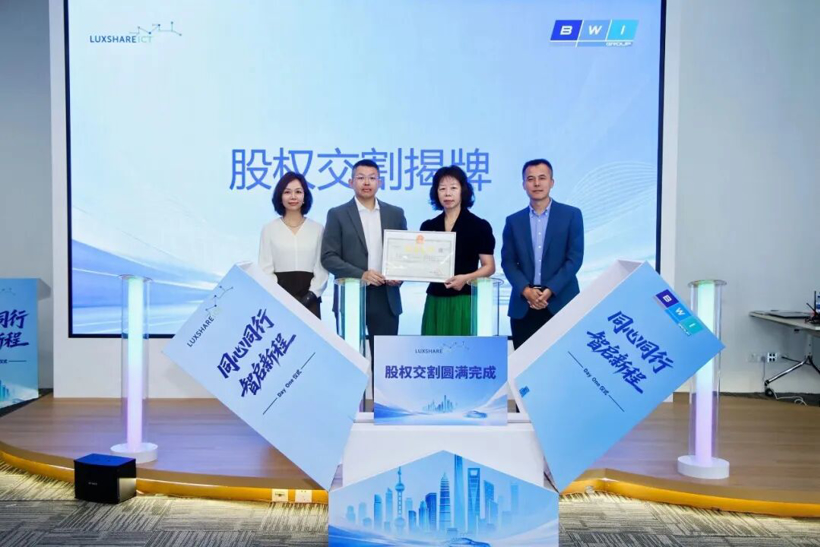
When Apple contract manufacturing colossus Luxshare Precision Industry finalized its 100% equity acquisition of Beijing West Industries (BWI Group) via Zhangjiakou Industrial Investment Holding Group in Shanghai, automotive supply chain desks across Detroit, Wolfsburg, and Tokyo took immediate notice. The transaction formally hands Luxshare complete operational and intellectual property control over one of the industry's most historic chassis and braking suppliers—an enterprise that traces its heritage directly back to General Motors’ Delphi Chassis Systems. Yet, beneath the strategic fanfare lies a precarious reality: consumer electronics contract manufacturers attempting to scale Tier-1 automotive hardware face brutal margin pressures, capital deployment friction, and unforgiving safety liability cycles.
Historically, consumer electronics contract manufacturers operated on rapid hardware product cycles measured in 9 to 12 months, thin operational margins offset by high volume, and commercial architectures dominated by a handful of tech giants. By acquiring BWI Group—which originally bought Delphi's suspension and braking assets in 2009 for approximately $100 million—Luxshare is doubling down on automotive Mechatronics. The modern electric vehicle transition has transformed the legacy chassis from a passive mechanical assembly of springs, dampers, and hydraulic calipers into an integrated domain of steer-by-wire, brake-by-wire, and active electro-hydraulic suspension linked directly to autonomous driving compute clusters. Luxshare’s full buyout of BWI is the clearest sign yet that consumer electronics assemblers are racing to secure core physical execution layers in software-defined vehicles (SDVs), even as automotive margins test their historical return-on-equity profiles.
Engineering the Smart Chassis: From Delphi Heritage to Active Suspension
The core attraction of BWI Group is not merely metal fabrication; it is an extensive IP portfolio in electronically controlled damping, continuous damping control (CDC), active roll control, and Electro-Mechanical Braking (EMB). BWI's flagship MagneRide technology—originally pioneered by Delphi and commercialized across Cadillac, Corvette, Ferrari, and Audi—utilizes magnetorheological fluid whose viscosity changes within milliseconds when exposed to an electromagnetic field. In modern high-end EVs, where heavy battery packs exceeding 500 kg place immense stress on dynamic handling and body motion, active and semi-active suspension systems have shifted from luxury novelties to mission-critical engineering components.
Luxshare plans to marry BWI’s mechanical engineering heritage with its own high-speed data transmission, wire harness, and surface-mount technology (SMT) capabilities. Integrating steer-by-wire (SbW) and brake-by-wire (One-Box and Two-Box electronic stability control systems) into an integrated smart chassis domain controller requires processing high-frequency sensor inputs at sub-millisecond latencies. BWI's contemporary 1-Box electro-hydraulic braking systems consolidate the vacuum booster, master cylinder, and electronic stability control (ESC) into a compact unit capable of generating maximum braking pressure within 150 milliseconds—critical for Level 2+ and Level 3 Advanced Driver Assistance Systems (ADAS) emergency braking interventions.
| Supplier / Technology Suite | Core Architecture Focus | Active Damping / Suspension Tech | Braking-by-Wire Integration | Primary OEM Footprint |
|---|---|---|---|---|
| Luxshare / BWI Group | Smart Chassis Mechatronics & Domain Systems | MagneRide (Magnetorheological) & Dual-Path CDC | 1-Box & 2-Box EMB Systems (iDBC2.0) | Stellantis, Ferrari, BMW, Geely, Dongfeng |
| Bosch Mobility | Vehicle Motion Management (VMM) | Adaptive CDC & Electro-Hydraulic Actuation | Integrated Power Brake (IPB) & ESP-heV | Global (Volkswagen, Mercedes-Benz, BYD, Tesla) |
| Continental (AOS) | Modular Motion Software & Smart Actuators | Air Supply Systems & Semi-Active Damping | MK C1 / MK C2 One-Box Systems | BMW, GM, Ford, Stellantis, NIO |
| ZF Friedrichshafen | cubiX Software & Active Kinematics | Continuous Damping Control (CDC) & sMOTION | Integrated Brake Control (IBC) | Porsche, Lotus, BMW, SAIC Motor |
To challenge established German giants like Bosch and Continental, Luxshare must prove that its mass-production consumer manufacturing playbook can adhere to rigorous automotive functional safety benchmarks, specifically ISO 26262 ASIL-D. While assembling an iPhone requires micro-precision, producing fail-operational chassis actuators that withstand ten years of salt spray, thermal cycling from -40°C to 125°C, and severe mechanical vibration is a completely different engineering discipline. The integration challenge lies in harmonizing BWI's high-pressure hydraulic valves with Luxshare’s high-speed Ethernet harnesses and edge computing controllers without introducing electromagnetic interference or latent software validation faults.
BOM Economics and Tier-1 Supply Chain Realignment
The financial mechanics of smart chassis hardware represent a stark divergence from Luxshare's historical contract manufacturing business. In electronics assembly, margins hover between 4% and 7%, characterized by rapid working capital turns and capital expenditure subsidized or guided by platform customers. Automotive Tier-1 chassis manufacturing, however, demands intense initial tooling capital, multi-year product development validation cycles, and extended warranty liabilities that can take up to seven years to realize full cash returns.
An analysis of a modern smart chassis Bill of Materials (BOM) highlights why Luxshare chose acquisition over organic in-house development. Developing a reliable, fail-safe brake-by-wire actuator and dual-chamber air suspension system from scratch typically requires $300 million to $500 million in cumulative R&D over a five-to-seven-year cycle. By purchasing BWI Group, Luxshare acquires ready-made manufacturing facilities in China, Poland, the Czech Republic, the United Kingdom, and the United States, alongside established commercial contracts.
- Air Suspension Actuators & Compressors: Industry estimates place the complete air suspension BOM (compressor, air reservoirs, valve blocks, height sensors, and dual-chamber struts) at approximately $1,100 to $1,400 per vehicle set for premium configurations, declining to $750 to $900 in high-volume, localized Chinese production tiers.
- Brake-by-Wire (1-Box Architecture): The core electro-hydraulic actuator, integrated brushless DC motor, ECU board, and pressure sensors represent an estimated BOM cost of $180 to $240, yielding gross margins of roughly 15% to 18% for mature global Tier-1s.
- Active Damping Valves (CDC/MagneRide): Precision electromagnetic valves and proprietary fluid formulations command an estimated $25 to $40 per damper corner, with margin preservation highly reliant on proprietary intellectual property and stamping precision.
Luxshare’s strategic objective is vertical integration: replacing BWI's outsourced electronic components, connectors, wiring harnesses, and structural metal stampings with internal Luxshare-manufactured alternatives. If Luxshare can capture 10% to 15% in supply chain efficiencies across BWI's sub-tier purchasing spend, it could transform a historically moderate-margin mechanical supplier into a high-margin integrated vehicle motion division. However, realizing these supply chain synergies requires rationalizing disparate supplier contracts across North America and Europe, where localized union contracts and strict OEM supplier qualification audits restrict rapid procurement shifts.
Competitive Impact: Squeezing Western Tier-1s in their Final Stronghold
The global automotive supply base is witnessing a decisive structural shift. Powertrain electrification has already eroded the historical competitive moats that legacy suppliers held in internal combustion engines, multi-speed transmissions, and exhaust aftertreatment. The chassis and vehicle motion domain remained one of the final defensible bastions for legacy Western Tier-1 suppliers like Bosch, Continental, ZF, and Tenneco. Luxshare’s aggressive institutional backing of BWI directly attacks this stronghold.
For Western incumbent suppliers, the risk is acute margin erosion in the Chinese domestic market and secondary emerging regions. Chinese domestic OEMs such as BYD, Geely, Li Auto, and XPeng have commoditized features that were once exclusive to ultra-luxury German sedans. Semi-active continuous damping is now standard equipment on mass-market vehicles priced under RMB 200,000 ($28,000). By acquiring BWI, Luxshare is positioned to become the domestic supplier of choice for high-volume Chinese OEMs seeking lower-cost, highly responsive chassis engineering partners capable of keeping up with 18-month vehicle design cycles.
Conversely, for decoupled global automakers like Hyundai-Kia and resilient Western OEMs balancing supply chain risk, the emergence of a Chinese-owned BWI presents a double-edged sword. While BWI maintains long-standing supplier relationships with clients like Stellantis, BMW, and Ferrari, its full absorption by a Chinese industrial conglomerate raises supply chain security questions among risk-averse procurement boards in the United States and the European Union. Global OEMs seeking to diversify their Tier-1 exposure may hesitate to award long-term global platform contracts to an entity whose ownership is deeply entwined with the Chinese industrial ecosystem.
The Reality Check: Interrogating the Consumer Tech Chassis Dream
The strategic press releases surrounding the BWI acquisition paint an optimistic picture of rapid synergies, high-tech integration, and seamless automotive scaling. However, cold engineering and economic realities dictate a far more cautious appraisal. The transition from consumer electronics contract assembly to mission-critical automotive chassis manufacturing is fraught with structural friction that capital alone cannot instantly resolve.
First, consider the engineering constraint of automotive validation timelines. In consumer tech, firmware patches can remediate post-launch functional regressions, and hardware iterations operate on annual refresh cycles. In chassis control, a single failure in brake pressure modulation, steer-by-wire rack actuation, or active suspension leveling carries life-safety implications and catastrophic recall liability. The catastrophic failure modes of a brake-by-wire system require multi-layered physical and algorithmic redundancy. BWI's proprietary algorithms and mechanical validation have taken decades to mature; attempting to compress testing schedules to 'China-speed' consumer electronics cycles risks severe quality and safety penalties that could dismantle OEM confidence.
Second, the commercial viability of mass-market active suspension remains fundamentally constrained by cost. While Chinese marketing narratives promote full air suspension and active electromagnetic damping as imminent standard equipment for every family crossover, the real-world manufacturing cost, durability concerns, and warranty replacement rates tell a different story. Air springs degrade rapidly under harsh environmental conditions, with bladder leaks and compressor burnout frequently appearing within four to six years of high-mileage operation. Unless Luxshare can deliver radical materials science breakthroughs that extend the lifecycle of air bladders and dynamic seals without escalating manufacturing costs, widespread adoption will remain capped at premium vehicle tiers, limiting the addressable volume BWI can realistically capture.
Finally, there is the unverified assumption of operational synergy. BWI Group’s production footprint is geographically dispersed across legacy manufacturing sites in Poland, the Czech Republic, the US, and China. Reorganizing cross-border manufacturing operations, harmonizing corporate cultures between an aggressive Shenzhen-style tech assembler and legacy European automotive design centers, and optimizing legacy labor structures rarely proceeds smoothly. Until Luxshare demonstrates an independently audited ability to lift BWI’s operating cash flows without sacrificing product reliability or alienating key Western OEM accounts, this takeover must be viewed as an expensive, capital-intensive experiment rather than an assured competitive victory.
Inside the Physics: Why Consumer Tech Chassis Scaling Faces Steep Production Hurdles
While BWI’s MagneRide technology demonstrates impressive lab performance, scaling magnetorheological fluid dampers to mass production introduces severe thermal and viscosity stability challenges. Automotive validation cycles for ASIL-D safety systems cannot be compressed to consumer electronics timelines; a single brake-by-wire failure mode requires decades of homologation data that Luxshare lacks. If independently validated, this would represent a milestone in supply chain consolidation, but without third-party verification of long-term fatigue life and thermal cycling resilience from -40°C to 125°C, the risk of catastrophic recall liability remains unacceptably high for global OEMs.
Material science constraints further limit widespread adoption; air suspension bladders degrade rapidly under harsh environmental conditions, with compressor burnout appearing within four to six years unless radical materials breakthroughs occur. Western incumbents like Bosch and ZF possess entrenched data moats that make switching partners costly. Unless Luxshare can demonstrate superior yield rates in cross-border manufacturing hubs (Poland, US) without sacrificing safety margins or alienating risk-averse procurement boards, this acquisition remains a capital-intensive experiment rather than an assured competitive victory.
Strategic Outlook and Executive Scenarios
As the integration of BWI Group unfolds over the next 24 to 36 months, the automotive industry will observe whether a consumer tech manufacturing giant can master the demanding economics of chassis mechatronics. Automotive strategists and institutional investors should evaluate the trajectory of this acquisition across three distinct operational scenarios:
Bull Case
Luxshare successfully executes vertical integration across BWI's bill of materials, shaving 12% to 15% off sub-tier component costs using its internal harness, sensor, and electronics production scale. BWI secures dominant smart chassis platform wins across leading Chinese EV brands while retaining its legacy European customer contracts (BMW, Stellantis, Ferrari). Operating margins expand to 10%, establishing Luxshare as a premier, vertically integrated global Tier-0.5 mechatronics supplier capable of competing directly with Bosch and Continental on price and technological delivery speed.
Base Case
BWI maintains stable domestic market share within China’s rapidly growing smart chassis sector, winning new active suspension contracts with domestic OEMs. However, operational restructuring across BWI’s European and North American facilities yields lower-than-anticipated cost savings due to rigid labor structures and regulatory compliance friction. Western OEMs gradually dual-source smart chassis systems, maintaining BWI for legacy mechanical programs while assigning next-generation software-defined steer-by-wire programs to Western Tier-1 incumbents. Overall operating margins stabilize in the mid-single digits.
Bear Case
Rising geopolitical scrutiny in the US and Europe restricts BWI’s market share expansion in Western markets, prompting key North American and European automakers to reallocate future platform contracts to decoupled competitors like ZF or Mando. Concurrently, aggressive domestic price slashing in China's automotive sector compresses BWI’s margins on air suspension and brake-by-wire systems to near breakeven. Luxshare is saddled with heavy capital expenditure demands, extended validation cycles, and rising warranty liabilities, dampening the acquisition’s return on invested capital.
Executive & Investor Takeaways
- Vertical Integration is the True Target: Luxshare’s takeover is not merely about accumulating market share; it is a play to replace mechanical sub-tier suppliers with internal electronics, wire harness, and surface-mount components to extract manufacturing margin.
- Moats in Vehicle Motion are Shrinking: The smart chassis is losing its pure mechanical defensibility, becoming an electronics-driven domain where low-cost, high-speed manufacturing titans can disrupt legacy German Tier-1 dominance.
- Operational and Regulatory Decoupling is Mandatory: BWI's European and North American manufacturing hubs must maintain strict digital and operational compartmentalization to withstand intensifying Western scrutiny over connected vehicle hardware.
- Validation Cycles Trump Marketing Speed: Institutional investors should closely monitor BWI's post-acquisition warranty provisions and safety recall rates; managing automotive fail-operational mechatronics requires discipline that cannot be shortcut by consumer electronics production frameworks.