The global electric vehicle (EV) market is rapidly approaching a technological ceiling. While current lithium-ion (Li-ion) battery chemistries have powered the first wave of EV adoption, their energy density is nearing its theoretical maximum. To achieve the next leap in range and safety, the industry must pivot. That pivot is centering on the latest lithium-metal battery breakthrough.
The Tech: Overcoming the Infamous Dendrite Problem
For decades, material scientists have eyed pure lithium metal as the ultimate anode material due to its ultra-high theoretical specific capacity. However, early attempts at lithium-metal batteries (LMBs) failed due to 'dendrites'—microscopic, needle-like lithium fibers that grow during charge cycles. These dendrites eventually pierce the separator, causing catastrophic short circuits and thermal runaway.
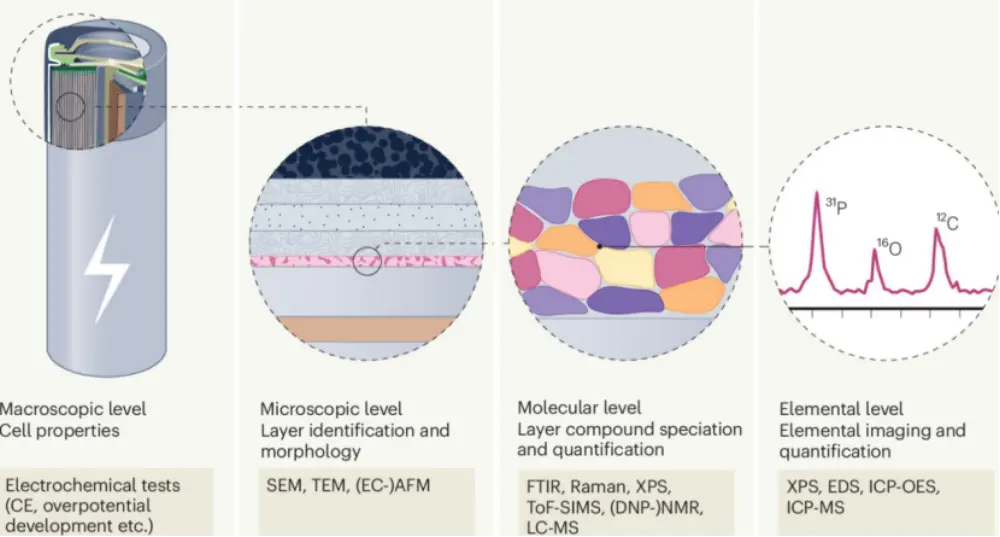
As a market analyst tracking the battery supply chain, this new US-German collaborative research represents a critical paradigm shift. Instead of merely trying to block dendrites mechanically, the joint team engineered a dynamic interface layer. This strategy guides uniform lithium deposition, preventing dendrite formation at the atomic level. This chemical stabilization is exactly what is needed to make solid-state and next-gen liquid LMBs commercially viable.
Lithium-Ion vs. Next-Gen Lithium-Metal
To understand why Western OEM strategists and venture capitalists are closely monitoring this development, we must look at the performance metrics compared to conventional Li-ion chemistry:
| Metric | Standard Li-ion (NMC/LFP) | Next-Gen Lithium-Metal (LMB) |
|---|---|---|
| Energy Density (Cell) | ~250-300 Wh/kg | ~500+ Wh/kg |
| Anode Material | Graphite / Silicon-carbon | Pure Lithium Metal |
| Safety Profile | High (with BMS limits) | Historically Volatile (Solved by new US-German interface) |
| Target EV Range | 400-600 km | 1,000+ km |
Geopolitical and Investment Implications: Bypassing China's Monopoly
Currently, China controls over 70% of the world's lithium-ion refining and battery manufacturing capacity, spearheaded by giants like CATL and BYD. For Western policymakers and automakers (such as Tesla, Ford, and VW), matching China on the manufacturing scale of mature LFP (Lithium Iron Phosphate) chemistry is a massive uphill battle.
This US-German lithium-metal battery breakthrough offers a 'leapfrog' opportunity. By commercializing proprietary next-generation battery IP, Western OEMs can build a highly differentiated premium tier of long-range EVs. This effectively bypasses the commoditized Chinese graphite supply chain entirely, as LMBs utilize pure lithium foils rather than standard graphite anodes.
The Scale-Up Challenge: From Lab to Giga-Factory
However, investors must temper their optimism with manufacturing reality. While the physical chemistry of the US-German discovery is groundbreaking, scaling this to 'China-speed' high-volume production is the ultimate hurdle. Producing microscopic, highly uniform interface coatings requires clean-room environments and specialized roll-to-roll machinery that has not yet been scaled for mass automotive production.
We expect early-stage pilot lines for these lithium-metal cells to emerge in the late 2020s, with premium EV integration targeting 2030. Forward-looking investment portfolios should monitor solid-state and lithium-metal startups that are partnering directly with these US and German academic institutions to secure early licensing rights.