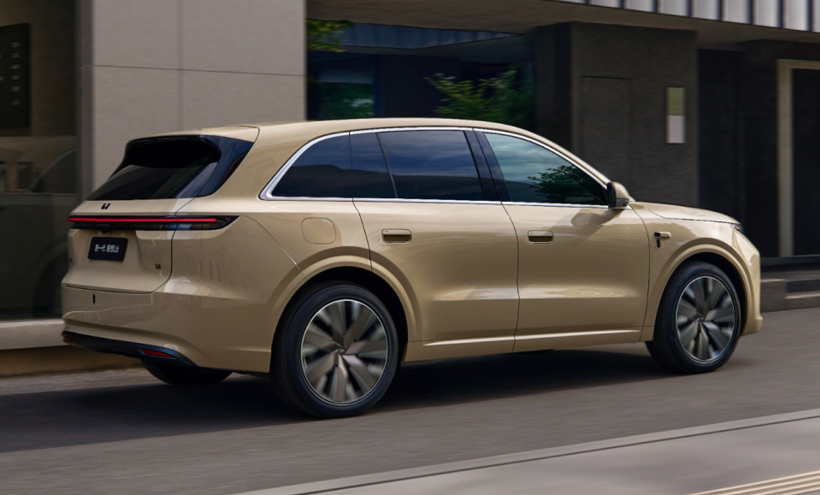
On July 16, 2026, Li Auto officially launched its highly anticipated next-generation Li Auto L6, priced competitively at 249,800 RMB (approximately $34,500 USD). Aimed squarely at younger family buyers, this five-seat smart SUV relies heavily on an optimized Li Auto L6 supply chain to maintain its premium feature set while driving manufacturing cost efficiency. For Western automotive professionals and institutional investors, mapping this supplier network provides invaluable insights into how Chinese OEMs achieve rapid commercialization cycles.
As a market analyst closely tracking China's fast-evolving New Energy Vehicle (NEV) sector, I find the supply chain strategy behind the L6 to be a masterclass in domestic supplier integration. While Western legacy OEMs often face extended validation timelines and fragmented supplier systems, Li Auto's streamlined architecture allows it to introduce technological updates at 'China-speed'. This agility is achieved through close collaboration with top-tier domestic players in batteries, ADAS, and thermal management systems.
The Li Auto L6 Core Supply Chain Mapping
To understand how Li Auto maintains its aggressive margins on the L6, we must look at the key Tier-1 suppliers driving its technical architecture. Below is a structured breakdown of the critical components powering the new L6:
| System Category | Key Suppliers | Strategic Role and Technology Contribution |
|---|---|---|
| Battery Technology | CATL / Sunwoda | Optimized LFP (Lithium Iron Phosphate) chemistry designed for high energy density and enhanced performance in cold climates. |
| ADAS Sensors & Compute | Hesai Technology / Horizon Robotics | Ultra-high-resolution LiDAR and high-performance silicon enabling seamless highway Navigation on Autopilot (NOA). |
| Thermal Management | Sanhua Intelligent Controls | Integrated thermal control loops to optimize cabin climate and battery longevity. |
| Chassis & Suspension | CDC Air Suspension Suppliers | Continuous Damping Control (CDC) components that adapt dynamically to road conditions, elevating ride comfort. |
Smart Tech Integration: Elevating the ADAS Ecosystem
The standout feature of the new L6 is its full-stack intelligent driving capability. Unlike earlier market iterations where Western suppliers dominated safety and driver-assistance systems, the L6 is a showcase of Chinese domestic hardware and software integration. Hesai's LiDAR technology combined with Horizon Robotics' silicon delivers the high-throughput computing power required for urban navigation.
Rather than relying on proprietary, closed-loop systems, Li Auto utilizes co-development models. This approach allows the OEM to rapidly iterate software-defined vehicle features via over-the-air (OTA) updates, bypassing the rigid development cycles traditionally associated with legacy suppliers.
Geopolitical Implications and Global Sourcing Alliances
For international automotive executives, the rise of domestic-heavy supply chains like the Li Auto L6 supply chain is not an indicator of decoupling, but rather a catalyst for strategic cross-border collaboration. Recognizing the efficiency of these supply ecosystems, several global legacy automakers are actively pursuing technology integration and strategic sourcing alliances with Chinese Tier-1 suppliers to optimize their own international EV platforms.
Localized regional footprints and supply chain compliance remain central to these strategies, allowing both domestic and international brands to maintain high standards of market agility and technological resilience amid evolving trade landscapes.