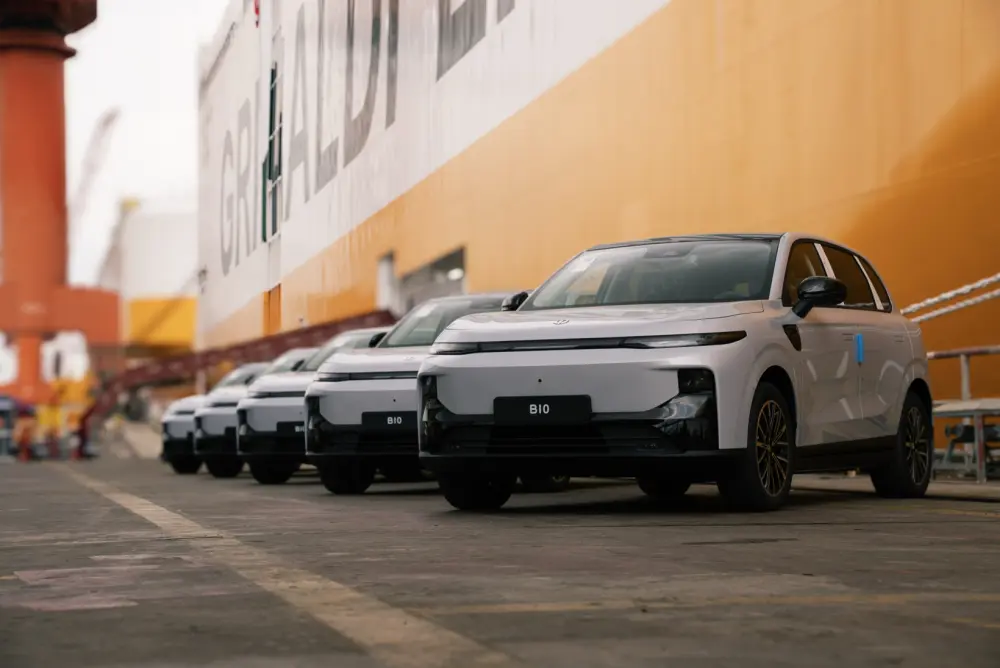
On July 6, Leapmotor officially announced its strategic entry into the Mexican market, marking the formal initiation of its North American expansion. Spearheaded by the highly anticipated Leapmotor B10 SUV, this launch is not just another routine market expansion. Instead, the Leapmotor Mexico expansion represents a masterfully designed tactical bypass of the rising trade barriers separating Chinese electric vehicle (EV) manufacturers from the lucrative North American consumer base.
As a global automotive supply chain analyst tracking Chinese OEM globalization strategies, I see this move as a seminal moment. While Washington and Brussels construct high tariff walls to keep out highly competitive Chinese EVs, players like Leapmotor are using capital partnerships to slip through the side door. By partnering with legacy automotive giant Stellantis, Leapmotor is decoupling its manufacturing and distribution risks from the geopolitical crosshairs of Beijing.
The Strategic Playbook: Leveraging the Stellantis JV
The core engine behind the Leapmotor Mexico expansion is Leapmotor International, a 51:49 Stellantis-led joint venture. This alliance grants Leapmotor exclusive rights to manufacture, export, and sell Leapmotor products outside of Greater China. For a fast-growing but capital-constrained Chinese startup, this is an unprecedented shortcut to global distribution.
Rather than spending years establishing dealer networks, building regulatory compliance frameworks, and navigating localized marketing in Latin America, Leapmotor gains immediate access to Stellantis’ legacy infrastructure. Stellantis possesses deep industrial roots in Mexico, operating major assembly and engine plants in Saltillo and Toluca. This operational leverage is crucial for what comes next.
Dodging Tariffs: The Mexico Backdoor to North America
The geopolitical significance of targeting Mexico cannot be overstated. With the United States imposing 100% tariffs on Chinese-made EVs under Section 301, direct export from China to the US is effectively dead. However, Mexico offers a unique dual-purpose geography:
- The Domestic Latin American Market: Mexico itself is experiencing a surge in EV demand, driven by fleet operators and tech-focused consumers looking for affordable luxury.
- The USMCA Launchpad: Under the United States-Mexico-Canada Agreement (USMCA), vehicles assembled in Mexico that meet regional value content (RVC) thresholds can enter the US duty-free.
The following table illustrates the strategic advantages Leapmotor achieves by utilizing its Stellantis alliance in Mexico compared to direct Chinese export models:
| Metric / Scenario | Direct Chinese Export Model (e.g., BYD Direct) | Leapmotor Stellantis Mexico Strategy |
|---|---|---|
| US Import Tariffs | 100%+ | 2.5% (or 0% if USMCA RVC metrics are met via localized assembly) |
| Logistics & Infrastructure | High cost, dependent on scarce Ro-Ro shipping vessels | Leverages Stellantis' existing global shipping, rail, and port agreements |
| Political Scrutiny | Extremely High (constant target for legislative sanctions) | Moderate (shielded under the umbrella of a Western conglomerate) |
The Hero Vehicle: Why the Leapmotor B10 Fits Mexico Perfectly
The initial vanguard of the Leapmotor Mexico expansion is the Leapmotor B10, an all-electric compact SUV built on the advanced LEAP3.0 platform. Unveiled globally with European standards in mind, the B10 integrates state-of-the-art ADAS (Advanced Driver Assistance Systems), a highly digitalized smart cockpit, and cost-efficient LFP battery architecture.
In Mexico, where the premium EV segment is dominated by highly priced Western imports, the B10 provides a compelling competitive dynamic: cutting-edge, software-defined architecture at a mainstream price point. This allows Stellantis to plug a massive gap in its own low-cost EV portfolio, countering cheap entry-level options from rivals like BYD and JAC, which are already rapidly expanding across Central and South America.
Strategic Outlook: The Geopolitical Game of Cat and Mouse
Western investors should observe this development with keen interest. While the US government remains highly vigilant about "Chinese backdoor automotive imports" through Mexico—frequently proposing adjustments to USMCA rules of origin—completely blocking a vehicle produced or distributed under a Western corporate entity like Stellantis is a diplomatic and economic minefield.
The Leapmotor Mexico expansion is not merely a regional sales push; it is a live-fire test of whether global joint ventures can successfully neutralize trade protectionism. If the B10 achieves high-volume adoption in Mexico, expect other legacy giants to scramble for similar partnerships with tier-2 Chinese EV innovators, creating a new paradigm of global automotive consolidation.