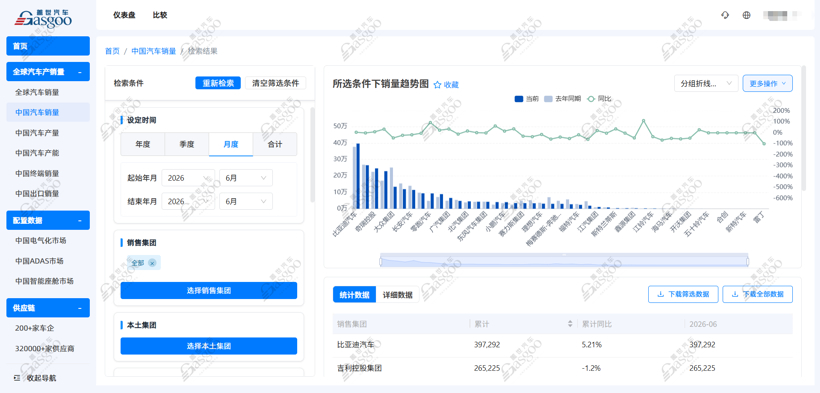
The Chinese automotive landscape is undergoing a profound structural realignment. According to the latest June 2026 data from the Gasgoo Automotive Research Institute, domestic manufacturers continue to expand their market share while traditional joint ventures experience contraction. The most notable milestone of this period is that Leapmotor has officially surpassed Tesla in monthly passenger vehicle sales within the mainland market, driven by robust demand and highly competitive pricing structures. This shift highlights the efficacy of the Leapmotor China sales 2026 trajectory and signals a broader evolution in consumer preferences.
The June 2026 Sales Realignment: Domestic Rise and Strategic Milestones
The theme of the June 2026 sales figures is clear: domestic brands are surging forward while traditional joint ventures lose ground. BYD continues to lead the entire market with an impressive volume of nearly 400,000 units, demonstrating the massive scale of its vertically integrated supply chain. However, the most significant competitive shift occurred in the tier just below, where Leapmotor's monthly volume eclipsed Tesla's local deliveries.
This achievement is not an anomaly but the result of steady, strategic product expansions and competitive positioning in the mid-to-high-end smart EV segments. The table below outlines the estimated performance of key players during this pivotal month:
| OEM Group | Estimated June 2026 Sales (China) | Market Dynamic |
|---|---|---|
| BYD Group | ~400,000 | Dominant market leader; strong plug-in hybrid and BEV mix. |
| Leapmotor | ~30,000+ | Record high, surpassing Tesla via aggressive mid-market pricing. |
| Tesla China | ~28,000 | Stable but facing intense domestic competition and aging product lines. |
Analyzing the Leapmotor Strategy: Technology Integration and the Stellantis Alliance
Leapmotor's ascent provides critical competitive intelligence for global automotive executives. Unlike other startups that have struggled with liquidity, Leapmotor has solidified its operations through high-level cross-border collaboration. Its strategic partnership with Stellantis (which holds a significant stake in Leapmotor International) has redefined how Chinese technology can scale globally.
Rather than relying solely on domestic market penetration, this alliance acts as a vehicle for strategic localization and localized regional footprint development. By utilizing Stellantis's vast global manufacturing and distribution infrastructure, the joint venture is well-positioned to maintain strict supply chain compliance across various international markets. This collaborative blueprint allows both partners to leverage global supplier expertise and fast-track technology integration, establishing a resilient path forward amidst evolving global trade frameworks.
Strategic Implications for Western Investors and OEMs
For Western investment firms and OEMs, Leapmotor's success in overtaking Tesla in monthly domestic sales serves as a clear warning regarding competitive speed. Domestic Chinese players are introducing advanced ADAS capabilities, LFP battery innovations, and sophisticated smart-cabin architectures at price points that traditional legacy platforms struggle to match.
To remain competitive, global OEMs must transition from a model of isolated development to one of strategic sourcing and technical integration. As demonstrated by the Stellantis-Leapmotor alliance, the future of the automotive sector lies in agile, mutually beneficial partnerships that prioritize local value creation and rapid-to-market product cycles.