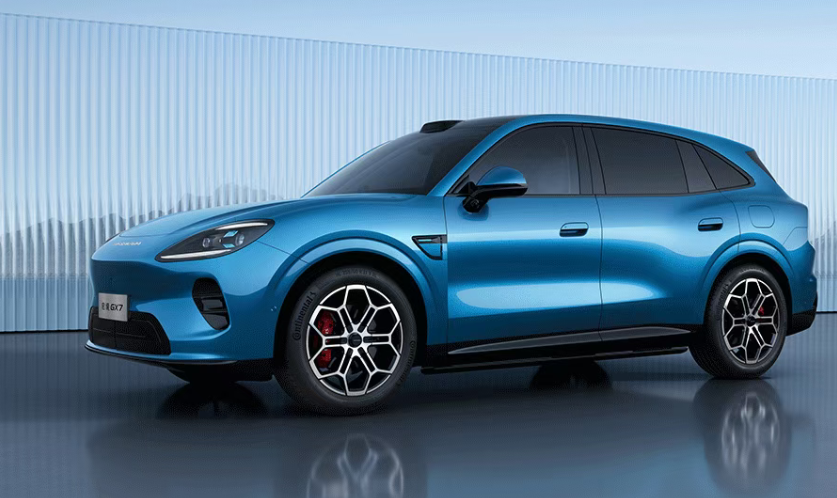
As China accelerates its roadmap toward highly automated mobility, the implementation of a native L3 autonomous driving architecture in production vehicles has shifted from a futuristic aspiration to an immediate market reality. In a recent disclosure by Liu Jiaming, CEO of intelligent EV newcomer Qijing Auto, the brand's upcoming mid-to-large smart SUV, the GX7, will feature an L3-ready platform architecture right out of the box. This move highlights a broader industry shift where Chinese automakers are designing vehicles from the ground up to accommodate dual-redundant safety systems, advanced sensor suites, and high-performance computing units capable of true conditional automated driving.
The Technical Foundation of a True L3 Autonomous Driving Architecture
To understand the significance of Qijing Auto's announcement, it is crucial to distinguish between Level 2+ 'hands-on' systems and Level 3 'eyes-off' conditional automation. A native L3 autonomous driving architecture is not simply a software update or an extra lidar sensor; it requires structural, hardware-level redundancies to ensure the vehicle can safely bring itself to a stop if any critical system fails.
According to industry standards, a robust L3 platform must incorporate the following core redundant layers:
- Redundant Power Supply: Dual independent power circuits to prevent sudden loss of control in the event of an electrical failure.
- Redundant Braking and Steering: Secondary actuators (such as dual-motor electronic power steering and decoupled electronic braking systems) that can execute emergency maneuvers independently.
- Sensor Diversity: A multi-modal sensor matrix combining high-resolution LiDAR, millimeter-wave radars, and ultra-high-definition cameras for reliable performance under diverse weather and lighting conditions.
- High-Performance Compute (HPC): Dual-chip processing setups capable of real-time sensor fusion, high-speed localization, and path planning with zero-latency failover capability.
Comparing Architectures: Standard L2+ vs. Native L3
The transition from driver-assist systems to conditional automation changes the liability framework and, consequently, the underlying automotive engineering. The table below outlines how these two paradigms differ:
| Architecture Attribute | Standard L2+ (Driver-Assisted) | Native L3 (Conditional Automation) |
|---|---|---|
| Primary Liability | Human Driver | System (When Engaged) |
| Safety Redundancies | Single-channel (Human is backup) | Dual-channel (System has secondary backup) |
| Sensory Setup | Camera-heavy, optional radar | LiDAR + Radar + Camera Sensor Fusion |
| Compute Power (TOPS) | Typically 10 - 250 TOPS | 500+ TOPS (Dual-chip redundancy) |
Geopolitical & Industry Strategic Implications
For global OEMs and Tier 1 suppliers, the rapid deployment of L3 architectures in mid-priced Chinese SUVs represents both a competitive pressure and an opportunity for cross-border collaboration. While Western automakers have taken a highly cautious, regulatory-led approach—often limiting Level 3 functionality to ultra-premium models under very specific highway conditions—Chinese manufacturers are leveraging localized supply chain agility to make these architectures standard in mid-market offerings.
Rather than viewing this as a technological divide, international automotive leaders are increasingly engaging in technology integration and strategic sourcing alliances. By partnering with leading global suppliers of redundant braking systems, functional safety microcontrollers, and localized high-definition mapping services, brands can build supply chain compliance and deliver high-value, safe intelligent systems tailored to regional regulatory environments worldwide.