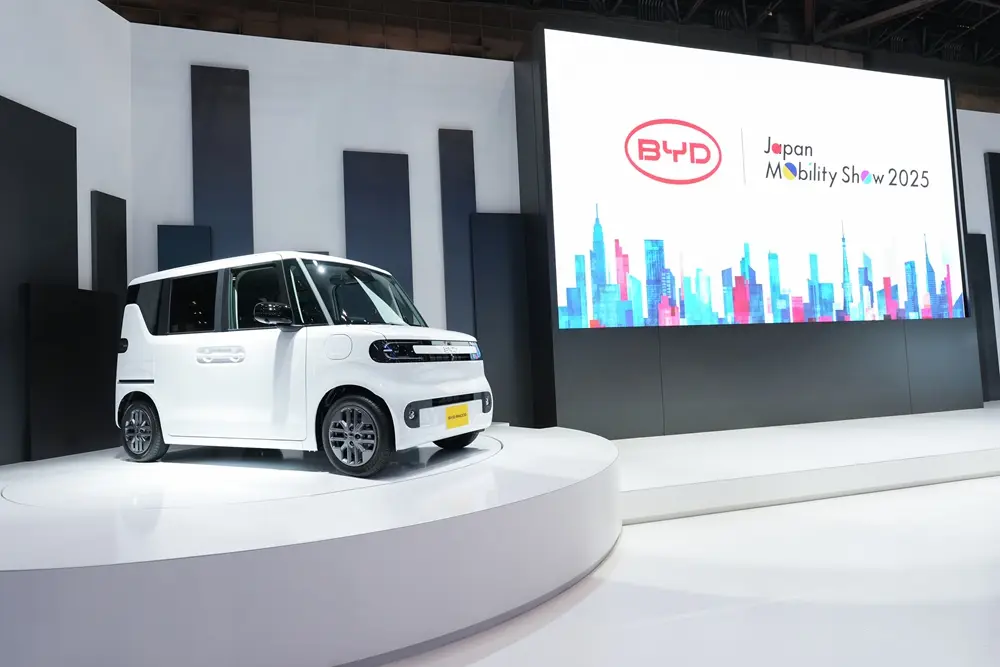
Japan's automotive market has long been considered an impenetrable fortress for foreign manufacturers. Yet, a silent revolution is brewing in the country's most beloved vehicle category: the micro-sized Kei car. As domestic legacy giants hesitate, Chinese EV heavyweights BYD and Chery are stepping directly into the void, aiming to redefine the market for Japanese electric Kei cars with aggressive pricing and superior technology.
The Strategic Pivot: Why Micro-EVs Make Sense in Japan
For decades, Western OEMs failed to penetrate Japan because they overlooked the unique structural realities of Japanese roads. Narrow streets, high fuel costs, and tight parking spaces birthed the Kei car—a distinct class of lightweight, small-engine vehicles restricted in dimension and power. Today, Kei cars make up roughly 40% of all new car sales in Japan.
From an analytical standpoint, these vehicles are the perfect candidates for electrification. Because they are primarily used for short-range urban commuting and daily chores, they do not require massive, expensive battery packs. A range of 150 to 200 kilometers is more than sufficient, allowing manufacturers to keep production costs low and retail prices highly competitive.
BYD and Chery Move on Japan's Home Turf
The entry of Chinese players into this insular ecosystem is a watershed moment. Last year, BYD turned heads at the Japan Mobility Show by showcasing the 'Racco', a boxy, ultra-efficient electric micro-car designed specifically to navigate Japan's strict urban regulations. BYD plans to bring competitive small-format EVs to the Japanese market to challenge domestic options like the Nissan Sakura.
Not to be outdone, Chery Automobile is preparing to deploy its own mini-EV assets, leveraging its success with entry-level electric models in China. By combining advanced Lithium Iron Phosphate (LFP) battery technology with robust digital cockpits, Chinese OEMs are offering a value proposition that Japanese automakers are struggling to match at scale.
| Model / Competitor | Origin | Key Advantage | Market Positioning |
|---|---|---|---|
| Nissan Sakura | Japan | Strong domestic dealer network | Current market leader |
| BYD Racco / Compact EV | China | Advanced ADAS, vertical LFP integration | Tech-forward premium-niche micro |
| Chery Mini-EV Variants | China | Ultra-low cost manufacturing baseline | Budget-conscious urban commuters |
What This Means for Global Investors and Western OEMs
For global automotive strategists, this is not just a localized turf war; it is a critical test of Chinese adaptation strategies. If BYD and Chery can successfully build brand equity and secure sales in Japan—a market historically hostile to foreign brands—it proves that Chinese EV software and hardware integration can overcome virtually any cultural or protectionist barrier.
Furthermore, it highlights a persistent vulnerability among Japanese legacy OEMs like Toyota and Honda, who have historically prioritized hybrid systems over pure battery electric vehicles (BEVs). By failing to aggressively electrify their iconic Kei car lineups early, they have left the gate wide open for agile Chinese competitors.
The Roadblocks: Brand Loyalty and Geopolitics
Despite their technical superiority, Chinese OEMs face steep headwinds in Japan. Domestic brand loyalty is incredibly high, and rising geopolitical tensions in East Asia could fuel consumer reluctance to buy Chinese-branded passenger cars. To counter this, Chinese companies are focusing heavily on localized safety certifications and transparent customer service models to establish the trust required to succeed in Japan.