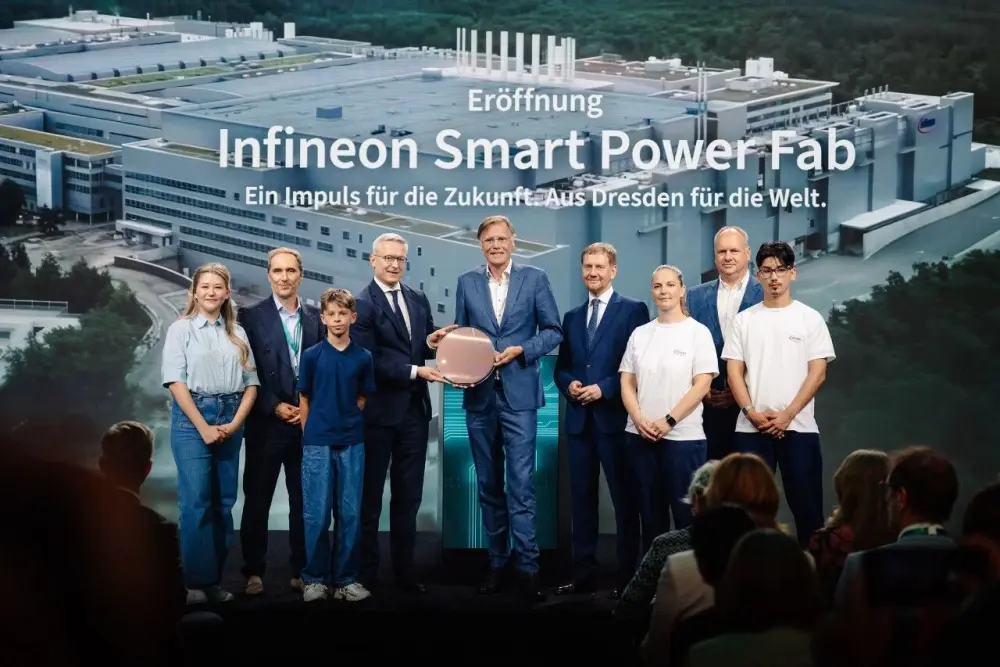
Infineon, a leading semiconductor manufacturer, has announced the early commissioning of its new silicon carbide (SiC) wafer plant in Dresden, Germany. This facility, with a total investment of 5 billion euros, is set to revolutionize the semiconductor industry, particularly in the context of electric vehicles (EVs) and autonomous driving technologies.
Overview of the Dresden SiC Wafer Plant
The Dresden plant, which was initially scheduled to begin operations in 2024, has been brought online ahead of schedule. This strategic move by Infineon underscores the company's commitment to meeting the growing demand for high-efficiency semiconductors, especially in the rapidly evolving EV and autonomous driving sectors.
Impact on the EV and Autonomous Driving Industries
The early commissioning of the Dresden plant is expected to have a profound impact on the global EV and autonomous driving markets. Silicon carbide wafers offer superior performance in terms of efficiency, power density, and thermal management compared to traditional silicon-based semiconductors. These advantages are crucial for the development of next-generation EVs and autonomous driving systems, which require high-performance, reliable, and energy-efficient components.
Key Benefits of SiC Wafers
- Higher efficiency, reducing energy losses and improving range in EVs
- Better thermal management, enabling more compact and lightweight designs
- Enhanced power density, supporting advanced features in autonomous driving
Global Media Coverage and Industry Reactions
Recent articles from global media outlets, such as Reuters and Bloomberg, confirm the significance of this development. The industry is welcoming this move, as it addresses the critical need for advanced semiconductor solutions in the automotive sector.
Strategic Implications for Western Investors and OEMs
For Western investors and original equipment manufacturers (OEMs), the early commissioning of the Dresden plant represents a strategic opportunity. It provides access to cutting-edge semiconductor technology, enabling them to stay ahead of the curve in the highly competitive EV and autonomous driving markets. Additionally, it offers a chance to leverage the 'China-speed' innovation, ensuring that they are not left behind in the race for technological leadership.
Conclusion
Infineon's early commissioning of its Dresden SiC wafer plant is a testament to the company's foresight and commitment to innovation. This move not only enhances the capabilities of the semiconductor industry but also positions Infineon as a key player in the global transition to electric and autonomous vehicles. For Western investors and OEMs, this development is a clear signal to adapt and invest in the latest semiconductor technologies to remain competitive in the fast-paced automotive market.