Over the past six years, the expansion of the Huawei intelligent driving system across the Chinese automotive ecosystem has sparked an intense industry-wide debate over who owns the 'soul' of the software-defined vehicle (SDV). What began in 2021 as a defensive stance by original equipment manufacturers (OEMs) anxious about relinquishing software control to a technology giant has evolved. Today, it is a sophisticated matrix of strategic technology integration and cross-border collaboration.
The Evolution of the 'Soul' Debate: From Friction to Co-Existence
As a Shanghai-based automotive technology analyst, I have observed the shifting dynamics between technology suppliers and legacy manufacturers. In 2021, the leadership of major domestic automotive groups famously declared that they could not accept a single tech partner providing the 'mind and soul' of their vehicles, leaving them as mere 'bodies'. However, by 2026, the competitive reality of the Chinese market has altered this calculus.
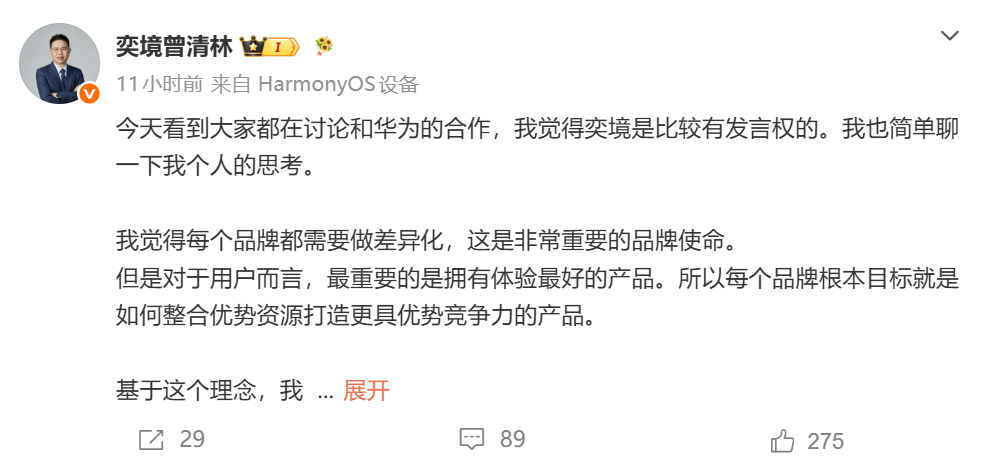
Recent clarifying statements from premium electric vehicle brands, such as Changan's Avatr, highlight this maturity. While initial industry speculation pointed to a complete outsourcing of brand identity, the practical application of the Huawei intelligent driving system demonstrates that partnerships are highly customizable. Rather than a total takeover, contemporary alliances focus on co-development, enabling brands to maintain their unique product definitions while utilizing world-class advanced driver-assistance systems (ADAS).
Understanding the Three Tiers of Huawei's Automotive Partnerships
To navigate this landscape, analysts categorize Huawei's engagement with automakers into three distinct business models. This structured approach allows OEMs to choose exactly how much of their 'soul' they want to co-develop:
| Cooperation Model | OEM Control Level | Huawei Role | Primary Examples |
|---|---|---|---|
| Tier 1 Supplier | High (OEM-led design) | Component provider (sensors, lidar, chips) | Broad selection of domestic and global OEMs |
| Huawei Inside (HI) | Medium-High (Joint platform) | Full intelligent vehicle stack integration | Avatr (Changan), Arcfox (BAIC) |
| HIMA (Smart Selection) | Medium-Low (Huawei-led) | End-to-end design, software, and retail ecosystem | Aito (Seres), Luxeed (Chery), Stelato (BAIC) |
The Strategic Middle Ground: The HI Model
The Huawei Inside (HI) model has emerged as a particularly attractive option for established manufacturers. By utilizing this framework, OEMs like Changan retain ownership of vehicle platform engineering, manufacturing, and regulatory compliance. Simultaneously, they integrate the specialized Huawei intelligent driving system to compete with fast-moving startup rivals.
Why Global OEMs Are Embracing Strategic Localization
The strategic shift toward local ADAS partnerships is not confined to Chinese domestic brands. Global OEMs operating in the Chinese market are recognizing that maintaining an isolated, proprietary software stack can lead to delayed releases and misaligned consumer features. To remain competitive, international automakers are exploring localized technology integration and strategic sourcing alliances.
- Supply Chain Compliance: Utilizing local intelligent driving hardware and localized mapping data ensures compliance with China's strict data security and localization frameworks.
- Time-to-Market Adaptability: Partnering with established software suppliers allows legacy brands to bypass lengthy R&D cycles, ensuring their localized products match the high technological expectations of Chinese consumers.
- Synergy in Research: By blending Western vehicle safety engineering with localized smart-driving solutions, global players can develop highly resilient, regionally optimized vehicle architectures.
Looking Forward: A Symbiotic Ecosystem
Ultimately, the narrative of a tech provider 'stealing' the automotive industry's soul has given way to a more pragmatic understanding. Modern smart vehicles require a level of software and hardware synchronization that traditional suppliers cannot easily build alone. By embracing tiered cooperation models, automakers are finding that they do not have to lose their identity to achieve technological excellence; instead, they are creating a shared, highly efficient ecosystem where speed, safety, and innovation coexist.