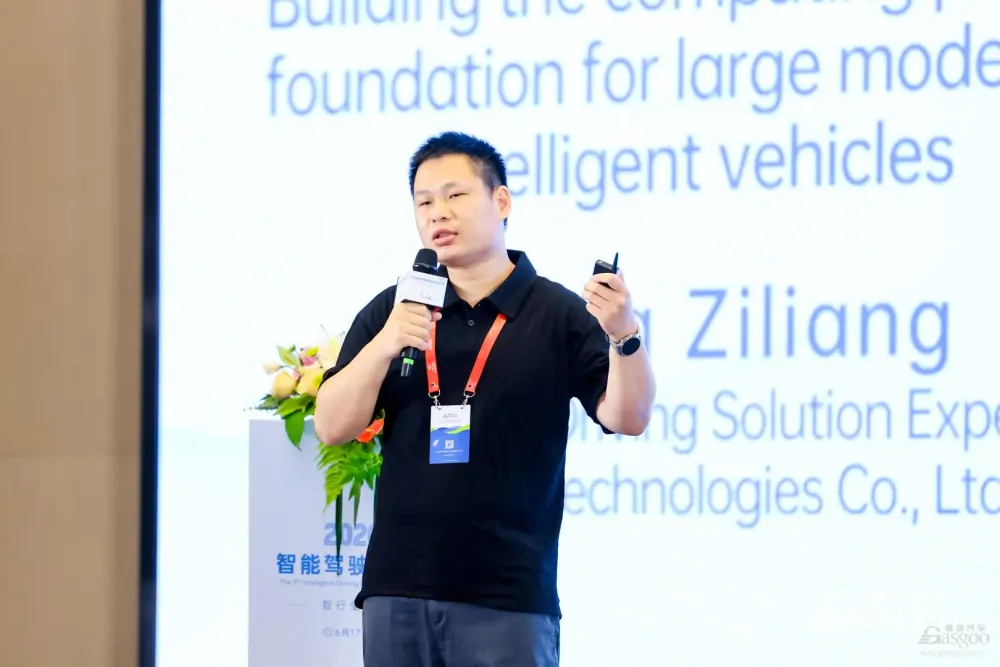
On June 17, 2026, at the '9th Intelligent Driving and Overseas Expansion Conference' hosted by Gasgoo, Huang Ziliang, an expert in intelligent driving solutions at Huawei, highlighted a significant shift in the autonomous driving industry. According to Huang, the industry is now entering an era where computational power is the key differentiator.
The Shift Towards Computational Power
Huang Ziliang's statement underscores a critical trend in the autonomous driving sector. As the industry moves towards higher levels of automation, such as L3 and beyond, the need for robust computational capabilities becomes more pronounced. This shift is driven by the increasing complexity of autonomous driving systems, which require powerful processors to handle real-time data processing, decision-making, and machine learning tasks.
Industry Implications
This transition has several implications for both Western and Chinese companies in the EV and autonomous driving space. For one, it signals a new frontier in the race for technological supremacy. Companies that can develop and integrate advanced computational platforms will have a significant advantage in the market.
Key Players and Their Strategies
- Huawei: With its expertise in telecommunications and AI, Huawei is positioning itself as a leader in providing high-performance computing solutions for autonomous vehicles.
- BYD and NIO: These leading Chinese EV manufacturers are also investing heavily in computational power to stay ahead in the autonomous driving race.
- Western OEMs (Tesla, Ford, VW): They are not far behind, with Tesla already integrating custom AI chips in their vehicles and other OEMs following suit.
Global Market Dynamics
The global market for autonomous driving is expected to grow exponentially in the coming years. As computational power becomes a key differentiator, companies that can leverage this technology will be better positioned to capture market share. This is particularly true in the Chinese market, where rapid innovation and government support are driving the adoption of advanced autonomous driving technologies.
Conclusion
The shift towards computational power in autonomous driving, as highlighted by Huawei's expert, marks a significant turning point in the industry. For Western investors and auto industry professionals, staying informed about these developments is crucial to making strategic decisions and capitalizing on emerging opportunities.