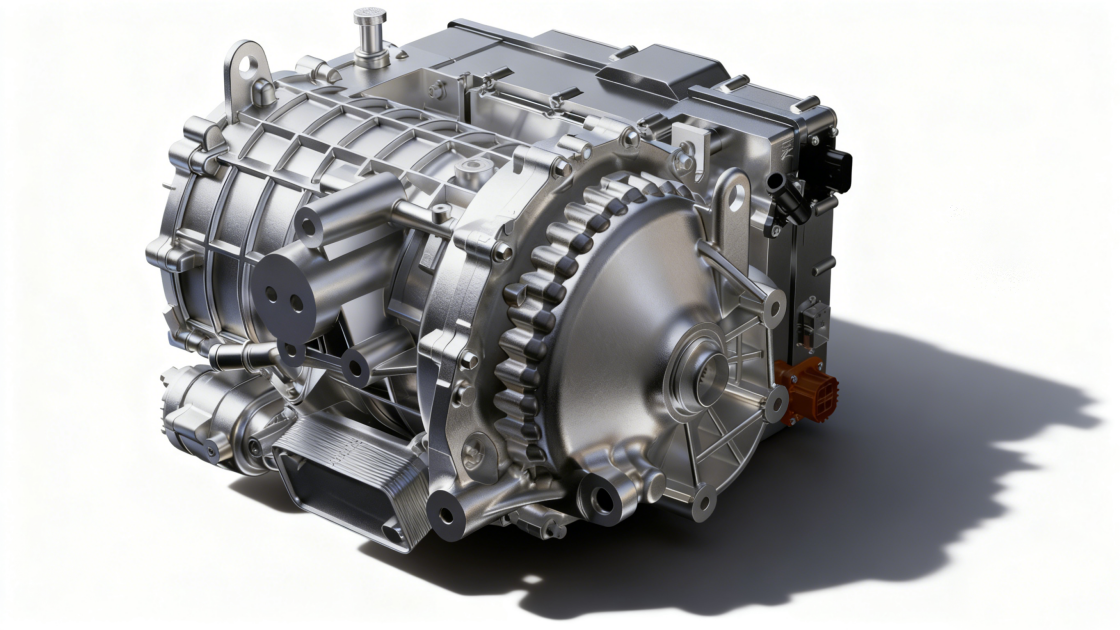
As the global electric vehicle sector shifts toward highly integrated, space-efficient propulsion systems, the mass production of the next-generation high-power coaxial e-drive by Chongqing Tsingshan Industrial marks a major structural pivot in China's domestic supply chain. This development highlights how domestic suppliers are rapidly climbing the value chain, transitioning from basic components to highly complex, integrated high-performance systems.
Understanding the Shift: What is a Coaxial E-Drive?
In traditional electric drive layouts, the motor shaft and the drive axle are often offset, requiring parallel shaft gearboxes that consume valuable packaging space. A high-power coaxial e-drive resolves this by aligning the motor, planetary reduction gears, and the differential along a single concentric axis. This concentric layout offers several advantages for modern premium EV architectures:
- Space Optimization: By consolidating components onto a single axis, the physical footprint of the e-drive is drastically reduced. This allows OEMs to maximize cabin space, improve front trunk (frunk) volume, or optimize suspension geometries.
- Weight Reduction & Efficiency: Eliminating intermediate shafts reduces overall material weight and mechanical friction losses, leading to improved driving range.
- Symmetrical Weight Distribution: Coaxial alignment naturally balances the weight distribution across the drive axle, enhancing high-speed vehicle dynamics and stability.
Supply Chain Significance: Winning Nominations from Avatr and Seres
Securing project nominations from high-profile brands like Avatr and Seres is a strong validation of Chongqing Tsingshan’s technology. Avatr is a premium joint venture backed by Changan Automobile, CATL, and Huawei, focusing on high-performance intelligent driving. Similarly, Seres—famous for its close collaborative ecosystem with Huawei (powering the Aito lineup)—requires highly demanding powertrain inputs to meet the performance expectations of premium consumers.
For Western analysts and investors, this represents a broader trend: Chinese tier-1 suppliers are increasingly capable of replacing global legacy suppliers in the premium segment. Traditionally, high-power integrated drive units for performance luxury models were dominated by global players like BorgWarner, Bosch, or Magna. The domestic scaling of these advanced units indicates mature quality assurance and rapid technology integration capabilities.
Comparing Powertrain Architectures
The transition to coaxial designs represents a distinct engineering path compared to parallel-shaft layouts. Below is an overview of how these architectures compare:
| Architecture Type | Packaging Efficiency | Weight & Part Count | Key Use Case |
|---|---|---|---|
| Coaxial E-Drive (e.g., Tsingshan) | Excellent (Ultra-compact, concentric axis) | Lower (Fewer shafts and housing materials) | Premium multi-motor performance EVs, space-constrained front axles |
| Parallel Shaft E-Drive | Moderate (Offset gear arrangement requires more space) | Higher (More robust housing needed for offset forces) | Standard single-motor commuter EVs where engine bay space is flexible |
Strategic Implications for Global OEMs and Suppliers
From a global market perspective, this milestone underlines the intense competition in the powertrain sector. Western legacy OEMs and Tier-1 suppliers are actively engaging in global supplier expertise and technology integration to maintain competitive cost structures. As Chinese suppliers scale their high-power coaxial e-drive solutions, they are driving down the cost curve of performance EV architectures globally.
Rather than viewing these developments purely through a lens of regional dominance, forward-thinking global automotive players are recognizing the value of cross-border collaboration and strategic sourcing alliances. To deliver top-tier performance at competitive price points, leveraging mature, scaled, and highly validated localized supply chains in Asia is becoming a standard industry framework.