When China's third-largest battery maker commits over $1.25 billion (1.1 billion euros) directly into European industrial soil, the global automotive establishment should pause before celebrating a victory for Western localization. Gotion High-Tech's capital injection into Volkswagen Group's PowerCo Gigafactory in Sagunto (Valencia), Spain, is not merely another industrial joint venture. It marks an unprecedented inflection point where a top-tier Chinese electrochemical pioneer takes equity and operational ownership inside the crown jewels of Europe's largest automotive conglomerate.
For decades, European industrial policy operated on the premise that strategic joint ventures in China would transfer production expertise to domestic Western giants. The Gotion-PowerCo transaction turns that historical dynamic completely on its head. Today, Wolfsburg is not exporting technology; it is importing balance sheet leverage, cathode manufacturing know-how, and process chemistry from Hefei to prevent its multi-billion-dollar unified cell strategy from stalling out amidst staggering capital expenditures and unyielding European energy costs.
The Unified Cell Gamble: Inside Volkswagen's Valencia Architecture
To understand the mechanics of this $1.25 billion capital injection, one must dissect the engineering architecture of Volkswagen's unified prismatic cell. Unveiled during Volkswagen's Power Day, the unified cell concept was engineered to slash battery pack costs across the group by up to 50% in entry-level segments and 30% across volume segments. Yet, designing a standardized physical enclosure is trivial compared to stabilizing mass-production yields across diverse chemistries ranging from cost-sensitive Lithium Iron Phosphate (LFP) to performance-oriented Nickel Manganese Cobalt (NMC).
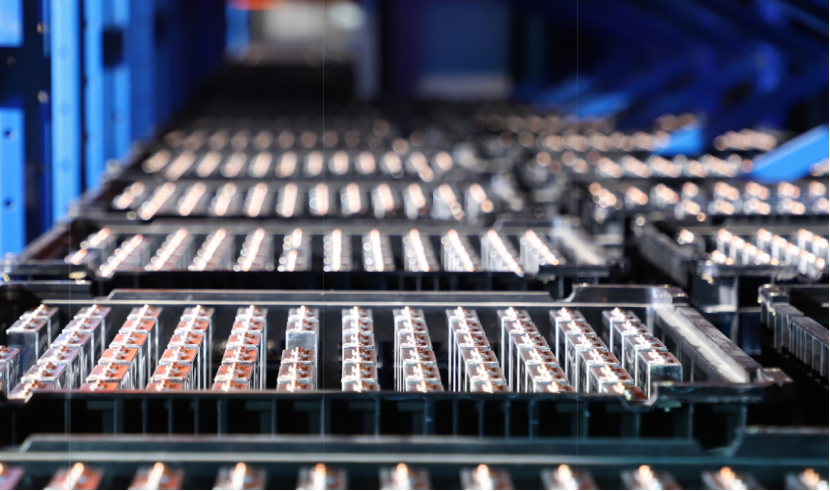
Gotion High-Tech, in which Volkswagen holds an approximate 26.47% equity stake as its largest single shareholder, has functioned as the technological architect behind Volkswagen's standard cell industrialization. The Sagunto gigafactory, engineered for an initial operational capacity of 40 GWh with expansion potential up to 60 GWh, requires advanced high-speed winding, laser welding, and high-precision slurry dispersion. In our analysis of European battery pilot lines, Western OEMs have continuously struggled with scrap rates exceeding 15% during preliminary ramp phases. Gotion brings battle-tested roll-to-roll slitting precision and electrolyte wetting technologies refined across tens of gigawatt-hours in Anhui and Jiangsu.
| Metric / Specification | Gotion / PowerCo Sagunto (Spain) | CATL Debrecen (Hungary) | ACC Billy-Berclau (Stellantis/Mercedes) | Northvolt Ett (Sweden) |
|---|---|---|---|---|
| Planned Nameplate Capacity | 40 GWh (expandable to 60 GWh) | 100 GWh | 40 GWh (Phase 1: 13.4 GWh) | 16 GWh (Permitted to 60 GWh) |
| Primary Chemistry Focus | Unified Prismatic (LFP & High-Mn) | Prismatic / Cell-to-Pack (NMC & LFP) | Prismatic Nickel-Rich NMC | Prismatic High-Nickel NMC |
| Estimated Capital Expenditure | €3.0B – €3.5B ($3.3B – $3.8B) | €7.3B ($7.9B) | €7.0B across 3 sites | ~$4.5B invested to date |
| Target Pack-Level Cost ($/kWh) | $78 – $84 (LFP unified) | $72 – $76 (Shenxing LFP) | $98 – $112 (NMC baseline) | $110 – $130 (Early yield penalty) |
| Supply Chain Autonomy | Chinese Precursor / Local Assembly | Integrated Chinese Supply Chain | European / Non-Chinese Mandated | Local European Circular Model |
| Mass Production Target Date | 2026 | 2025–2026 | Operational (Scaling) | Operational (Severe bottleneck) |
The engineering comparison above underscores a severe operational reality. While indigenous European initiatives like Northvolt and Automotive Cells Company (ACC) battle persistent yield degradation and ballooning capital expenditure, Gotion-backed facilities benefit directly from mature Chinese manufacturing execution systems (MES). By standardizing the Valencia line on Gotion's prismatic cell manufacturing blueprints, Volkswagen hedges against the execution disasters that have crippled purely Western battery startups.
Supply Chain Realpolitik: Sourcing, Bill of Materials, and Margins
Behind the headline valuation of $1.25 billion lies a complex web of Tier-1 chemical supply chains that remain firmly anchored in East Asia. A typical 60 kWh LFP battery pack manufactured under Western cost models currently lands around $95 to $105 per kilowatt-hour at the pack level, primarily inflated by local European electricity tariffs, construction amortization, and fragmented precursor supply chains. Gotion's industrial intervention is explicitly structured to push Valencia's unified cell manufacturing down toward the $80/kWh threshold.
Consider the Bill of Materials (BOM) for the Sagunto plant's unified cells. While the European Union's Critical Raw Materials Act mandates domestic extraction and refining thresholds, the raw reality is that cathode active materials (CAM) and synthetic graphite precursors will initially flow through Gotion's tightly controlled supply network. Gotion relies on domestic Chinese partnerships for lithium hexafluorophosphate (LiPF6) electrolyte formulation and high-purity phosphoric acid. Transporting these refined chemical inputs to the Port of Valencia for final slurry coating and cell assembly allows the venture to comply with local value-add thresholds while preserving Chinese cost advantages.
Furthermore, clean electricity supply in Spain represents a structural arbitrage. Sagunto was chosen because of Iberdrola's dedicated 250-hectare photovoltaic solar plant, delivering renewable power directly to the gigafactory at prices significantly lower than those available in Germany or Northern Europe. Yet, even with sub-€0.06/kWh solar power, the balance of plant (BOP) operating margins remain precariously thin. Gotion's capital commitment suggests that the Chinese supplier is willing to accept minimal manufacturing margins in Spain to lock down Volkswagen's global vehicle platforms—spanning the MEB Entry architecture (such as the VW ID.2all and Cupra Raval) to high-volume commercial vans.
Global OEM Chessboard: Hegemony vs. Structural Sourcing Risk
The geopolitical and commercial fallout from Gotion's Valencia maneuver alters the competitive equilibrium across the global automotive landscape. There are distinct winners, defensive players, and structurally vulnerable victims in this multi-billion-dollar realignment.
- The Clear Winner (Volkswagen Group): Wolfsburg secures capital relief. Facing multi-billion-euro software remediation costs at CARIAD and sluggish European EV adoption, offloading a portion of PowerCo's CapEx burden to Gotion preserves critical cash flow while guaranteeing localized battery supply for its mass-market compact EVs.
- The Strategic Infiltrator (Gotion High-Tech): By embedding itself as an essential co-owner of PowerCo's Valencia hub, Gotion establishes an unassailable operational footprint within the European Single Market. It effectively bypasses emerging protectionist sentiment, securing long-term OEM purchase agreements that insulate it from the vicious domestic Chinese price war.
- The Structural Losers (Pure-Play Western Battery Startups): Companies attempting to build closed-loop European battery ecosystems without Chinese IP find themselves outmatched on capital, yield ramp speed, and chemical cost structures. Gotion's direct presence in Valencia raises the competitive bar to a level that undercapitalized European startups cannot match.
- The Decoupled Counterweight (Independent Global Automakers): Contrast Volkswagen's deepening integration with players like Hyundai Motor Group. By pursuing a decoupled resilience strategy—scaling 800V architectures (E-GMP) globally while maintaining strict control over proprietary software and battery joint ventures in North America and India—independent players avoid the operational hostage trap of depending on Chinese state-adjacent battery champions within their core regional markets.
The Reality Check: Electrochemistry Constraints and the Yield Trap
Corporate press releases frame the Gotion-Volkswagen partnership as a seamless synthesis of German manufacturing discipline and Chinese chemical prowess. The engineering reality, however, presents substantial friction points that public relations teams routinely obscure.
First, consider the electrochemical performance ceiling of Lithium Iron Phosphate (LFP) chemistry within European operating conditions. While Gotion has demonstrated high energy density LFP cells utilizing silicon-carbon anodes and advanced chemical doping reaching up to 190–200 Wh/kg at the cell level, low-temperature performance remains fundamentally constrained by lithium-ion diffusivity kinetics in iron-phosphate crystal lattices. In Northern and Central European winter climates, vehicles equipped with these entry-level unified cells face acute charging speed degradation below 0°C, requiring complex and energy-intensive thermal management circuits that erode real-world vehicle range.
Second, the gap between an automated Chinese mega-facility and a greenfield European gigafactory is notoriously wide. Deploying an operational battery plant requires thousands of specialized technicians trained in cleanroom dry-room protocols, hazardous slurry handling, and high-voltage module inspection. Gotion cannot easily export thousands of Chinese operational engineers to Spain without sparking labor and regulatory backlash. Transferring manufacturing protocols to a newly recruited Spanish workforce under strict local labor regulations almost certainly guarantees an extended, yield-sapping ramp-up phase where scrap rates may linger far above the sub-3% baseline achieved in Gotion's domestic facilities.
Finally, claims regarding near-term deployment of all-solid-state or semi-solid-state battery technology out of the Sagunto facility should be treated with deep skepticism. Gotion's advanced solid-state demonstrations remain low-yield, high-cost laboratory achievements. For the foreseeable future, Valencia will be an industrial workhorse producing conventional liquid-electrolyte unified cells. Conflating next-generation prototype breakthroughs with commercial gigafactory throughput misleads equity analysts and consumers alike.
Trade Policy and Strategic Localization: The Regulatory Playbook
Gotion's $1.25 billion European investment is a masterclass in trade adaptability. As the European Commission concludes anti-subsidy investigations into Chinese battery-electric vehicles and ratchets up countervailing duties ranging up to 35.3% on imported Chinese-built EVs, localized component manufacturing becomes the only viable path to market survival.
By injecting capital directly into a Spanish gigafactory alongside Volkswagen, Gotion ensures that the resulting unified cells are stamped as 'Made in the EU.' This operational status circumvents automotive import tariffs, complies with stringent European battery passport rules, and satisfies regional value-creation mandates. Under the European Union Battery Regulation (Regulation 2023/1542), manufacturers must provide auditable digital carbon footprints, minimum recycled material contents (cobalt, lithium, nickel), and strict supply chain due diligence documentation by 2027.
Instead of battling these non-tariff trade barriers at European customs ports, Gotion uses the PowerCo joint framework as a regulatory shield. Furthermore, Spain's strategic deployment of its PERTE (Strategic Projects for Economic Recovery and Transformation) funds—supported by European NextGenerationEU recovery capital—means that European taxpayers are actively co-funding the industrial establishment of a Chinese battery champion. It is an economic outcome that European protectionists never intended, yet are legally powerless to prevent under current foreign direct investment screening mechanisms.
Strategic Outlook & Macro Scenarios Through 2030
The operational trajectory of the Gotion-Volkswagen alliance in Spain will dictate how legacy European OEMs balance cost pressures against national security imperatives over the next decade.
Bull Case
The Sagunto gigafactory ramps ahead of schedule by late 2025, quickly achieving commercial cell production yields exceeding 92%. Volkswagen's sub-€25,000 electric vehicles launch smoothly across Europe powered by cost-optimized unified LFP cells. Gotion successfully localizes Tier-2 chemical refining partnerships across the Iberian peninsula, dropping pack-level costs below $75/kWh. PowerCo expands Valencia to its 60 GWh ceiling, establishing Spain as Southern Europe's primary EV battery hub and validating the hybrid Sino-European equity model.
Base Case
The facility achieves initial production in 2026, but scrap rates hover around 8–10% for the first eighteen months due to local workforce training curves and European supply chain bottlenecks. Cell manufacturing costs level out around $85/kWh—significantly cheaper than previous European benchmarks, but still carrying a 15% cost penalty relative to domestic Chinese plants. Volkswagen maintains its market share in the European entry-level EV segment, though margin expansion remains constrained by amortized plant investments and ongoing software revisions.
Bear Case
Geopolitical friction escalates, leading European regulatory bodies to impose retroactive outbound investment reviews or stricter technology-licensing constraints on Chinese corporate leadership within critical infrastructure. Sourcing bottlenecks for synthetic graphite and refined lithium carbonate create protracted line shutdowns in Sagunto. Volkswagen finds itself caught in an operational deadlock: unable to achieve cost parity with pure Chinese vehicle imports, yet heavily reliant on a Chinese co-owner that faces increasing regulatory scrutiny from Brussels and Washington.
Key Strategic Takeaways for Executives and Institutional Investors
- Capital Sourcing Realignment: Western OEMs can no longer finance the multi-gigawatt battery transition entirely from their own balance sheets; expect further direct equity partnerships where Chinese cell manufacturers take direct co-ownership of European production assets.
- Prismatic Unified Standardization: The success or failure of Volkswagen's volume EV offensive hinges entirely on the execution of Gotion's unified cell manufacturing protocols at Sagunto.
- Regulatory Arbitrage via Localization: Chinese Tier-1 suppliers will continue using strategic capital deployment in Southern and Eastern Europe to neutralize EU countervailing duties and secure multi-year OEM volume commitments.
- The Technological Ceiling Trap: Western executives must recognize that while LFP joint ventures solve short-term cost deficits for urban commuter cars, they do not resolve fundamental structural gaps in next-generation high-nickel, cold-weather resilience, or scalable solid-state battery chemistry.