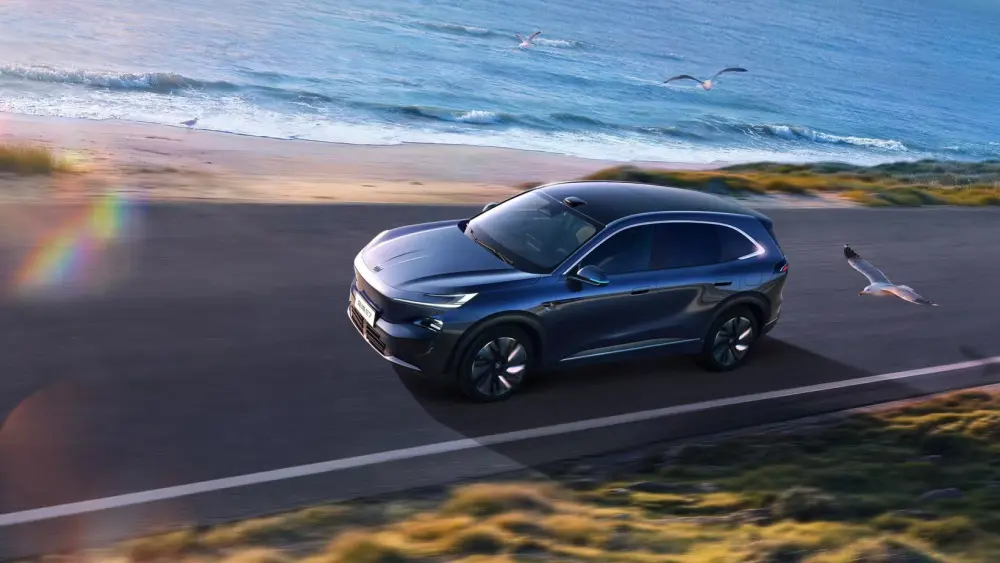
The battle for market share in the world's largest automotive market is reaching a fever pitch, forcing legacy Western automakers to pivot or perish. According to the latest data, General Motors (GM) delivered over 357,000 vehicles in China in Q2. This stabilization in volume highlights the critical role of the automaker's rapidly expanding GM China NEV sales matrix, which is serving as a defensive shield against dominant domestic players like BYD and Geely.
The Data: Analyzing GM's Q2 Performance and NEV Traction
While a total of 357,000 units in a single quarter represents a respectable footprint, the true story lies in the product mix. GM’s joint venture partnerships, particularly SAIC-GM and SAIC-GM-Wuling (SGMW), have shifted their primary focus to battery electric vehicles (BEVs) and plug-in hybrid electric vehicles (PHEVs)—collectively known as NEVs in China.
Historically reliant on internal combustion engine (ICE) sedans and SUVs, GM has faced immense pressure from Chinese OEMs. The transition to their dedicated EV platforms is starting to show incremental results, but the bulk of their volume still relies heavily on the budget-friendly Wuling brand and highly localized Buick NEV variants.
Legacy vs. Local: How GM’s Strategy Compares
As a global automotive analyst monitoring Sino-Western joint ventures, I find GM’s commitment to China particularly striking when compared to its Detroit rival, Ford. While Ford has scaled back its Chinese ambitions to focus on exporting vehicles from China, GM is doubling down on localized NEV production to defend its massive domestic footprint.
However, defending market share in China comes at a steep price. The brutal price war, initiated by BYD and exacerbated by aggressive newcomers like Xiaomi, has compressed profit margins to razor-thin levels. To keep GM China NEV sales competitive, GM has had to offer aggressive discounts, raising concerns among Western investors regarding the long-term profitability of their Chinese operations.
The Strategic Playbooks: GM vs. Other Western OEMs
To understand the current competitive landscape, consider how GM's strategy stacks up against other legacy automakers:
| OEM | China Strategy | Core Advantage | Primary Risk |
|---|---|---|---|
| General Motors | Local NEV Scale (SAIC-GM-Wuling) | Mass volume, established local supply chains | Margin compression from brutal price wars |
| Ford | Export-led Asset-Light Pivot | Lower capital expenditure and localized risk | Irrelevance in the local Chinese domestic market |
| Volkswagen | Local Tech Partnerships (XPeng) | Deep localization of software & ADAS | Integration delays and corporate cultural clashes |
What This Means for Western Investors
For institutional investors and automotive strategists, GM's Q2 delivery figures provide several critical insights:
- The ICE Decay is Accelerating: GM's traditional cash cows (gasoline Buicks and Chevrolets) are losing ground rapidly. The survival of the joint ventures depends entirely on the speed and margin viability of their NEV ramp-up.
- Battery Tech is the Battleground: To lower costs, GM is increasingly leveraging local supply chains, including advanced LFP (lithium iron phosphate) chemistries, to compete with Chinese cost structures.
- The ADAS Gap: Delivering hardware is no longer enough. To capture premium buyers, GM must accelerate its deployment of localized, advanced driver-assistance systems (ADAS) tailored for complex Chinese urban environments.
Conclusion: A Fragile Stabilization
GM's delivery of 357,000 vehicles in Q2 proof-tests their ability to maintain sheer volume in China, but the strategic pivot is far from complete. To achieve sustainable long-term 'Alpha,' GM must prove that its localized NEV matrix can not only generate high volume but also deliver healthy bottom-line profits. For now, the automaker remains locked in a high-stakes war of attrition in the world's most competitive EV ecosystem.