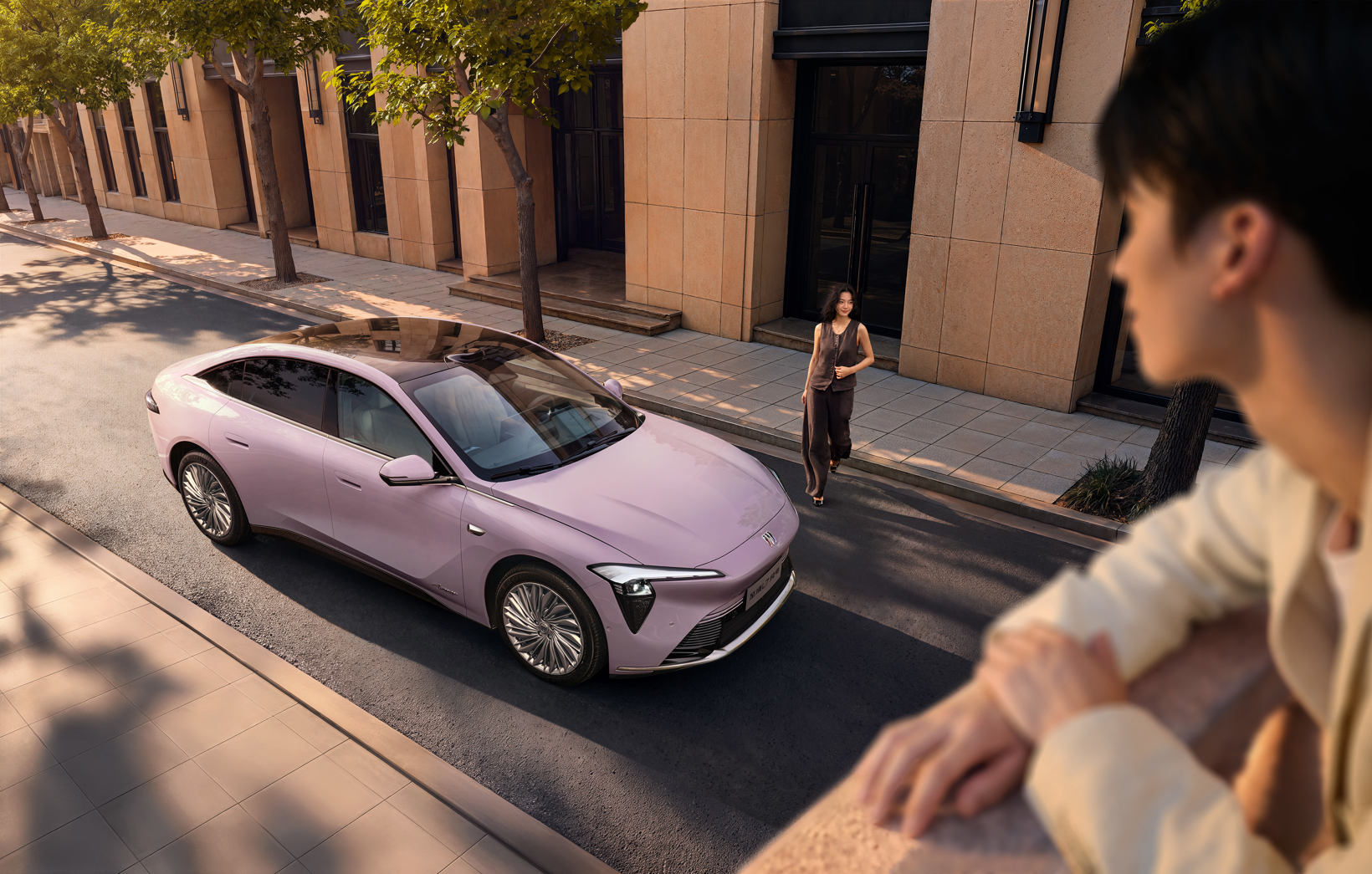
General Motors’ latest sales figures for China landed on October 9 with a headline that should stop every Western auto executive cold: over 358,000 vehicles delivered in Q3 2026, with new energy vehicles (NEVs) accounting for more than 60% of the mix. On the surface, this looks like a triumphant inflection point for the world’s largest automaker in its most brutally competitive market. Underneath, the data tells a far more complicated story—one of margin erosion, structural dependency, and a frantic race to stay relevant in a market that is rapidly leaving legacy OEMs behind.
Let’s be clear: hitting 60% NEV penetration in China is no small feat. The Chinese passenger vehicle market has been in a state of hyper-competition since 2023, with a relentless price war that has crushed margins across the board. For GM, a company that just five years ago was selling over 3 million vehicles annually in China, the fact that it is still moving 358,000 units a quarter—and that the majority are now electrified—is a testament to its joint-venture machinery. But it is also a warning sign. The company is increasingly dependent on a market where it is no longer a price-setter, but a price-taker.
Inside the 60% NEV Mix: Wuling’s Low-Cost Gambit and Cadillac’s Struggles
To understand GM’s China NEV sales surge, you have to disaggregate the numbers. The bulk of the volume comes from the SAIC-GM-Wuling (SGMW) joint venture, specifically the Wuling Hongguang Mini EV and its newer Bingo compact EV. These are not high-margin vehicles. The Hongguang Mini EV starts at approximately RMB 32,800 ($4,500) and is essentially a compliance car that generates razor-thin margins—if any at all. The Bingo, priced from RMB 59,800 ($8,200), competes directly with BYD’s Seagull and Dolphin, but lacks BYD’s vertically integrated battery cost advantage.
Meanwhile, the Buick brand—once GM’s profit engine in China—has been forced into a deep discounting spiral. The Buick Electra E5, a mid-size electric SUV, was launched in 2023 at RMB 209,000 ($28,700) but has seen street discounts of up to 20% as dealers struggle to move inventory. Cadillac’s Lyriq EV, positioned as a luxury competitor to NIO and Li Auto, has failed to gain traction; monthly sales have rarely exceeded 1,000 units, despite a price tag of RMB 379,700 ($52,000).
| Model | Brand | Starting Price (RMB) | Battery Capacity (kWh) | Range (CLTC km) | Q3 2026 Sales (est.) |
|---|---|---|---|---|---|
| Hongguang Mini EV | Wuling | 32,800 | 9.3 / 13.8 | 120 / 170 | ~85,000 |
| Bingo | Wuling | 59,800 | 31.9 / 37.9 | 333 / 410 | ~45,000 |
| Electra E5 | Buick | 209,000 | 68 / 79.7 | 545 / 620 | ~12,000 |
| Lyriq | Cadillac | 379,700 | 95.7 | 653 | ~2,500 |
| Seagull | BYD | 69,800 | 30.1 / 38.9 | 305 / 405 | ~120,000 |
The comparison with BYD’s Seagull is instructive. The Seagull, priced slightly higher than the Wuling Bingo, offers similar range but benefits from BYD’s in-house Blade LFP battery, which reduces cost per kWh by an estimated 15–20% compared to GM’s sourced cells from CATL and other suppliers. GM’s lack of vertical integration in batteries is a structural disadvantage that cannot be fixed overnight.
The SAIC Dependency: GM’s China Business Is No Longer Its Own
GM’s China operations are conducted almost entirely through its joint ventures with SAIC: SAIC-GM (Buick, Cadillac, Chevrolet) and SAIC-GM-Wuling. This structure, mandated by Chinese law for foreign automakers until 2022, has now become a strategic liability. As GM cedes more control to its Chinese partners to navigate local market dynamics, it risks losing technological and brand ownership. The Wuling brand, for instance, is essentially a SAIC-controlled entity; GM provides engineering support but little else. The Buick Electra E5 is built on SAIC’s Ultium-derived platform, but the battery and electric drive systems are largely localized.
This dependency is not unique to GM—Volkswagen, Toyota, and Stellantis face similar challenges. But GM’s reliance on SAIC for its NEV volume is particularly acute. According to industry estimates, over 70% of GM’s China NEV sales come from SGMW, where GM’s equity stake is only 44%. This means that a significant portion of GM’s “China NEV success” is not fully consolidated into its global financials, and the profits (if any) are shared with SAIC and Wuling’s other shareholders.
Supply Chain & Cost Structure: The LFP Trap and CATL’s Pricing Power
At the heart of GM’s China NEV strategy is a heavy reliance on lithium iron phosphate (LFP) batteries. The Wuling Bingo and Hongguang Mini EV use LFP cells, primarily from CATL and Gotion High-Tech. While LFP offers lower cost and better safety than nickel-cobalt-manganese (NCM) chemistries, it also has lower energy density and poorer cold-weather performance. This limits GM’s ability to compete in the premium segment, where NIO, Li Auto, and Tesla dominate with NCM and high-nickel chemistries.
Industry estimates suggest that LFP cell costs in China have fallen to approximately $60–70 per kWh in 2026, down from $100 in 2023. However, CATL and other suppliers have been aggressively protecting their margins, and GM’s purchasing scale is smaller than BYD’s or Tesla’s. This means GM likely pays a 10–15% premium for its cells, further eroding profitability. For the Buick Electra E5, the 68 kWh LFP pack alone costs an estimated RMB 35,000–40,000 ($4,800–5,500), or roughly 18–20% of the vehicle’s MSRP. Add the electric drive unit, power electronics, and thermal management system, and the bill of materials (BOM) for an Electra E5 is estimated at RMB 120,000–130,000 ($16,400–17,800), leaving little room for profit after dealer margins and marketing costs.
Tier-1 suppliers involved in GM’s China NEV lineup include CATL (battery cells), LG Energy Solution (some NCM packs for Cadillac), Bosch (braking and ADAS), and Aptiv (wiring and connectors). Notably absent is GM’s own Ultium Cells joint venture with LG, which has focused on North American production and has been slow to localize in China. This is a missed opportunity: by not producing its own cells in China, GM cedes cost control to CATL and other suppliers.
Competitive Impact: Who Wins, Who Loses in China’s EV Bloodbath
GM’s 60% NEV share is impressive in isolation, but it must be viewed against the broader market. In Q3 2026, China’s NEV penetration likely exceeded 45% of total passenger vehicle sales. GM is therefore slightly ahead of the market average, but far behind BYD, which has an NEV share of nearly 100% of its China sales. Tesla, with its Shanghai Gigafactory, sells roughly 200,000–250,000 vehicles per quarter in China, all electric, and commands higher margins than GM’s volume brands.
The real loser in this story is not GM, but its legacy competitors. Volkswagen, which has invested heavily in its own EV platform (MEB) and a joint venture with XPeng, is struggling to match GM’s volume. Nissan and Honda are virtually irrelevant in China’s NEV market. Stellantis has essentially retreated, and Ford is a marginal player. GM, by virtue of its early bet on Wuling’s low-cost EVs, has managed to stay in the game—but at what cost?
From a Western OEM perspective, GM’s experience offers a cautionary tale: entering the Chinese NEV market through low-margin joint ventures may preserve volume, but it does not build a sustainable competitive advantage. Hyundai-Kia, by contrast, has reduced its exposure to the Chinese domestic market and focused on higher-margin sales in North America, Europe, and India, where its E-GMP platform vehicles command premium pricing. GM’s decision to double down on China, while profitable in the short term, may prove strategically misguided if the price war continues.
The Reality Check: Is GM’s 60% NEV Share a Victory or a Vanity Metric?
Let’s interrogate the headline claim. GM says its China NEV share exceeded 60% in Q3 2026. But what does that actually mean for profitability? The company does not break out China NEV profit margins, but industry analysts estimate that SGMW’s NEV operations are loss-making on a net basis, subsidized by profits from the joint venture’s commercial vehicle business (Wuling vans and trucks). The Buick and Cadillac EVs are also likely loss-making, as they struggle to achieve scale.
Moreover, the 60% figure is calculated on a base of total sales that has shrunk dramatically. In 2017, GM sold over 4 million vehicles in China. By 2026, that number has fallen to roughly 1.5 million annually (based on Q3 annualized). So while the NEV mix has risen, the absolute volume of NEVs sold (about 215,000 in Q3) is less than half of what GM’s total China volume was a decade ago. This is not growth; it is a defensive retreat into a smaller, less profitable niche.
There is also the question of technological leadership. GM’s China NEVs rely on LFP batteries and relatively conventional electric drive systems. They do not feature the 800V architectures, silicon carbide (SiC) inverters, or advanced ADAS capabilities that are becoming standard in premium Chinese EVs. The Cadillac Lyriq, for instance, uses a 400V system and lacks the 350 kW fast-charging capability of the NIO ET7 or Li Auto MEGA. In a market where “China-speed” innovation is the norm, GM is competing with yesterday’s technology.
Finally, the regulatory environment is becoming more challenging. Under the US Inflation Reduction Act (IRA) and EU countervailing duties, Chinese-made EVs face significant export barriers. GM’s China-produced NEVs are primarily for domestic consumption, but if GM wanted to export them to Europe or North America, it would face tariffs and supply chain compliance issues. This limits the strategic value of its China NEV business as a global export hub.
Regulatory & Geopolitical Landscape: The Export Wall and Localization Imperatives
The geopolitical backdrop for GM’s China NEV success is fraught. The United States has imposed a 100% tariff on Chinese-made EVs, and the EU has implemented countervailing duties of up to 38% on Chinese EV imports. While GM’s China-built vehicles are not currently exported to these markets in significant volumes, the threat of further decoupling looms. If GM were to attempt to export its Wuling Bingo to Europe, it would face a tariff wall that would make the vehicle uncompetitive.
To navigate this, GM is pursuing a strategy of “strategic localization” in other markets. It is building a new battery plant in Indiana with LG Energy Solution and expanding EV production in Mexico and Canada. But these efforts are separate from its China business, which remains largely domestically focused. The risk is that GM’s China NEV operations become a technological cul-de-sac, isolated from its global platforms and unable to benefit from economies of scale.
On the regulatory front, China’s own NEV mandates and dual-credit system have forced GM to accelerate electrification. The company earns generous NEV credits from its Wuling Mini EV sales, which it can trade or use to offset penalties from its gas-guzzling Buick SUVs. This regulatory arbitrage is a key, if unspoken, driver of GM’s NEV strategy. But as China tightens its credit rules and raises technical requirements, the value of these credits may diminish.
Strategic Outlook: Three Scenarios for GM’s China NEV Future
Bull Case
GM successfully leverages its SAIC partnership to localize battery production, reducing cell costs by 20% and achieving profitability on its NEV lineup by 2028. The Wuling Bingo and Buick Electra E5 gain market share through aggressive pricing, and GM’s China NEV sales reach 1 million units annually by 2030. The company uses its China experience to inform a global low-cost EV platform, which it exports to emerging markets. Margins improve as scale is achieved and the price war subsides.
Base Case
GM maintains its current trajectory, with NEV share hovering around 60–65% but total China sales continuing to decline. The company remains dependent on SAIC and CATL, and profitability remains elusive. GM’s China business becomes a source of cash flow but not growth, and the company gradually shifts investment toward North American and European EV production. The Wuling brand becomes a regional player, while Buick and Cadillac EVs remain niche.
Bear Case
The Chinese price war intensifies, and GM is forced to exit the mass-market NEV segment. SGMW’s losses mount, and GM writes down its investment in the joint venture. The company retreats to a small, unprofitable presence in China, focusing only on Cadillac imports. Its global EV strategy is set back by the loss of scale and learning from the China market. Competitors like BYD and Tesla consolidate their dominance, and GM becomes a marginal player in the world’s largest EV market.
Strategic Takeaways for Executives and Investors
- Profitability over volume: GM’s 60% NEV share is a vanity metric unless it translates into positive operating cash flow. Investors should demand segment-level profitability disclosures for China NEVs.
- Battery vertical integration is non-negotiable: GM’s reliance on CATL and other suppliers for LFP cells puts it at a 10–15% cost disadvantage versus BYD. Localizing cell production or securing long-term supply agreements is critical.
- Joint venture dependency is a double-edged sword: While SAIC provides market access and local expertise, GM’s 44% stake in SGMW limits its control and financial consolidation. Future JV agreements should be structured for greater strategic flexibility.
- Export barriers limit global synergies: Tariffs in the US and EU make it difficult for GM to leverage its China NEV platform globally. The company must develop separate, compliant supply chains for Western markets.
- Watch for consolidation: As the price war continues, weaker players will exit. GM’s long-term survival in China may depend on acquiring or merging with a domestic NEV brand to achieve scale.
GM’s China NEV milestone is not a cause for celebration—it is a call to action. The company has managed to stay in the race, but the finish line is nowhere in sight. Without decisive action on cost, technology, and profitability, GM risks becoming a footnote in the very market it once dominated.