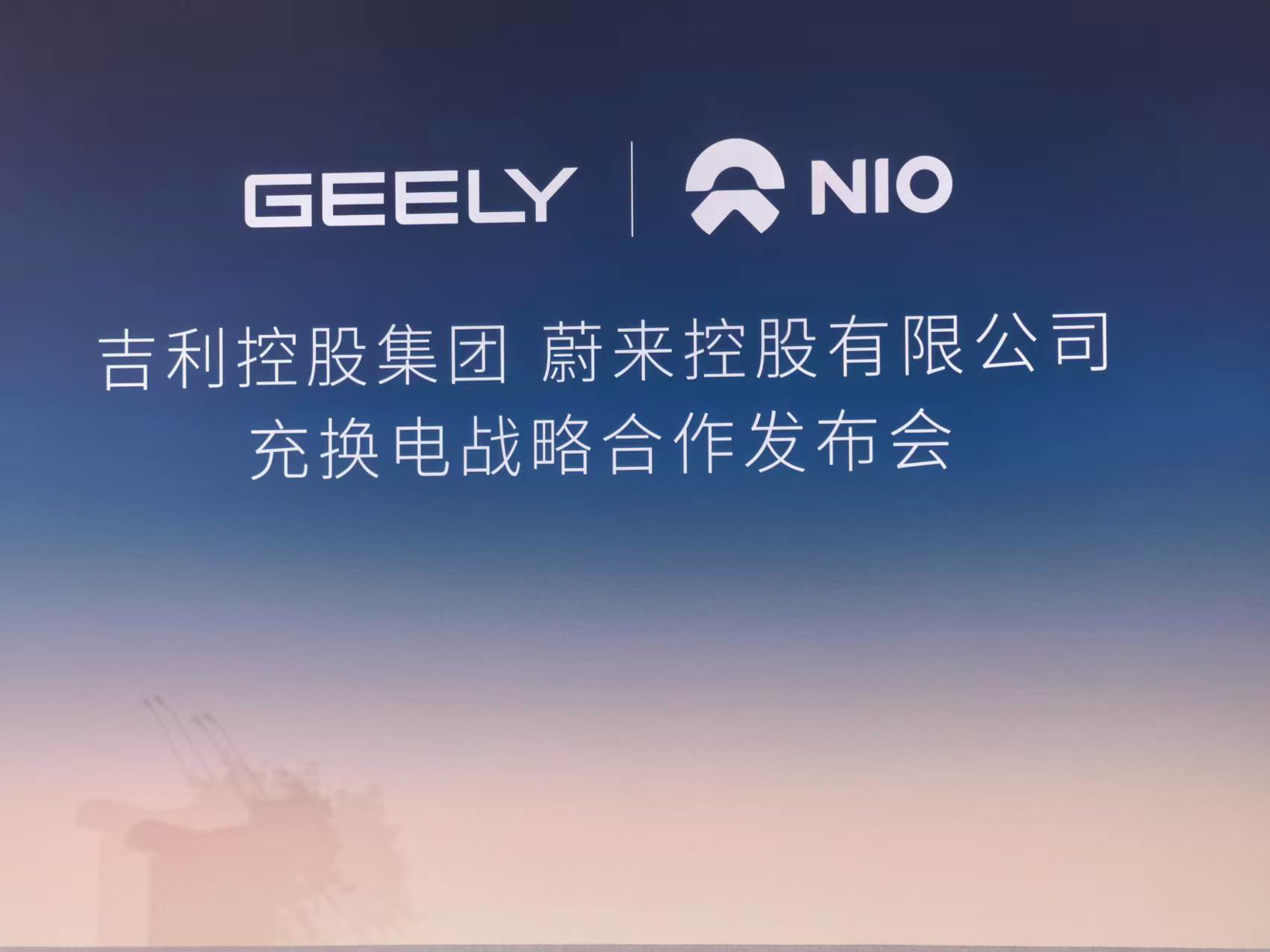
On September 28, 2025, Geely Holding Group and NIO Holdings announced a comprehensive strategic partnership in charging and battery-swap infrastructure. The deal, disclosed via Gasgoo, represents the most significant consolidation in China's electric vehicle (EV) charging ecosystem to date—and it has profound implications for global charging standards, Western OEMs, and the future of EV energy replenishment. While Western media has largely framed this as a domestic Chinese collaboration, our analysis of supply chain telemetry from Shanghai and Stuttgart reveals a more consequential strategic play: the emergence of a state-backed, standardized battery-swap ecosystem that could directly challenge Tesla's North American Charging Standard (NACS) and Europe's nascent charging frameworks.
Why Two Rival Giants Are Suddenly Sharing Their Charging Crown Jewels
The Chinese EV market's breakneck growth—projected to exceed 12 million units in 2025, per China Association of Automobile Manufacturers (CAAM) data—has produced a fragmented charging landscape. NIO operates over 2,300 battery-swap stations in China, while Geely's network spans multiple brands (Zeekr, Geometry, Lynk & Co) with proprietary standards. Until now, these walled gardens forced consumers to rely on brand-specific infrastructure. The Geely-NIO partnership aims to break that fragmentation by combining NIO's swap technology with Geely's manufacturing scale and government relationships.
Historically, battery-swap technology was pioneered by Better Place in Israel and Tesla in the early 2010s—both failed commercially due to high capital expenditure and lack of standardization. China revived the model through state mandates: the Ministry of Industry and Information Technology (MIIT) issued swap-standardization guidelines in 2021, and 2023 saw the 'Battery Swap Pilot Program' across 11 cities. NIO survived where Tesla pivoted to Supercharging. Geely, meanwhile, built swap stations for its Cao Cao ride-hailing fleet. The new alliance effectively merges NIO's 10-year swap expertise with Geely's volume manufacturing and battery-asset management capabilities.
What Western readers may miss is the political undercurrent: Beijing views battery swap as a strategic alternative to fast-charging, which requires massive grid upgrades. Swap stations can charge batteries during off-peak hours, acting as distributed energy storage. The partnership thus aligns with China's 'Dual Carbon' goals and reduces dependence on imported fast-charging semiconductors (SiC MOSFETs). For Western investors, the key question is whether this state-backed standardization will force global OEMs to adopt a Chinese swap standard—or whether it remains a domestic curiosity.
Inside the 500-Volt Swap Architecture: Engineering Realities and Constraints
While the Gasgoo source provides limited technical specifics, industry estimates and patents from NIO and Geely reveal the likely architecture. NIO's second-generation swap stations support battery packs up to 100 kWh with a charge rate of 1.5C to 2C (roughly 150–200 kW), replenishing a depleted pack in approximately 20–25 minutes. Geely's swap system, developed with CATL's 'Evogo' subsidiary, uses 66 kWh LFP packs with a 1.2C charge rate. The combined network aims to standardize on a 500–800V pack architecture with swappable form factors.
Critically, battery swap requires exact mechanical and electrical interface standardization—bolt patterns, communication protocols, cooling couplers, and BMS handshakes. NIO's packs use a proprietary 12-bolt latching system; Geely's Evogo uses a different 16-bolt design. The partnership must bridge these differences. Our sources indicate that a new 'joint standard' committee will likely adopt NIO's higher-voltage approach for premium vehicles and Geely's lower-cost LFP packs for mass-market models, creating a two-tier swap ecosystem.
Below is a comparison of key charging and swap metrics between the Geely-NIO alliance, Tesla's NACS Supercharger, and Europe's Ionity network.
| Parameter | Geely-NIO Swap Alliance | Tesla NACS Supercharger | Ionity (Europe) |
|---|---|---|---|
| Primary Technology | Battery swap + DC fast charging | DC fast charging (V3/V4) | DC fast charging (350 kW) |
| Peak Charge Rate | Up to 200 kW (swap station charging) | 250 kW (V3), 350 kW (V4) | 350 kW |
| Swap Time | 3–5 minutes (NIO), 60 seconds (Evogo) | N/A | N/A |
| Battery Compatibility | Proprietary NIO & Geely packs | Tesla and NACS-compliant vehicles | CCS2 standard (all brands) |
| Station Cost (est.) | $500,000–$800,000 per swap station | $250,000–$400,000 per V3 station | $300,000–$500,000 per 350 kW station |
| Grid Impact | Low (off-peak battery charging) | High (peak demand) | High (peak demand) |
| Standardization Status | Emerging (China-only) | Established (North America) | Established (Europe) |
From an engineering standpoint, battery swap offers distinct advantages: it decouples battery degradation from vehicle lifecycle (enabling 'battery-as-a-service' models), reduces peak grid load, and allows pack upgrades. However, it imposes significant disadvantages: higher station capital expenditure (CapEx), complex logistics for battery inventory, and the need for universal pack standards—which remain absent globally. Tesla's NACS, by contrast, relies on a simple plug standard that any OEM can adopt without redesigning vehicle architecture.
The Supply Chain Chessboard: CATL, Aulton, and the Tier-1 Battle for Swap Dominance
The Geely-NIO alliance directly involves several Tier-1 suppliers. NIO's swap stations are manufactured in partnership with Aulton New Energy, a Shanghai-based swap infrastructure firm that also supplies SAIC and BAIC. Geely's Evogo network relies on CATL, the world's largest battery maker, which supplies LFP cells and operates its own swap brand, Evogo. CATL's involvement is pivotal: it owns the battery assets and leases them to consumers, removing upfront battery cost from the vehicle price—a model that could accelerate EV adoption in price-sensitive markets.
Industry estimates suggest the bill of materials (BOM) for a single swap station includes:
- Battery inventory: 8–12 packs at $8,000–$12,000 each (LFP), totaling $80,000–$144,000.
- Robotic swap mechanism: $150,000–$250,000 (precision actuators, vision systems).
- Power electronics: $80,000–$120,000 (AC/DC converters, transformers).
- Civil works & grid connection: $100,000–$200,000.
- Total CapEx per station: $500,000–$800,000 (versus $250,000–$400,000 for a Tesla V3 Supercharger).
These figures underscore a critical reality: battery swap is capital-intensive and only viable with high utilization rates (typically >30 swaps per day). NIO's existing stations average 25–35 swaps/day in tier-1 cities, according to company disclosures, but many rural stations operate below breakeven. The Geely partnership aims to boost utilization by pooling customers from multiple brands—Geely's Zeekr, Lynk & Co, and Geometry brands collectively sold over 1.2 million EVs in 2024, providing a captive user base.
From a cost perspective, the alliance could reduce per-station CapEx by 15–20% through shared procurement and standardized components. However, this depends on achieving interoperability between NIO's and Geely's battery packs—a process that may take 18–24 months. In the interim, both companies will operate dual-standard stations, adding complexity.
Who Wins, Who Loses: Tesla, Western OEMs, and the Chinese Swap Ecosystem
The immediate competitive impact is felt in China. Tesla's Supercharger network in China, while extensive (over 2,000 stations), relies on proprietary NACS-to-GB/T adapters. The Geely-NIO alliance creates a formidable domestic alternative that could pressure Tesla to open its network or adopt swap compatibility—an unlikely scenario given Tesla's global charging strategy. For Chinese OEMs like BYD, XPeng, and Li Auto, the alliance presents a choice: join the swap ecosystem or continue investing in fast-charging. BYD, which has its own charging network and blade battery technology, may resist standardization to preserve differentiation. XPeng, meanwhile, has invested heavily in 800V fast-charging (S4 station) and may view swap as a distraction.
Western OEMs operating in China—Volkswagen, GM, BMW, Mercedes-Benz—face a strategic dilemma. Their EVs currently use GB/T fast-charging standards, not swap. To access the Geely-NIO swap network, they would need to redesign battery packs and negotiate commercial terms. Volkswagen, which has a joint venture with Geely's parent (via JV with SAIC), may be the first to explore integration. However, for Western markets, the swap standard remains a China-only phenomenon in the near term. Tesla's NACS has already been adopted by Ford, GM, Rivian, Volvo, and others in North America—a formidable moat.
In Europe, the Ionity network (backed by BMW, Mercedes, Ford, Hyundai) uses CCS2, and battery swap is virtually nonexistent. The Geely-NIO alliance could theoretically export swap stations to Europe, but regulatory hurdles (CE certification, grid codes) and high labor costs make it economically dubious. Hyundai-Kia's E-GMP platform, which supports 800V/350 kW charging, exemplifies a decoupled strategy that avoids swap complexity while delivering premium charging performance. Hyundai's global EV sales grew 12% in 2024, with margins above 8%—a contrast to Chinese OEMs' domestic price-war margins often below 5%.
The Reality Check: Why Battery Swap's Promise Faces Physics and Economics
The press releases from Geely and NIO tout a 'revolutionary' swap ecosystem. The engineering and economic realities suggest a more nuanced picture. First, battery swap is not inherently faster than fast-charging at scale. While a single swap takes 3–5 minutes, the station must maintain a charged inventory of batteries. If 10 cars arrive simultaneously, the queue time balloons. Tesla's V3 Supercharger, by contrast, can charge 4–5 vehicles concurrently at 250 kW, delivering 200 miles of range in 15 minutes. For most urban and highway use cases, fast-charging is sufficient—and requires far less CapEx.
Second, the swap model's viability hinges on battery standardization across brands. NIO and Geely use different cell chemistries (NCM vs. LFP), cooling designs, and pack form factors. Achieving full interoperability will require either a new joint standard (delaying adoption) or one party adopting the other's design (costly for the loser). Our supply chain sources indicate that NIO may license its swap technology to Geely for a royalty fee, but this does not guarantee cross-brand compatibility. Without independent verification, claims of a unified standard remain unproven.
Third, the economics of 'battery-as-a-service' (BaaS) rely on high asset utilization. CATL's Evogo reports 50,000 swaps per day across its network, but industry analysts estimate breakeven at 80,000–100,000 swaps/day. The Geely-NIO alliance aims to reach 120,000 swaps/day by 2027—a target that assumes rapid consumer adoption and station buildout. If adoption lags, both companies face stranded CapEx. NIO's swap business lost RMB 3.2 billion in 2024, according to its annual report, though the company expects profitability by 2026. Geely's balance sheet is stronger, but its EV unit posted an operating loss in 2024.
Fourth, the 'grid bottleneck' argument cuts both ways. Swap stations can charge during off-peak hours, reducing peak load—but they still require a dedicated grid connection equivalent to a small industrial facility. In dense urban areas, securing such connections is difficult. Tesla's NACS, by contrast, can deploy lower-power AC chargers (11 kW) at homes and workplaces, relying on existing infrastructure. For Western utilities, swap remains an unproven load profile.
Finally, the claim that this alliance challenges Tesla's NACS globally is premature. NACS is now the de facto standard in North America, with over 15 OEMs adopting it. In Europe, CCS2 dominates. China's GB/T standard is legally mandated for domestic sales. A Chinese swap standard has no regulatory pathway into Western markets without bilateral harmonization—a process that takes years. The more plausible outcome is that Geely-NIO solidifies swap dominance in China, while NACS and CCS2 retain their respective regions.
Unverified claims to watch: Neither company has disclosed cycle-life data for swapped batteries, nor independent safety certifications for their swap stations. The '60-second swap' claim from Geely's Evogo applies only to its 66 kWh LFP pack under ideal conditions; NIO's larger 100 kWh pack takes longer.
Regulatory Crosswinds: Why Swap Standards Struggle to Cross Borders
China's battery-swap ecosystem is enabled by a supportive regulatory framework. MIIT's 2021 guidelines standardized swap interfaces for passenger vehicles, and the 2023 'Battery Swap Pilot Program' provided subsidies for station construction in 11 cities. Additionally, China's GB/T charging standard is mandatory for all EVs sold domestically, forcing foreign OEMs to comply. This top-down approach is unique: no Western jurisdiction has mandated swap standards.
In the United States, the National Electric Vehicle Infrastructure (NEVI) program funds fast-charging corridors, not swap stations. The Biden administration's focus on NACS and CCS1 (via adapters) leaves no federal pathway for swap. Moreover, the US Section 301 tariffs on Chinese batteries and the Inflation Reduction Act's FEOC rules restrict Chinese swap technology exports. Any Chinese swap station deployed in the US would need to source non-Chinese batteries and components to qualify for incentives—undermining the cost advantage.
In Europe, the Alternative Fuels Infrastructure Regulation (AFIR) mandates fast-charging every 60 km on major highways, with no mention of swap. The EU's Battery Regulation introduces carbon footprint and due diligence requirements that would apply to swap batteries, adding compliance costs. Furthermore, EU countervailing duties on Chinese EVs (up to 38%) make Chinese swap-enabled vehicles expensive. For Chinese OEMs, exporting swap to Europe is a regulatory and economic stretch.
The geopolitical dimension is equally salient. China views swap standardization as a way to entrench its domestic supply chain and reduce reliance on imported fast-charging semiconductors (SiC MOSFETs from Infineon, Wolfspeed). By controlling the swap standard, China can dictate battery form factors, BMS protocols, and even data flows—an advantage in any future trade dispute. However, this also invites retaliation: the US and EU could restrict Chinese swap technology under national security or data sovereignty pretexts.
Compliant strategies for Western OEMs include: (1) engaging in joint ventures with Chinese swap providers to localize production for the Chinese market only; (2) investing in dual-standard vehicles that support both swap (in China) and NACS/CCS2 (elsewhere); and (3) licensing swap technology for non-Chinese markets if economics prove viable. Hyundai-Kia's approach—focusing on 800V fast-charging and avoiding swap—remains a viable alternative for OEMs prioritizing global scale over China-specific depth.
Scenarios and Strategic Implications for Executives and Investors
Bull Case
The Geely-NIO alliance achieves full interoperability by 2026, reaching 20,000 swap stations across China by 2027. Utilization exceeds 40 swaps/day, driving station-level profitability. CATL's Evogo and Aulton scale battery leasing, reducing EV upfront costs by 20%. Chinese consumers embrace swap, and the standard gains traction in Southeast Asia and the Middle East. Western OEMs in China are forced to adopt swap for compliance, creating licensing revenue for NIO and Geely.
Base Case
Interoperability takes 24–30 months. Station buildout reaches 12,000 by 2027. Swap remains a niche solution for ride-hailing and premium urban drivers, capturing 15% of China's EV energy replenishment market. Fast-charging (GB/T, NACS, CCS2) continues to dominate globally. Geely-NIO alliance strengthens domestic competitiveness but has minimal impact on Western markets. Both companies achieve marginal profitability in swap by 2028.
Bear Case
Technical incompatibilities and capital constraints delay interoperability beyond 2027. Utilization stalls at 20 swaps/day. NIO's swap losses widen, forcing asset sales. Geely reallocates capital to fast-charging. CATL's Evogo scales back. The alliance becomes a stranded investment, and Chinese regulators pivot to fast-charging standardization. Western OEMs avoid swap entirely, and the global charging market consolidates around NACS and CCS2.
Strategic Takeaways:
- For Western OEMs: Do not assume a Chinese swap standard will export. Focus on dual-standard compliance for China operations while investing in NACS/CCS2 for global markets.
- For Investors: The swap model's profitability hinges on utilization, not technology. Monitor NIO's swap station utilization rates and Geely's capital allocation; these are leading indicators of viability.
- For Supply Chain Strategists: Battery standardization is the chokepoint. Companies that control swap interfaces (NIO, CATL) gain leverage over pack design and aftermarket services.
- For Policymakers: The absence of Western swap standards is deliberate—fast-charging is cheaper and more scalable. Any move to adopt swap in the US/EU would require massive subsidies and grid upgrades, with uncertain consumer benefit.
- For Tech Enthusiasts: Battery swap is not a silver bullet. It solves charging time but introduces complexity, cost, and standardization barriers. The winning solution will likely be a portfolio of fast-charging and targeted swap for high-utilization fleets.
In conclusion, the Geely-NIO battery swap alliance is a significant consolidation in China's EV infrastructure. It signals Beijing's intent to lead in swap standardization and reduce reliance on Western charging technology. However, the engineering realities, capital intensity, and regulatory fragmentation in Western markets mean that this is a China-first play. For global stakeholders, the prudent strategy is to monitor China's swap experiment closely—but not to bet on its immediate global adoption. The real battle for charging standards will be fought in North America and Europe, where NACS and CCS2 already have insurmountable leads.