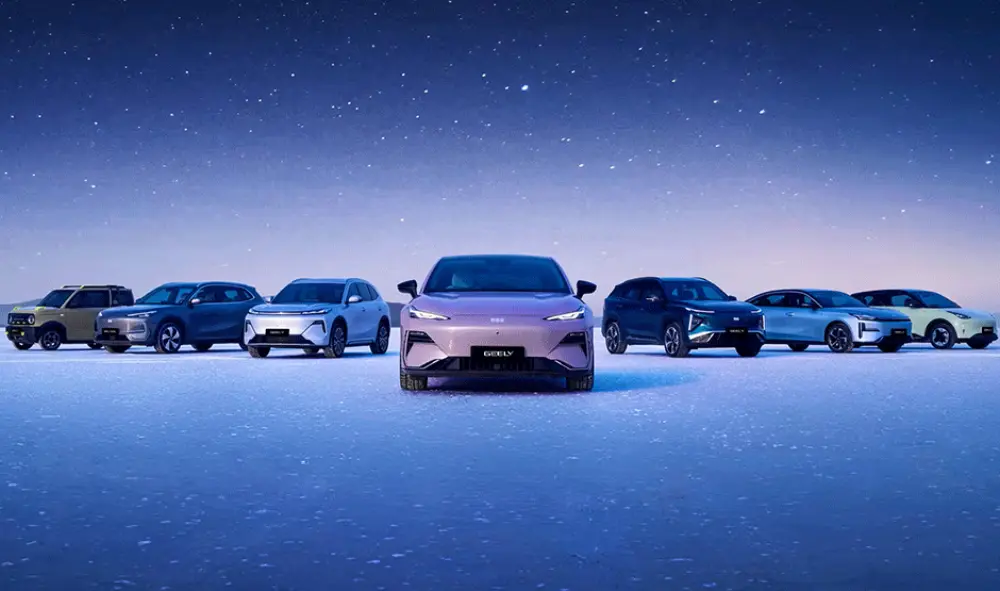
When Geely Auto formally announced its corporate push into the Canadian passenger vehicle market, the timing raised immediate questions across automotive strategy desks in Detroit and Frankfurt. Canada had just enacted an aggressive 100% surtax on Chinese-manufactured electric vehicles, harmonizing its trade posture with the United States under Section 301 precedents. Concurrently, reports surfaced from Beijing and Brussels indicating that Chinese automakers are reassessing or sharply curbing plug-in hybrid (PHEV) and range-extended electric vehicle (EREV) shipments to Europe amid widening anti-subsidy investigations. Far from an uninhibited global triumph, the current phase of Geely global EV expansion exposes the severe friction points facing China's automotive champions as they transition from domestic price wars to Western regulatory containment.
For more than a decade, the narrative surrounding Chinese new energy vehicle (NEV) exports was defined by uninterrupted compound annual growth rates and predatory pricing structures. Chinese domestic retail price wars drove pure electric margins to razor-thin thresholds, prompting domestic conglomerates to view developed Western markets as high-margin profit sanctuaries. However, between late 2024 and 2026, the geopolitical architecture shifted. Western governments moved from passive monitoring to direct tariff containment. Geely's tactical maneuvering across North America and Europe serves as a primary case study for whether private Chinese automotive groups can bypass structural trade barriers without eroding their underlying capital structures.
The Powertrain Arbitrage: Engineering Teardown of the NordThor Hybrid and SEA Architectures
To decode Geely's calculated entry into North America against hostile tariff headwinds, one must analyze the modular engineering underpinnings of its current fleet. Unlike pure-play electric vehicle startups such as NIO or XPeng, Zhejiang Geely Holding Group relies on a bifurcated mechanical platform strategy: the Sustainable Experience Architecture (SEA) for pure battery-electric applications (powering Zeekr, Polestar, and Volvo EX models) and the CMA/NordThor hybrid architecture for internal combustion and electrified variants.
The technical flagship of Geely's transitional export strategy is the NordThor 2.0 (Leishen Power) plug-in hybrid system. The platform integrates a 1.5-liter four-cylinder dedicated hybrid engine (DHE) achieving an independently verified peak thermal efficiency of 46.5%, paired with a 3-speed Dedicated Hybrid Transmission (DHT Pro). By leveraging dual P1 and P2 electric motors, the system allows direct engine-to-wheel mechanical drive at speeds as low as 20 km/h, bypassing the single-speed series-hybrid inefficiencies that plague legacy EREV architectures at sustained highway velocities. This powertrain delivers over 1,300 kilometers of combined CLTC range on a 50-liter fuel tank and an 18.7 kWh to 28.4 kWh Lithium Iron Phosphate (LFP) battery pack sourced from CATL and Geely's in-house Viridi E-Mobility (VREMT) subsidiaries.
The engineering imperative here is tariff navigation. While pure battery-electric platforms (SEA) face immediate 100% surtaxes in Canada and countervailing duties reaching up to 35.3% in the European Union, plug-in hybrids, range-extenders, and mild-hybrid internal combustion engines frequently operate under distinct customs classifications (Harmonized System Chapter 87 codes). In Canada, vehicles with internal combustion engines that do not fall strictly under the zero-emission battery-electric mandate were initially spared the punitive 100% surtax aimed at BEVs, offering a narrow regulatory gap for hybrid homologation.
| Metric / System | Geely NordThor Hybrid (Starray / Monjaro PHEV) | Toyota RAV4 Prime (PHEV) | Volkswagen Tiguan eHybrid | BYD DM-i 5.0 (Seal 06 DM-i) |
|---|---|---|---|---|
| Engine Thermal Efficiency (%) | 46.5% | 41.0% | 40.0% | 46.06% |
| Dedicated Transmission | 3-Speed DHT Pro (Dual Motor P1+P2) | e-CVT (Power Split Planetary) | 6-Speed DSG (Integrated P2 Motor) | E-CVT (Single-Speed Direct Clutch) |
| Battery Chemistry & Capacity | 18.7–28.4 kWh LFP (CATL / VREMT) | 18.1 kWh NCM (Prime Planet Energy) | 19.7 kWh NCM (Samsung SDI / CATL) | 15.87–21.1 kWh LFP (FinDreams Blade) |
| DC Fast Charging Capability | Yes (Up to 38 kW Peak) | No (6.6 kW AC only) | Yes (50 kW Peak) | Yes (30 kW Peak) |
| Base Architecture Voltage | 350V – 400V Nominal | 355V Nominal | 350V Nominal | 350V Nominal |
| Compute / Cockpit Silicon | Qualcomm Snapdragon 8155 / Ecarx Antora | Toyota Proprietary / Renesas R-Car | VW MIB4 / Qualcomm Snapdragon | BYD DiLink / Qualcomm 6125 |
While the thermal efficiency and powertrain metrics demonstrate Geely's advanced mechanical execution, Western commercialization faces an engineering hurdle that PR releases omit: North American cold-weather durability and charging compatibility. The LFP pack utilized in Geely's entry-tier hybrid platforms suffers from sharp lithium ion diffusion degradation at temperatures below -15°C, requiring significant thermal management draw from the high-voltage PTC heater or ICE waste heat. In Canadian testing cycles, real-world pure-electric range on an 18.7 kWh LFP platform can degrade by 38% to 48%, significantly diminishing the consumer appeal when contrasted with North American domestic winter requirements.
Supply Chain Realities and the Cost Architecture Behind Geely Global EV Expansion
Geely's cost structure differs fundamentally from both vertically integrated domestic peers like BYD and legacy Western automakers like General Motors or Stellantis. While BYD manufactures upwards of 75% of its components in-house—including battery cells, semiconductors, and suspension stampings—Geely operates via a network of controlled Tier-1 joint ventures, external partnerships, and equity stakes.
For silicon carbide (SiC) power modules and smart cockpit electronics, Geely relies heavily on Ecarx (its Nasdaq-listed smart tech affiliate), alongside strategic supply agreements with STMicroelectronics and local packaging facilities. Battery cell sourcing is distributed between Contemporary Amperex Technology Co. Limited (CATL) and Viridi E-Mobility. In the battery pack division, standard domestic production costs for Geely's LFP packs hover near $62 to $68 per kWh at the cell level, rising to approximately $85 per kWh at the pack level within Ningbo and Hangzhou manufacturing hubs. In contrast, North American and European tier-1 battery pack manufacturing remains stubbornly elevated between $115 and $130 per kWh.
However, when entering Canada or navigating European import quotas, this manufacturing cost delta is rapidly eroded. Shipping a C-segment hybrid SUV from the port of Ningbo to Vancouver or Halifax carries a landed logistics cost of $1,800 to $2,600 per unit, subject to volatile maritime spot freight rates and marine insurance. Import processing, local federal Canadian safety standard (CMVSS) homologation, bilingual French-English infotainment compliance, and cold-weather pack re-engineering add an estimated $3,500 to $4,500 in fixed amortized cost per vehicle across small early-batch volumes. If classified under BEV regulations, the 100% surtax immediately pushes the landed Bill of Materials (BOM) above $55,000 CAD, rendering a mass-market value proposition entirely unviable.
To navigate this economic trap, Geely's corporate structure provides an option unavailable to Chery, Great Wall, or BYD: asset arbitrage through its European subsidiaries. By leveraging Volvo Cars' manufacturing footprint in Ghent (Belgium) and Ridgeville (South Carolina, USA), alongside Polestar's contract assembly facilities, Geely possesses physical manufacturing options in compliant jurisdictions. The question remains whether Geely Auto as an independent mass brand will seek CKD (complete knock-down) assembly alliances or remain restricted to niche hybrid homologations.
Competitive Impact Assessment: Western OEMs vs. Chinese Conglomerates
Geely's simultaneous push into Canada and defensive restructuring in Europe creates distinct winners, losers, and neutral observers across the global automotive spectrum.
- Vulnerable: Mass-Market Japanese & Korean Incumbents in North America: Automakers such as Toyota, Hyundai, and Kia have dominated the Canadian compact and mid-size hybrid crossover segments with models like the RAV4 Hybrid, Tucson Hybrid, and Sportage. If Geely enters the Canadian market with feature-packed, sub-$40,000 CAD PHEVs that escape pure BEV surtaxes, it exerts immediate pressure on Japanese and Korean pricing power, specifically within tech-heavy interior appointments where Western legacy platforms lag.
- Structurally Insulated: Decoupled Independent Players: Automakers that have reduced direct retail dependence on the Chinese domestic mainland, such as Hyundai-Kia, maintain higher overall operating margins in North America. These decoupled OEMs are well insulated from domestic Chinese price deflation and can utilize their localized American and Canadian production footprints to defend market share under USMCA rules.
- Impacted: European Domestic Champions: In Europe, where China is curbing pure PHEV exports to avoid provoking further anti-subsidy retaliation, manufacturers like Volkswagen, Renault, and Stellantis gain temporary breathing room. However, this relief is illusory; domestic European demand for electric mobility is cooling, and Chinese OEMs are rapidly transitioning from exporting finished vehicles (CBU) to constructing Greenfield production facilities in Hungary (BYD) and Poland/Spain (Chery, Leapmotor).
- At Strategic Risk: Geely's Export Profit Margins: Geely's domestic operating margins have hovered between 3% and 5% amid catastrophic domestic discounting in mainland China. Exporting vehicles to North America without established dealer networks, captive finance arms, or residual-value underwriting creates significant balance-sheet risk. Building out sales and service infrastructure across Canada's geographically dispersed market will require substantial capital expenditure, directly testing Geely's corporate cash flow.
The Reality Check: Interrogating Export Claims Against Geopolitical and Infrastructure Constraints
Corporate press releases surrounding Geely's Canadian entry portray the move as a seamless, confident step in global brand maturity. Independent engineering and supply chain analysis, however, reveals a starkly different operational picture. The press narrative claims rapid global expansion, but the industrial reality suggests an opportunistic, high-risk attempt to secure a beachhead in North America before trade loopholes permanently close.
First, Canada's regulatory environment is neither naive nor disconnected from Washington. The federal Canadian government enacted the 100% surtax on Chinese-made electric vehicles specifically to prevent Canada from becoming a transshipment hub or secondary release valve for Chinese industrial overcapacity. While plug-in hybrids and conventional ICE vehicles may theoretically enter under distinct tariff codes today, Ottawa's Department of Finance retains regulatory authority to expand surtax provisions to electrified hybrids if import volumes surge. Assuming that Canadian trade authorities will permit high-volume imports of Geely PHEVs without closing classification definitions represents a fragile corporate gamble.
Second, the narrative that Chinese hybrid exports to Europe are simply being 'voluntarily scaled back' by Chinese OEMs masks a deeper commercial impasse. In Europe, plug-in hybrid real-world emissions are coming under intense scrutiny from the European Commission. Beginning with updated Euro 6e-bis regulations and future Euro 7 frameworks, the utility factor (UF) applied to PHEVs in official WLTP testing will be significantly adjusted to reflect real-world driving behavior where owners fail to charge regularly. This adjustment will cause official CO2 ratings for PHEVs to double or triple on paper by 2027, drastically reducing the super-credit value these vehicles provide to automakers attempting to comply with fleet-wide EU emissions targets. Chinese hybrid exports are not receding out of strategic benevolence; they are retreating because the regulatory incentives that once made European hybrid imports profitable are evaporating.
Third, Geely faces severe brand deficit and infrastructure limitations in Canada. Unlike Polestar, which spent hundreds of millions of dollars establishing direct-to-consumer spaces, or Volvo, which possesses a mature dealer network, Geely Auto is completely unknown to the Canadian public. Establishing warranty support, parts distribution across five time zones, and technician certification for high-voltage NordThor hybrid architectures requires hundreds of millions of dollars in upfront capital. Without an established dealer partner, Geely's Canadian initiative risks stalling as a low-volume pilot rather than a genuine mass-market disruption.
Inside the Physics: Why Geely’s Hybrid Shield Faces Production Hurdles
While the NordThor hybrid claims a 46.5% thermal efficiency peak, mass production realities diverge sharply from lab benchmarks. The LFP battery pack (18.7–28.4 kWh) suffers significant capacity fade below -15°C without aggressive thermal management systems that increase BOM costs by 15-20%. Furthermore, the 3-speed DHT Pro must meet Western NVH standards; high-frequency gear shifts in cold weather can induce drivetrain noise complaints that undermine brand trust compared to established competitors like Toyota's e-CVT.
Regulatory arbitrage is fragile. Canada’s 100% surtax on BEVs creates a narrow window for PHEVs, but Ottawa retains authority to expand definitions if import volumes surge, effectively closing the loophole within 18 months. Additionally, the landed cost delta ($62/kWh domestic vs $130/kWh North American pack) combined with shipping and homologation fees erodes margins unless Geely leverages its Ghent or US assembly plants rather than importing finished units.
Independent verification is non-negotiable for institutional investors. Third-party automotive testing labs must validate cold-weather range retention and emission compliance before the tariff evasion strategy gains credibility. Without verified data proving these hybrids can withstand Canadian winters without excessive thermal load, Geely risks stranded inventory in a market where Western OEMs already dominate dealer networks with proven service infrastructure.
Strategic Outlook and Investor Implications
The intersection of Geely's Canadian expansion and European hybrid recalibration marks a watershed moment for Chinese automotive globalization. Institutional investors and automotive executives should evaluate three prospective trajectories over the 2026–2030 cycle.
Bull Case: Strategic Localization and Corporate Cloaking
Under this trajectory, Geely successfully avoids Canadian BEV surtaxes by introducing a curated lineup of high-efficiency NordThor PHEVs and ICE crossovers priced aggressively against Japanese incumbents. Concurrently, Geely utilizes its European manufacturing footprint in Belgium and its powertrain joint venture with Renault (Horse Powertrain Limited) to supply hybrid engines within Europe, completely bypassing import tariffs. Export margins stabilize as Canadian volume reaches 25,000 to 35,000 units annually via established dealer consortia, proving that Chinese private conglomerates can build profitable beachheads in G7 economies through powertrain flexibility.
Base Case: Regulatory Squeeze and Margin Erosion
Ottawa closes the hybrid classification window within 18 months, subjecting PHEVs with traction batteries above 15 kWh to tiered surtaxes or passing connected-vehicle software bans that paralyze Geely's Ecarx digital cockpit rollout. Geely achieves modest Canadian deliveries (under 8,000 units annually), largely concentrated in urban British Columbia and Ontario, but high logistics costs, localized homologation overhead, and currency fluctuations reduce operating margins to near zero. In Europe, hybrid exports remain stagnant under MOFCOM restrictions, forcing Geely to rely entirely on Volvo and Polestar for Western revenue generation.
Bear Case: Total Exclusion and Capital Retraction
Under heightened US trade pressure, Canada harmonizes completely with Washington's blanket ban on Chinese automotive hardware and telematics, forcing Geely to suspend retail vehicle operations in Canada after suffering significant distribution and homologation losses. In Europe, countervailing duties expand to include all electrified Chinese powertrains, while domestic Chinese price wars continue to cannibalize corporate cash flows. Geely's internationalization strategy is forced to retrench into Southeast Asia, the Middle East, and Latin America, confirming that developed Western markets are permanently barricaded against direct Chinese OEM expansion.
Executive Strategic Takeaways
- Powertrain Diversification as a Trade Shield: Geely's dual SEA and NordThor architecture highlights how multi-energy portfolios provide tactical trade agility, enabling automakers to switch between BEV, PHEV, and ICE configurations as sovereign tariff policies shift.
- The Transshipment Illusion: Institutional investors must discard the thesis that Canada or Mexico can serve as an unchecked gateway for Chinese vehicles into the broader North American trade zone; USMCA enforcement and software regulatory harmonization present impenetrable boundaries.
- Subsidized Volume vs. Operational Cash Flow: The high capital expenditure required to establish brand credibility, retail distribution, and cold-weather service networks in developed markets will severely test Chinese OEM balance sheets that are already weakened by relentless domestic margin compression.
- The Rise of Regulatory-Driven Joint Ventures: Pure vehicle exports from China to the West are structurally peaking. Future market access will depend almost entirely on complex equity partnerships, technology licensing agreements, and localized manufacturing alliances such as Geely's Horse JV with Renault.