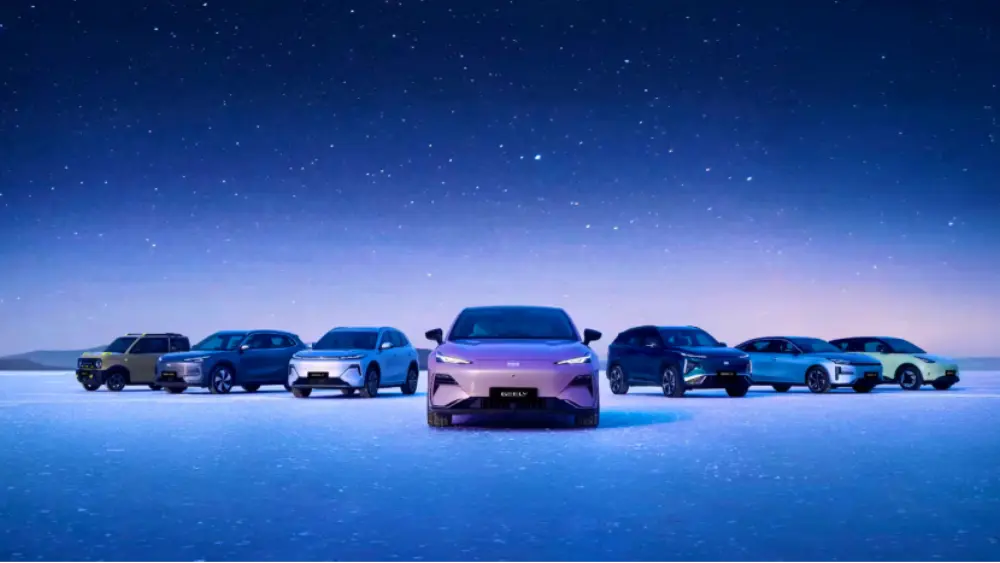
When Zhejiang Geely Holding Group discreetly confirmed its strategic roadmap to penetrate the Canadian automotive retail market by 2027, the announcement sent shockwaves through both Detroit boardrooms and Ottawa trade policy offices. For years, North American automotive analysts operated under the assumption that aggressive tariff walls—most notably the United States’ Section 301 duties and Canada’s matching 100% surtax on Chinese-manufactured electric vehicles instituted in late 2024—had successfully isolated the continent from Chinese automotive conglomerates. Geely’s calculated timeline proves that assumption was premature. Rather than retreating inward, China’s second-largest private automotive group is playing a patient, structural long game, timing its entry to test whether trade barriers can withstand relentless manufacturing cost deltas and diversified powertrain strategies.
To understand the gravity of the Geely Canada expansion, one must contextualize the regulatory environment. In October 2024, the Canadian federal government followed the Biden-Harris administration by enacting a 100% tariff on Chinese-built electric vehicles, complementing existing 6.1% most-favored-nation tariffs. Ostensibly, this made direct imports of Chinese battery electric vehicles (BEVs) financially non-viable. Yet, Geely is not a conventional domestic Chinese OEM like BYD or Leapmotor; it is a sprawling multinational empire with operational footprints spanning Gothenburg, Ghent, Ridgeville, and Coventry. The 2027 target gives Geely a critical multi-year runway to navigate homologation, negotiate retail distribution, and configure a supply chain compliant with complex rules of origin.
The Multi-Brand Engineering Matrix: How Geely Plans to Penetrate North America
The technical underpinning of Geely’s global expansion rests upon its modular vehicle architectures, primarily the Sustainable Experience Architecture (SEA) and the Compact Modular Architecture (CMA). Unlike legacy Western OEMs that attempt to stretch single platforms across discordant regional requirements, Geely’s SEA platform was designed from inception as an open-source, highly scalable electric skateboard capable of supporting wheelbases from 1,800 mm to 3,300 mm, accommodating sub-compact hatchbacks to full-size luxury utility vehicles.
For the Canadian market, where extreme winter climates present a severe operational crucible for battery chemistry, vehicle architecture cannot rely solely on standard low-cost Lithium Iron Phosphate (LFP) pack configurations. Operating in temperatures that routinely drop below -20°C in Alberta, Ontario, and Quebec necessitates sophisticated thermal management systems and resilient cell chemistries. In high-latitude deployments, standard LFP packs suffer severe capacity degradation—often exceeding 40% range loss due to sluggish lithium-ion intercalation and high internal resistance at sub-zero temperatures. Geely’s engineering strategy must balance cell chemistry economics against cold-weather survivability.
The company’s premium sub-brands, such as Zeekr, deploy 800V high-voltage electrical architectures integrated with liquid-cooled nickel-manganese-cobalt (NMC) chemistries and in-house developed Silicon Carbide (SiC) power inverters. These inverters yield an operating efficiency exceeding 98.5%, significantly mitigating parasitic energy drain caused by cabin heat pumps and positive temperature coefficient (PTC) heaters during Canadian winter cycles.
| Metric / Specification | Geely Zeekr 001 (SEA Platform) | Tesla Model Y Long Range (AWD) | Hyundai Ioniq 5 (E-GMP Platform) | Ford Mustang Mach-E (GE1) |
|---|---|---|---|---|
| Architecture Voltage | 800V SiC Architecture | 400V Silicon IGBT/SiC Hybrid | 800V SiC Architecture | 400V Silicon IGBT |
| Battery Chemistry Options | 95 kWh LFP / 100 kWh Ternary NMC | 78.1 kWh Ternary NMC | 84 kWh Ternary NMC | 72 kWh LFP / 91 kWh NMC |
| Peak Charging C-Rate | 4.5C (NMC) / 5.5C (Golden Battery) | 2.6C | 3.8C | 1.8C |
| Thermal Management System | Direct Heat Pump with Waste Recovery | Octovalve Thermal Integration | Integrated Heat Pump with Preconditioning | Standard Liquid Cooling & Resistive Heater |
| Base Retail Price (China/Converted) | $37,200 USD (¥269,000 RMB) | $44,990 USD (US Spec) | $41,800 USD (Global Base) | $39,995 USD (US Spec) |
| Canadian Market Exposure | Targeted 2027 Market Entry | Active (Fremont/Shanghai Sourced) | Active (Ulsan/Metaplant Sourced) | Active (Cuautitlan Assembled) |
As illustrated in the comparative metrics, Geely’s mechanical and electrical baselines are engineered to compete at parity—or outperform—established Western segment benchmarks. However, deploying these specifications into Canada entails overcoming fundamental physical and structural friction that cannot be solved merely on paper.
Dissecting the Supply Chain: Tier-1 Sourcing and the Tariff Vulnerability Formula
The core challenge facing the Geely Canada expansion is not engineering competence; it is the bill of materials (BOM) cost architecture under North American trade scrutiny. In mainland China, Geely enjoys an integrated supply chain ecosystem. Its proprietary battery enterprise, VREMT (Viridi E-Mobility Technology), provides full vertical integration across battery packs, motor controllers, and onboard chargers. Furthermore, Geely’s commercial partnership with CATL yields battery cell procurement costs estimated between $58 and $68 per kilowatt-hour for LFP, and $78 to $88 per kilowatt-hour for ternary NMC cells. By contrast, Western legacy manufacturers in North America face pack-level costs hovering between $115 and $135 per kilowatt-hour.
This massive BOM delta—representing an initial manufacturing cost advantage of approximately $5,000 to $8,500 per vehicle—evaporates instantly under Canada’s 100% surtax regime. If Geely attempts to export completely built units (CBUs) directly from manufacturing plants in Ningbo, Chengdu, or Hangzhou, the customs clearance landed cost calculation is economically prohibitive:
- Base Factory Ex-Works Cost: $28,000 USD
- Ocean Freight & Logistics to Port of Vancouver: $2,200 USD
- Standard MFN Tariff (6.1%): $1,708 USD
- Canada Section 53 Surtax (100%): $28,000 USD
- Landed Dealer Invoice: $59,908 USD
Under this arithmetic, a vehicle designed to undercut the Tesla Model Y or Ford Mustang Mach-E would enter the Canadian retail landscape carrying a mandatory retail price tag near $75,000 CAD, stripping away any pricing leverage. Consequently, strategic analysts must evaluate alternate supply chain corridors. Geely holds significant operational equity in European production sites via Volvo Cars (Ghent, Belgium and Torslanda, Sweden), alongside its joint venture with Renault, known as Horse Powertrain, which operates manufacturing capabilities in Europe and Latin America. Additionally, Geely’s strategic tie-up with Proton in Malaysia provides potential assembly pathways in ASEAN territories.
Unless Geely leverages non-Chinese assembly facilities or introduces Range-Extended Electric Vehicles (REEVs) and plug-in hybrid electric vehicles (PHEVs)—powertrain configurations that may fall outside the strict legal definitions of Canada’s pure BEV surtax orders—a direct import offensive is commercially impossible.
Competitive Impact Assessment: Detroit Three Vulnerabilities vs. Decoupled Asian OEMs
Geely’s advance toward 2027 forces a strategic reassessment across the North American competitive landscape. The entities most vulnerable to a Geely footprint in Canada are not necessarily luxury European brands, but rather Detroit’s legacy manufacturers: General Motors, Ford, and Stellantis.
1. The Detroit Three Margin Dilemma
Ford and GM rely heavily on full-size internal combustion engine (ICE) trucks and large SUVs to subsidize their capital-intensive EV transformation programs. In the Canadian market, where compact crossovers represent the highest-volume passenger vehicle category, legacy domestic automakers have struggled to produce profitable electric or electrified alternatives below the $45,000 CAD mark. If Geely enters the market with a hybrid or localized PHEV lineup under brands like Lynk & Co, it will attack the very market segment where domestic automakers maintain weak product margins.
2. The Decoupled Resilience of Hyundai and Kia
Conversely, South Korea’s Hyundai Motor Group occupies the strongest defensive posture. Having largely mitigated direct operational dependency on mainland Chinese manufacturing, Hyundai-Kia scaled dedicated 800V architectures (E-GMP) across manufacturing centers in South Korea and North America (such as the Georgia Metaplant). Because Hyundai-Kia vehicles benefit from free-trade agreements and clear rules of origin compliance, they remain structurally immune to the tariff retaliations threatening Geely, allowing them to compete aggressively on retail leasing terms that Geely cannot easily match.
3. The Tesla Factor
Tesla has previously supplied the Canadian market using export capacity from Gigafactory Shanghai. When Ottawa aligned with Washington’s tariffs in 2024, Tesla was forced to rapidly re-route its Canadian supply chain to Fremont and Austin, absorbing logistical friction and higher component manufacturing costs. Geely entering Canada by 2027 indicates that Chinese automakers view Canada not as an isolated profit center, but as an indispensable proving ground to normalize Chinese-designed vehicle software, ADAS architectures, and industrial designs within the North American consumer psyche.
The Reality Check: Interrogating Geely’s North American Feasibility
Corporate press releases announcing international expansions are routinely designed to signal global ambition to domestic investors and equity markets. However, subjecting Geely’s Canadian ambitions to engineering and operational scrutiny reveals severe friction points that marketing materials systematically obscure.
The C-Rate and Thermal Physics Trap
Chinese domestic marketing materials for Geely’s sub-brands frequently tout ultra-fast charging capabilities, such as the 5.5C charging speeds of their proprietary Golden Battery packs, claiming 10% to 80% state-of-charge replenishment in 10.5 minutes. In a controlled laboratory setting at 25°C, these figures are technically validated. However, deploying high C-rate charging in Canada encounters the brick wall of electrochemical physics.
Charging a lithium battery at rates exceeding 3C when ambient pack temperatures are near freezing risks severe lithium plating on the graphite anode. This phenomenon not only permanently degrades battery capacity through the loss of cyclable lithium ions, but it also forms microscopic lithium dendrites that can penetrate cell separators, inducing internal short circuits and thermal runaway. To mitigate this, onboard battery management systems (BMS) must divert substantial kilowatt-hours simply to precondition the pack via thermal loops. In practical Canadian winter conditions, claiming consistent sub-15-minute fast-charging without devastating cycle-life degradation is a physical impossibility.
The Dealer Network and Retail Desert
Automotive retail in Canada is governed by provincial dealer franchise regulations and strict capital requirements. Unlike Tesla, which established direct-to-consumer sales models over a decade of litigation and capital expenditure, or BYD, which partners with entrenched mega-dealership groups in Latin America and Europe, Geely possesses zero proprietary retail infrastructure in Canada. Leveraging Volvo’s existing dealer network appears theoretically plausible, but franchise agreements are legally fortified; Volvo dealers in North America are independent commercial entities that may fiercely resist diluting their premium luxury branding with mass-market Chinese nameplates. Establishing a greenfield retail, service, and parts distribution network across a geography spanning 5,500 kilometers from Vancouver to Halifax requires an upfront capital commitment easily exceeding $300 million CAD—an expenditure that is impossible to amortize under low-volume tariff-constrained imports.
Regulatory and Geopolitical Landscape: Navigating Canada’s Strategic Alignment
Geely’s 2027 timeline directly intersects with the mandatory joint review of the Canada-United States-Mexico Agreement (CUSMA / USMCA), scheduled for July 2026. The geopolitical stakes surrounding this review cannot be overstated.
The Canadian government under current trade directives has aligned its automotive industrial policy directly with the United States to protect its deeply integrated domestic auto-parts sector in Southern Ontario. Under CUSMA rules, passenger vehicles must achieve a 75% Regional Value Content (RVC) requirement to qualify for duty-free access across North American borders, along with strict labor value content requirements.
If Geely attempts to circumvent direct tariffs by shipping knock-down kits (CKD or SKD) for light assembly in non-tariff jurisdictions without genuine local component transformation, it will immediately trigger regulatory anti-circumvention provisions. Both the Canadian Border Services Agency (CBSA) and the United States Trade Representative (USTR) have explicitly signaled that Chinese-parented automotive manufacturing footprints will be scrutinized under beneficial ownership clauses, regardless of the physical point of origin.
Therefore, Geely’s strategic options are strictly constrained:
- Powertrain Diversification: Focus Canadian export product allocations on conventional hybrids (HEV) or plug-in hybrids (PHEV), exploiting technical definitions if surtaxes remain exclusively targeted at pure battery-electric vehicles.
- Brand Neutralization: Introduce vehicles under established, emotionally European-branded badges (such as Polestar or Lotus) that undergo manufacturing in European facilities, relying on corporate branding to absorb regulatory hostility.
- Component Sourcing Concessions: Partner with Canadian Tier-1 suppliers (such as Magna International or Martinrea) for exterior stampings, seating, and structural assemblies, attempting to build a domestic Canadian industrial constituency that lobbies against punitive tariff escalation.
Strategic Outlook: Three Trajectories for Geely’s 2027 North American Venture
As the automotive sector monitors Geely’s exploratory maneuvers, the ultimate outcome of the Geely Canada expansion will be dictated by macroeconomic conditions, trade policy enforcement, and capital allocation discipline.
Bull Case: The Hybrid Sourcing Flank
Under this scenario, Geely successfully navigates Canadian regulatory definitions by launching in 2027 not with heavily taxed pure BEVs, but with advanced range-extended electric vehicles (REEVs) and plug-in hybrids under a restructured brand entity. By utilizing powertrain components manufactured through the Renault-Geely Horse joint venture and assembling vehicles in compliant European or Southeast Asian partner plants, Geely achieves an effective tariff rate far below 100%. They secure partnerships with regional Canadian dealer conglomerates hungry for margin, capturing 1.5% to 2.5% of the Canadian light-vehicle market by offering high-tech electrified crossovers priced between $38,000 and $48,000 CAD.
Base Case: Boutique Volumes and Brand Beachhead
Geely recognizes that mass-volume profitability is structurally blocked by trade policy. Instead of attempting broad-scale retail disruption, the company executes a limited, brand-building pilot program restricted to major metropolitan centers (Vancouver, Toronto, Montreal). Total delivery volumes remain modest—under 8,000 units annually—operating at breakeven or minor accounting losses. The primary objective is achieved: establishing Canadian homologation pipelines, testing cold-weather real-world software telemetry, and creating consumer brand awareness ahead of potential trade policy recalibrations in the post-2028 political cycle.
Bear Case: Regulatory Wall and Strategic Abandonment
Ahead of the 2026 CUSMA review, Ottawa closes potential loopholes by expanding the 100% surtax to include all electrified powertrains (including PHEVs and REEVs) originating from companies with more than 20% Chinese state or corporate beneficial ownership, regardless of final assembly location. Facing a hostile regulatory environment, the threat of secondary trade sanctions from Washington, and the crippling capital costs of building out an independent Canadian service network, Geely formally freezes its Canadian deployment plans before the first customer demonstrator arrives at the port, redirecting export capital entirely to Latin America, Southeast Asia, and the Middle East.
Executive Strategic Takeaways
- Tariff Walls Are Not Absolute Deterrents: Geely’s multi-brand, multi-jurisdiction operational architecture allows it to evaluate commercial corridors that purely domestic Chinese automakers cannot attempt.
- Powertrain Flexibility Dictates Survival: While Western coverage focuses exclusively on battery-electric vehicles, Geely’s diversified portfolio of hybrid and range-extended architectures provides critical trade adaptability against BEV-specific surtaxes.
- Extreme Climate Exposes Marketing Hyperbole: Theoretical Chinese domestic fast-charging metrics fail in sub-zero operational environments; thermal management engineering will dictate consumer retention in northern markets far more than peak C-rate claims.
- CUSMA 2026 Is the Decisive Milestone: Institutional investors must treat the upcoming 2026 CUSMA renegotiation as the ultimate litmus test determining whether Chinese automotive intellectual property can secure any legitimate foothold in North America.