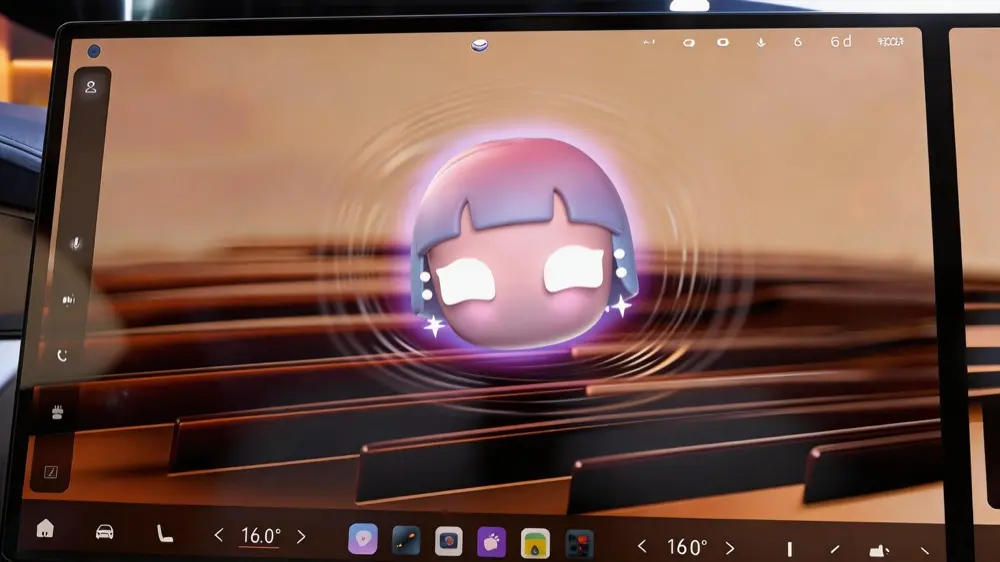
Is your car still running on 1990s computing architecture? While Western automakers patch together separate ECUs for infotainment and advanced driver assistance systems, Geely just made that approach obsolete. On April 17, 2024, Geely Auto Group unveiled China’s first cabin-driving fusion super intelligent agent, launching globally on the flagship Zeekr 8X SUV. This is not merely an upgrade. It represents a fundamental shift from distributed domain controllers to a unified ‘World Action Model’ that treats your vehicle as a single intelligent organism rather than a collection of digital fiefdoms.
The End of Domain Silos: Understanding Cabin-Driving Fusion
For decades, automotive electronics have followed a fragmented architecture. Bosch supplies the ADAS module, Continental handles the cockpit display, and ZF manages chassis control. Each operates in isolation, creating what engineers call ‘information islands.’ Geely’s new architecture obliterates these barriers.
What Makes This Different from Central Computing?
Mercedes and BMW have experimented with centralized domain controllers, but Geely’s implementation goes further. The WAM (World Action Model) architecture does not simply consolidate hardware; it creates a native fusion of perception, data, decision-making, and execution across previously separate vehicle domains.
- Native Fusion: Unlike retrofitting legacy systems, WAM was designed from scratch for physical AI integration
- Cross-Domain Intelligence: The system simultaneously processes cockpit interactions, autonomous driving inputs, chassis dynamics, and powertrain data in a unified model
- Intent-Driven Architecture: Moves from ‘instruction-response’ programming to predictive action based on global vehicle understanding
This matters because Western Tier 1 suppliers have built empires on selling separate control units for each function. Geely’s cabin-driving fusion threatens to collapse these revenue streams into single, integrated platforms—potentially disrupting the $200 billion automotive semiconductor market that Reuters recently highlighted as facing consolidation pressure.
Inside the Super Intelligent Agent: Two Brains, One Body
The Zeekr 8X deploys a dual-component architecture that mirrors human cognition: a thinking center and an execution terminal.
Super Eva: The Cognitive Cortex
Super Eva serves as the ‘thinking hub,’ replacing traditional voice assistants with a system capable of emotional recognition, environmental perception, and complex trip planning. Crucially, it breaks free from the ‘question-and-answer’ paradigm that limits current Western systems like Mercedes MBUX or BMW iDrive.
The system’s five core capabilities include:
- Emotion recognition and contextual awareness
- Environmental sensing integration
- Proactive trip and task planning
- Cabin-driving coordination (the fusion capability)
- Third-party ecosystem service integration
G-ASD 4.0: The Execution Layer
While Super Eva thinks, G-ASD 4.0 (Geely Autonomous Driving) executes. This represents a quantum leap from version 3.0, incorporating three technical breakthroughs:
- End-to-End Fusion: Lateral and longitudinal control merge into a single model, improving lane-change reaction speed by 82% and reducing braking harshness by 60%
- Massive Parameter Model: Integration of Step-3.5’s 196 billion-parameter large model delivers 350 TOPS inference speed
- Data Moat: Training on 850 million vehicles’ worth of data plus Volvo’s 55-year safety database creates barriers Western competitors cannot easily replicate
The result is what Geely calls a shift from ‘human-like driving’ to ‘superhuman driving’—a claim that puts pressure on Tesla’s Full Self-Driving and Waymo’s robotaxi systems, even as Bloomberg reports on accelerating Chinese AI chip development.
Zeekr 8X: Hardware Strategy and Market Positioning
The Zeekr 8X launches with two hardware tiers—H7 and H9—both supporting full ADAS functionality with over-the-air evolution. The H7 configuration notably employs NVIDIA’s Thor chip platform, representing a strategic win for NVIDIA in China’s premium EV sector despite US technology restrictions.
This dual-tier approach allows Geely to democratize cabin-driving fusion across price segments while maintaining premium positioning. For Western investors, this signals that Chinese EV makers are no longer following the ‘good-better-best’ Western playbook; they are implementing top-tier intelligence as standard equipment.
Strategic Implications: Why Detroit and Stuttgart Should Worry
The cabin-driving fusion architecture represents more than technical bragging rights. It threatens the fundamental business model of Western automotive suppliers who have profited from component complexity for generations.
When a single Geely platform replaces twenty separate ECUs, the implications ripple through supply chains. See our analysis on how NIO’s centralized computing challenges traditional tier-1 suppliers for parallel trends in vehicle architecture consolidation.
Furthermore, by leveraging Volvo’s safety heritage (Geely acquired Volvo in 2010) alongside Chinese AI development speed, Geely creates a hybrid innovation model that combines European safety credibility with Shenzhen iteration cycles. This is a combination Detroit cannot easily match.
The Bottom Line
Geely’s cabin-driving fusion launch on the Zeekr 8X marks a technical inflection point. While Western automakers still integrate separate cockpit and ADAS systems through middleware, Geely has achieved native fusion at the architectural level. For investors and industry observers, the question is no longer whether Chinese EVs will match Western technology, but whether Western manufacturers can catch up to China’s integrated intelligent vehicle platforms before the next generation of mobility standards solidifies.