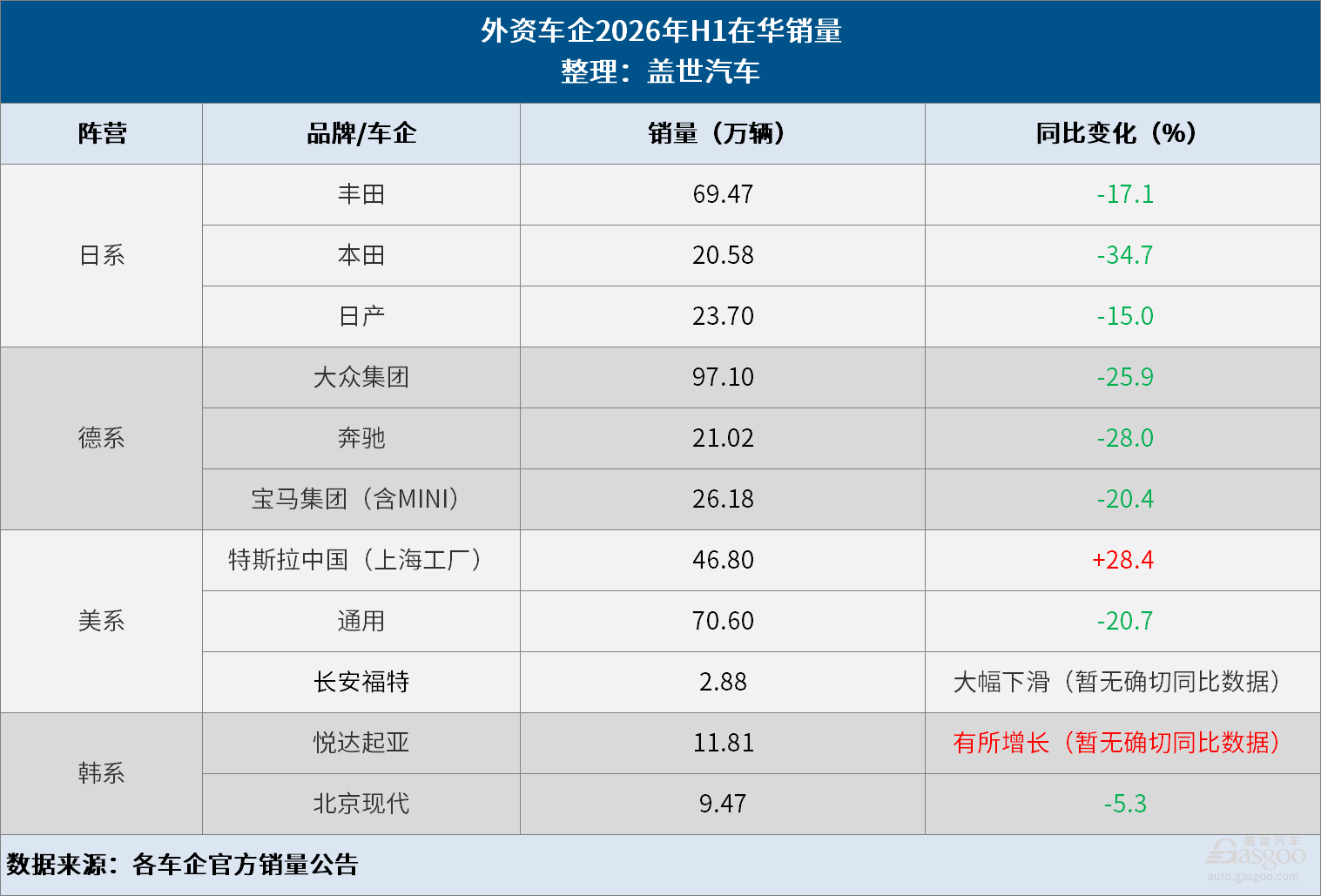
The geopolitical and technological landscape of the global automotive sector is undergoing a historic shift. According to recent market data from the first half of 2026, foreign automakers market share in China has officially fallen below the critical 30% threshold. Over the last five years, legacy international OEMs have seen a staggering volume contraction of approximately 5 million units in the world's largest automotive market. What was once a highly profitable stronghold for joint ventures is now a highly competitive arena defined by rapid technological adaptation.
The Rapid Contraction of Legacy OEM Volume
As a Shanghai-based market analyst monitoring East Asian supply chains, I have watched this transition accelerate over the past 60 months. Five years ago, foreign joint ventures comfortably controlled the majority of Chinese passenger vehicle sales. Today, that structural dominance has eroded. The loss of 5 million units in annual sales volume demonstrates that traditional brand equity is no longer sufficient to secure market share in the face of rapid, software-driven EV innovation.
This displacement is not merely a cyclical downturn; it represents a structural realignment. Western and Japanese legacy OEMs are facing intense competition from domestic players who have optimized their localized regional footprints to deliver highly competitive, technology-rich vehicles at unprecedented speeds.
The Three Pillars of Modern Automotive Competition in China
The divergence in market performance can be mapped to three critical operational dimensions that currently define competitive advantage in the Chinese market:
1. Product Iteration Speed (The 'China-Speed' Benchmark)
Domestic Chinese OEMs have compressed vehicle development lifecycles down to 18–24 months, utilizing parallel hardware-software development. In contrast, many global automakers still operate on traditional 48-to-60-month global development cycles. By the time a foreign platform reaches the market, its thermal management systems, ADAS hardware, and battery chemistry can feel a generation behind local competitors.
2. Localized Supply Chain Integration
Building a resilient, cost-efficient EV ecosystem requires deep integration with local Tier-1 suppliers. Domestic manufacturers have established highly integrated vertical supply chains for LFP (Lithium Iron Phosphate) battery chemistry, power electronics, and advanced thermal management. Foreign OEMs are increasingly recognizing that to remain competitive, they must pivot toward localized strategic sourcing alliances.
3. Smart Cockpit and ADAS Adaptation
The modern Chinese consumer prioritizes the 'intelligent experience'—including highly localized voice recognition, in-car WeChat integration, and advanced driver assistance systems (ADAS) tailored for complex urban environments. Global software architectures developed in Europe or North America often struggle to adapt to these unique regional expectations, creating a software performance gap.
Market Share Dynamics: H1 2021 vs. H1 2026
| Market Segment | H1 2021 Share | H1 2026 Share | Strategic Focus Point |
|---|---|---|---|
| Foreign Joint Ventures | ~52% | < 30% | Strategic localization & digital restructuring |
| Domestic Chinese OEMs | ~48% | > 70% | Vertical integration & global export expansion |
Strategic Implications: Cross-Border Technology Integration
To arrest the decline in foreign automakers market share in China, global OEMs are moving away from standard import or localized assembly models. Instead, we are witnessing a wave of cross-border collaboration. Rather than relying solely on legacy home-country architectures, Western OEMs are actively leveraging local supplier expertise through strategic technology joint ventures.
This includes partnerships where global OEMs co-develop EV platforms alongside Chinese tech companies and EV pioneers. This strategy allows international brands to maintain regulatory supply chain compliance while drastically accelerating their localized product iteration cycles. For global investors, monitoring these strategic sourcing alliances is critical to identifying which legacy automakers will successfully transition their global portfolios to meet the demands of the modern, electrified era.