For years, the global automotive industry has been searching for a holy grail to bypass the chemical limits of lithium-ion technology. That search may have just taken a massive leap forward. A major fluoride-ion battery breakthrough from researchers in Japan has solved a critical chemistry roadblock, paving the way for next-generation batteries that could theoretically deliver up to ten times the energy density of current electric vehicle (EV) packs.
The Chemistry Behind the Fluoride-Ion Battery Breakthrough
Fluoride-ion shuttle batteries (FIBs) have long been recognized by battery scientists as a superior alternative to lithium-ion. Instead of transferring lithium ions, these batteries transfer fluoride ions—the same element found in tap water and toothpaste. Because fluoride is highly electronegative and has a low atomic weight, it allows for exceptionally high energy densities.
However, FIBs have historically suffered from a fatal flaw: they required extremely high operating temperatures (often above 150°C) to make the electrolyte conductive enough for the ions to move. At room temperature, the fluoride ions remained stubbornly stagnant, rendering the battery useless for daily-drive passenger EVs.
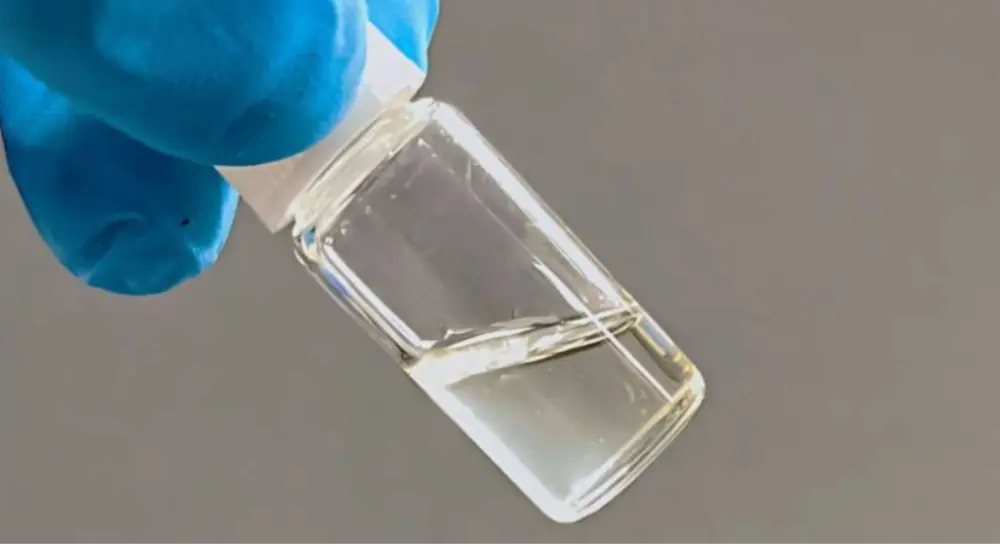
The recent breakthrough by the National Institutes of Natural Sciences (NINS) tackles this exact bottleneck. By designing a completely new, highly stable liquid electrolyte, the team successfully demonstrated efficient fluoride-ion conduction at room temperature. This new chemical formulation prevents the rapid degradation of the anode and cathode while maintaining a fluid state that permits rapid ion shuttle dynamics.
Comparing the Contenders: Lithium-Ion vs. Fluoride-Ion
To understand why global automakers and investment firms are monitoring this development closely, we have to look at the raw theoretical limits of these battery chemistries.
| Battery Metric | Conventional Lithium-Ion (NMC) | Fluoride-Ion (Theoretical Max) |
|---|---|---|
| Energy Density | ~250-300 Wh/kg | Up to 2,500 Wh/kg |
| Raw Material Risk | High (Lithium, Cobalt, Nickel bottlenecks) | Low (Abundant Fluorine, Copper, Iron) |
| Safety Profile | Moderate (Thermal runaway risk) | High (Inherent chemical stability) |
The Geopolitical Chessboard: Japan's IP vs. China's Scale
As a market analyst tracking East Asian supply chains, I see this development as a highly strategic move in the ongoing battery cold war. Currently, China completely dominates the lithium-ion supply chain, controlling over 70% of global battery cell manufacturing. Western OEMs and Japanese giants like Toyota are desperate to find a technological bypass that breaks this Chinese monopoly.
Japan has chosen to focus its national research initiatives on 'beyond-lithium' technologies, particularly solid-state batteries and fluoride-ion chemistries. Toyota, for example, has been quietly patenting fluoride-ion battery designs for years. By resolving the room-temperature liquid electrolyte issue, the NINS team has given Japanese industry a vital piece of intellectual property.
However, history teaches us that laboratory breakthroughs do not always equal market dominance. While Japan may hold the foundational IP for this fluoride-ion battery breakthrough, Chinese battery champions like CATL, BYD, and Gotion High-tech possess unparalleled scaling capabilities. If this liquid electrolyte can be synthesized cheaply, expect Chinese manufacturers to rapidly adapt their gigafactories to produce fluoride-ion cells at a fraction of the cost.
What This Means for Western Investors and OEMs
For strategic planners at companies like Tesla, Ford, or European OEMs, the timeline for commercializing fluoride-ion batteries is still likely 7 to 10 years out. However, this breakthrough shifts the risk matrix. It proves that lithium-ion is not the final destination for transport electrification.
If you are allocating capital to long-term mining operations (such as lithium or nickel mines), you must factor in the rise of alternative chemistries that completely bypass these metals. Fluoride-ion batteries rely on abundant, cheap materials like copper and iron, drastically reducing geopolitical supply chain vulnerabilities.