As global automotive markets pivot toward intelligent driving, industry keynotes are dominated by buzzy terms like 'AI large models on wheels,' '1,000 TOPS autonomous driving computing power,' and 'smart cabin agents.' Yet, beneath the high-tech marketing gloss lies a silent physical constraint that determines whether these innovations actually work in the real world. The ultimate performance of next-generation electric vehicles is increasingly dictated not by their software code, but by their EV thermal management systems.
The Hidden Bottleneck of the 1,000 TOPS AI Race
As an industrial analyst monitoring East Asian supply chains, I have observed a critical design conflict in modern EV architectures: the rapid escalation of computing power is creating unprecedented thermal loads. When an autonomous driving system runs dual Nvidia Orin or next-generation Thor chips, the heat generated requires active, highly precise liquid cooling. If the cooling system fails to keep pace, the ADAS chips are forced to thermally throttle (downclock), directly compromising active safety features in real-time.
Simultaneously, the cabin demands climate control, and the battery pack requires tight temperature window management to sustain ultra-fast 4C or 5C charging speeds. Traditional decoupled cooling loops can no longer handle these competing demands. The industry is rapidly shifting toward integrated thermal management platforms that dynamically route heat energy across three distinct domains: the battery pack, the electric powertrain, and the cabin/compute infrastructure.
Why EV Thermal Management Systems are the New Supply Chain Goldmine
For global investors and Western OEMs, the shifting dynamics within the thermal management supply chain represent an extraordinary arbitrage opportunity. Historically, this market was dominated by global giants like Denso, Mahle, and Valeo. However, agile domestic Chinese suppliers are leveraging local scale and rapid development cycles to capture massive market share.
By shifting from component-level sourcing (valves, pipes, compressors) to highly integrated thermal modules, Chinese Tier 1s are driving down production costs while dramatically improving energy efficiency. The table below outlines how next-generation integrated systems differ from traditional setups:
| Feature / Metric | Traditional Thermal Systems | Next-Gen Integrated Systems (China-Speed) |
|---|---|---|
| Architecture | Fragmented, independent loops | Highly integrated multi-way valve modules |
| Heat Source Utilization | Electric PTC heaters (high energy drain) | Waste heat recovery from powertrain, battery, and AI chips via heat pump |
| Weight & Space Savings | Baseline (heavy copper piping, multiple pumps) | Up to 30% reduction in weight, highly compact packaging |
| Winter Range Recovery | Severe degradation (30-40% loss in sub-zero temps) | 15-25% improvement via advanced thermal scavenging |
Solving the Winter Range Penalty: The Battle for Cold-Weather Efficiency
The core consumer friction point for electric vehicles remains 'winter range anxiety'—particularly for vehicles equipped with Lithium Iron Phosphate (LFP) batteries. While LFP batteries offer superior safety and cost-efficiency, their performance drops precipitously in cold climates.
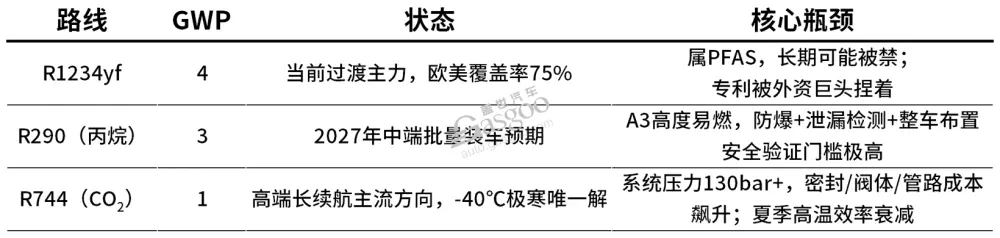
To make pure EVs viable in northern regions, OEMs are implementing advanced carbon dioxide (R744) heat pumps and multi-port electronic expansion valves. By integrating the heat pump with the drive motor's waste heat, the vehicle can warm the battery pack without pulling primary power from the battery itself. This ensures that even under sub-zero conditions, drivers can utilize high-power fast charging and access full ADAS computing capabilities without fear of leaving themselves stranded.
Strategic Takeaways for Western Investors and OEMs
Western automotive executives and investment managers must recognize that the EV race has matured beyond simple software-defined-vehicle (SDV) narratives. The hardware bottleneck is back.
Those who master thermal orchestration will win the market on cold-weather performance, charging times, and computing reliability. Companies like Sanhua Intelligent Controls and Yinlun are no longer just component suppliers; they are strategic gatekeepers of the electric vehicle's overall physical efficiency. As you evaluate the next wave of EV capital allocation, look past the flash of the central infotainment screens—the real compound margins are being generated under the hood in the thermal manifold.