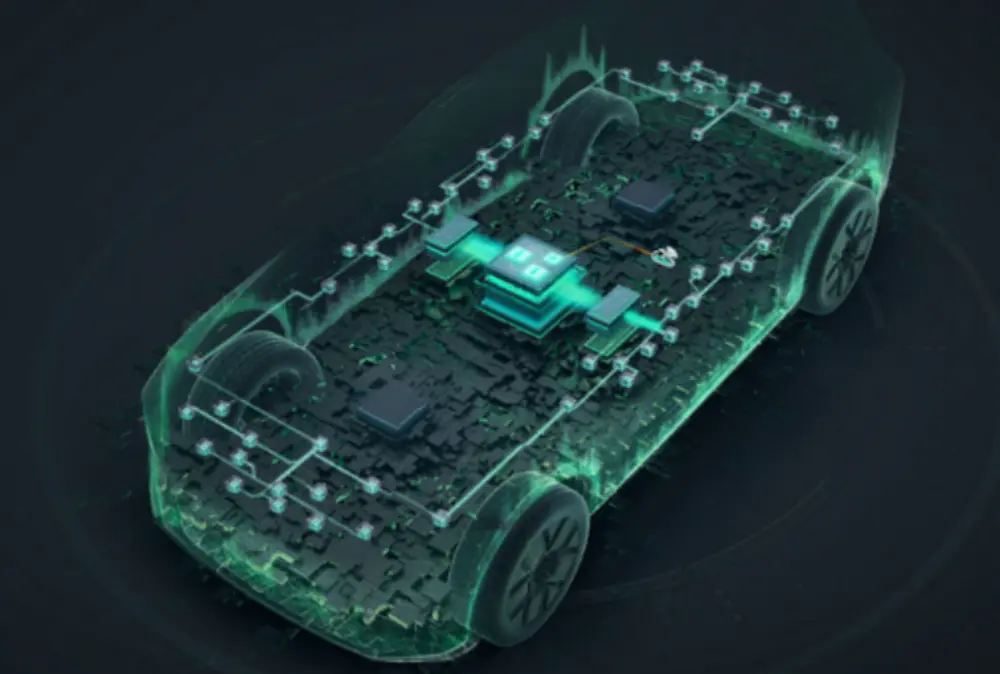
As legacy legacy automakers scramble to narrow the digital gap with China's hyper-competitive electric vehicle sector, a defensive coalition is forming. The emergence of a collaborative European SDV alliance framework represents a major strategic shift. European OEMs, once fiercely protective of their proprietary architectures, are now actively pooling resources to co-develop Software-Defined Vehicle (SDV) middleware and open-source standards. But can this collective defensive maneuver truly match the hyper-iterative 'China-speed' engineering model?
The Software Struggle: Why Europe is Banding Together
For years, European automotive giants like Volkswagen Group, Stellantis, and BMW treated vehicle software as a core proprietary battleground. However, disastrous software delays—headlined by high-profile struggles at VW's software division, CARIAD—have forced a hard shift in reality. The massive capital expenditures required to build proprietary operating systems from scratch are no longer viable under current margin pressures.
By shifting toward an open-source European SDV alliance model, spearheaded by organizations like the Eclipse Foundation and supported by major players like Bosch and ZF, European OEMs hope to standardize non-differentiating middleware. The goal is simple: stop reinventing the wheel on basic OS layers, split the soaring R&D costs, and focus limited engineering talent on consumer-facing digital features.
The 'China-Speed' Benchmark: How Far Behind is Europe?
While European automakers discuss governance models and data-sharing compliance, Chinese OEMs are moving at consumer-electronics speed. Companies like BYD, NIO, and Xiaomi treat the car as a smartphone on wheels, iterating on smart cabin features and advanced driver assistance systems (ADAS) in near-real-time.
This rapid deployment is enabled by three core advantages in the Chinese ecosystem:
- Vertical Integration: Giants like BYD control everything from battery chemistry to semiconductor design and software integration, bypassing fragmented Tier-1 supplier cycles.
- Cross-Industry Tech Alliances: Deep collaborations between automakers and tech giants (e.g., Huawei's HarmonyOS Intelligent Mobility Alliance or Geely's acquisition of Meizu) inject pure-play software talent directly into vehicle architectures.
- Aggressive Regulatory Testing: China's policy frameworks quickly greenlight pilot testing for Level 3 and Level 4 autonomous driving, creating a massive data feedback loop for machine learning models.
Analytical Breakdown: European Collaboration vs. Chinese Integration
To understand the structural challenges facing the European response, we can compare the collaborative alliance approach with China's vertically integrated ecosystem:
| Strategic Dimension | European SDV Alliance Approach | Chinese Vertically Integrated Model |
|---|---|---|
| Development Model | Consortium-led, open-source standardization (e.g., Eclipse SDV) | In-house proprietary vertical integration or dedicated tech joint ventures |
| Decision-Making Speed | Slow, hampered by multi-stakeholder alignment and compliance | Ultra-fast, dictated by hyper-competitive domestic market pressure |
| Software Update Cycle | Months to years (dependent on legacy architecture hardware lifecycles) | Weeks to months via continuous Over-The-Air (OTA) updates |
| Cost Efficiency | High potential for shared cost reduction on non-differentiating stack | Extremely high through massive domestic scale and localized supply chains |
The Core Bottleneck: Culture, Governance, and Integration
As an industry analyst tracking these shifting dynamics, the bottleneck for Europe is not a lack of software talent, but rather organizational inertia. Standardizing basic software APIs through an open-source framework is highly logical, but a vehicle is a complex system of systems. Integrating standardized open-source middleware with highly proprietary, legacy hardware components from different Tier-1 suppliers remains an engineering nightmare.
Furthermore, legacy automakers are structurally risk-averse. The consensus-driven culture of European consortia stands in stark contrast to the fail-fast, iterative software ethos found in Shenzhen and Shanghai. While European engineers debate safety-critical hypervisor standards, Chinese competitors are already deploying generative AI models to improve in-cabin voice assistants and automated parking algorithms.
Strategic Implications for Global Investors and OEMs
For global investors and Western OEMs, the development of the European SDV alliance represents both a defensive lifeline and a warning sign. It is a confession that legacy automakers can no longer go it alone in the digital era.
To survive, European OEMs must accelerate their transition from traditional hardware manufacturers to platform orchestrators. Investors should closely monitor which Tier-1 suppliers successfully position themselves as the core systems integrators within these new open-source ecosystems. However, expecting this collaborative model to miraculously halt the market-share expansion of Chinese smart EVs in regions like Southeast Asia, Europe, and Latin America is highly unrealistic in the short-to-medium term.