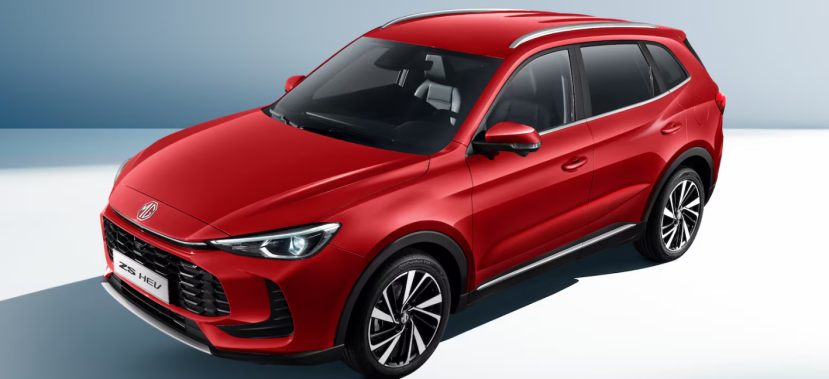
When the European Commission confirmed preliminary discussions indicating that China would substantially curb exports of plug-in hybrid electric vehicles (PHEVs) and extended-range electric vehicles (EREVs) to the European Union over the next four years, trade lawyers in Brussels and automotive strategists in Shenzhen were forced to recalibrate their balance sheets simultaneously. For months, European policymakers focused their regulatory heavy artillery almost exclusively on battery-electric vehicles (BEVs), levying provisional countervailing tariffs reaching up to 35.3% atop standard 10% import duties. Yet, as the pure electric momentum showed signs of cooling among range-anxious European consumers, Chinese original equipment manufacturers (OEMs) deftly shifted production allocations toward sophisticated, high-efficiency dual-motor hybrid architectures. Now, this emerging hybrid escape hatch faces an aggressive diplomatic ceiling.
The geopolitical maneuvering reflects a fundamental shift in global automotive supply dynamics. Historically, Western legacy manufacturers viewed hybridization as their exclusive intermediate bridge—a proprietary transition buffer to amortize billions in legacy internal combustion engine (ICE) tooling while gradually scaling cell production. However, Chinese automakers turned this presumption on its head. Leveraging dedicated hybrid engines operating at over 46% thermal efficiency, coupled with modular Lithium Iron Phosphate (LFP) blade-style traction packs, Chinese PHEVs emerged not as legacy compromises, but as formidable low-cost alternatives to Western diesels and mild hybrids. The specter of volume-capping bilateral accords reveals that Brussels now views hybrid imports with the exact same industrial anxiety previously reserved for low-cost Chinese BEVs.
The Dual-Motor Architecture: Engineering China’s Hybrid Export Wedge
To understand why European authorities are aggressively targeting hybrid imports, one must examine the profound divergence between European parallel-hybrid engineering and China’s dedicated series-parallel electric drive systems. European legacy hybrids—exemplified by platforms from Volkswagen, Stellantis, and BMW—frequently adapted existing longitudinal or transverse automatic gearboxes by sandwiching an electric motor between a turbocharged ICE and a dual-clutch transmission (P2 architecture). While mechanically sophisticated, these legacy designs incur elevated bill-of-materials (BOM) overhead, weight penalties, and compromised thermal efficiency once high-voltage traction batteries deplete.
Conversely, Tier-1 Chinese platforms—such as BYD’s DM-i 5.0, Geely’s Thor EM-i, and Chery’s Kunpeng Super Hybrid—employ dedicated hybrid transmissions (DHT) operating on a Atkinson/Miller thermodynamic cycle. These engines strip out complex multi-speed planetary gearboxes in favor of dual-motor generator/traction setups featuring high-voltage Silicon Carbide (SiC) power electronics. By prioritizing electric motor drive across 80% to 90% of standard urban driving cycles, these vehicles achieve sustained thermal efficiencies between 44.5% and 46.5%, translating to real-world fuel consumption rates dipping below 3.0 liters per 100 kilometers under WLTC conditions, alongside electric-only ranges exceeding 120 km.
| Metric / Architecture | BYD DM-i 5.0 (Seal 06 DM-i) | Geely Thor EM-i (Galaxy Starship 7) | VW Group MQB Evo PHEV (Passat eHybrid) | Stellantis EMP2 PHEV (Peugeot 308 PHEV) |
|---|---|---|---|---|
| ICE Thermal Efficiency (%) | 46.06% | 46.50% | ~40.0% (estimated) | ~38.5% (estimated) |
| Battery Chemistry & Capacity | 15.87 kWh LFP Blade | 19.09 kWh LFP Aegis | 19.7 kWh NCM (Ternary) | 12.4 kWh NCM (Ternary) |
| Transmission Architecture | E-CVT Dual-Motor DHT | Single-Speed DHT Dual-Motor | 6-Speed DSG (Integrated P2 Motor) | 8-Speed e-EAT8 (Integrated P2 Motor) |
| WLTC Pure Electric Range | ~120 km (NEDC ~125 km) | ~101 km | ~100 km | ~60 km |
| Estimated Powertrain BOM Cost | $3,800 – $4,200 | $4,100 – $4,500 | $6,200 – $6,800 | $5,900 – $6,400 |
| European Landed Base Retail Price | €28,000 (Target est.) | €29,500 (Target est.) | €42,000 – €45,000 | €38,000 – €41,000 |
As the comparative data underscores, Chinese hybrid powertrains undercut European architectures on baseline BOM costs by approximately 30% to 40%. The extensive reliance on localized LFP cell chemistries and integrated high-voltage power distribution units (PDUs) eliminates the costly cobalt and nickel dependencies typical of European NCM packs. This technological and economic wedge allows Chinese OEMs to land fully equipped C-segment PHEVs at European ports with retail price tags that undercut domestic European offerings by over €10,000, even after factoring in transatlantic logistics, homologation adjustments, and baseline duties.
Supply Chain Realities and Powertrain BOM Dissection
The aggressive cost advantage displayed by Chinese PHEVs is not merely a product of lower manufacturing labor; it is grounded in complete upstream integration across Tier-1 components. While European automakers rely on fragmented component supply chains—sourcing gearboxes from ZF, e-motors from Valeo, power electronics from Bosch, and NCM cells from CATL or LG Energy Solution—Chinese giants have consolidated almost the entire hybrid value chain in-house.
Consider the bill-of-materials breakdown for an advanced Chinese DHT PHEV compared to an EU legacy equivalent. In the Chinese ecosystem, companies like BYD’s Fudi Technology (FinDreams) and Geely’s Viridi E-Mobility supply the engine block, dual electric motors, hair-pin stator windings, inverter modules, and LFP battery packs internally. By manufacturing the internal combustion engine around simplified single-point direct injection, Atkinson cycles, and eliminating mechanical components like alternators and traditional starter motors (relying entirely on high-voltage Integrated Starter Generators), Chinese OEMs strip out roughly $600 to $800 in mechanical componentry per vehicle.
- Traction Battery & Management: Cell-to-Pack (CTP) LFP configurations deployed in Chinese hybrids cost approximately $55 to $65 per kWh at the pack level, compared to European ternary NCM packs costing between $95 and $115 per kWh.
- Power Electronics: Domestic Chinese SiC MOSFET suppliers like Sanan Optoelectronics, StarPower Semiconductor, and BYD Semiconductor provide high-frequency traction inverters at roughly 25% lower cost than equivalent Western components from STMicroelectronics or Infineon.
- Dual-Motor Transmissions: The integrated planetary or single-speed DHT units developed by Chery, Great Wall Motor (GWM), and Geely avoid complex hydraulic valving and multi-clutch assemblies, dramatically lowering machining cycle times and warranty overhead.
However, this tightly knit supply chain exposes Chinese OEMs to structural friction when export quotas are introduced. Because these low BOM figures depend on massive domestic scale—with Chinese factories running at utilization rates designed to amortize tooling over hundreds of thousands of units—any artificial quota imposed on European destination markets disrupts the revenue optimization models of these manufacturers. Without the ability to export high-margin hybrid volumes into the EU, Chinese OEMs cannot easily offset the crushing price compression currently suffocating their domestic operations.
Competitive Impact: Margin Pressures and Defensive MOATs
The potential implementation of a formal four-year cap on Chinese hybrid exports sends reverberations across multiple industry tiers. In the European theater, legacy OEMs—particularly Stellantis, Renault Group, and Volkswagen—gain immediate tactical breathing space. These European champions had been facing an asymmetric pricing pincer: on one hand, meeting stringent Corporate Average Fuel Economy (CAFE) fleet emission targets for 2025 (mandating a drop to approximately 93.6 g CO2/km) required aggressive electrification; on the other hand, high interest rates and sluggish BEV demand among middle-market European consumers made low-cost hybrids the only viable volume bridge.
Had Chinese automakers been permitted unfettered access to flood the European market with €25,000 to €30,000 PHEVs possessing 100+ km electric ranges, European OEM profitability in the B- and C-segment crossovers would have suffered structural margin erosion. By leveraging export quotas, European automakers preserve vital margin pools in their hybrid portfolios, granting them additional quarters to re-engineer their internal combustion platforms and reduce battery supplier costs without immediate displacement.
For Chinese OEMs, the competitive dynamic splits down structural lines. Well-capitalized players with aggressive localization plans—such as BYD constructing assembly facilities in Szeged, Hungary, and Chery utilizing the former Nissan plant in Barcelona, Spain—can treat an export cap as a temporary operational detour. For them, export limits merely accelerate the transition toward local CKD (Completely Knocked Down) and SKD (Semi-Knocked Down) assembly within European borders. Conversely, second-tier Chinese exporters lacking immediate European capital expenditure commitments (such as GWM, Dongfeng, or SAIC’s hybrid branches) will find their Western growth vectors abruptly constrained, forcing them to redirect export quotas toward Latin America, Southeast Asia, and the Middle East.
The Reality Check: Interrogating the Quota Narrative and Powertrain Limits
While mainstream headlines characterize this bilateral quota framework as a balanced diplomatic compromise, an unsparing engineering and economic interrogation reveals critical contradictions that both Brussels and Beijing are eager to obscure.
First, the mechanics of voluntary export restraint (VER) agreements are notoriously opaque and legally fraught. The European Commission has neither clarified the baseline reference year nor articulated whether the quotas will be measured by absolute unit volume, total invoice value, or fleet carbon weight. Under World Trade Organization (WTO) rules established during the Uruguay Round, formal voluntary export restraints are technically prohibited. Structuring such an accord without triggering formal WTO dispute settlement mechanisms requires delicate, non-binding executive agreements or state-directed licensing quotas managed by the China Chamber of Commerce for Import and Export of Machinery and Electronic Products (CCCME). In practice, state-allocated quotas in Beijing historically favor state-owned enterprises (SOEs) over private champions, introducing internal Chinese friction between players like SAIC and BYD.
Second, the claim that capping PHEV imports will protect European industrial competitiveness ignores the underlying consumer economics of European electrification. European consumers are pivoting toward hybrids precisely because high domestic electricity prices, unreliable public charging infrastructure in Southern and Eastern Europe, and depreciating BEV residual values have diminished pure electric enthusiasm. Restricting the flow of high-efficiency, cost-effective hybrids does not automatically force European buyers into domestic BEVs; rather, it risks extending the operating life of aging, higher-polluting internal combustion vehicles, inadvertently undermining the EU’s decarbonization milestones.
Furthermore, one must interrogate the technological sustainability of Chinese high-efficiency hybrid claims under real European operating conditions. The 2,000+ kilometer combined driving ranges touted by Chinese OEMs during domestic press conferences rely heavily on lenient CLTC (China Light-Duty Vehicle Test Cycle) protocols. When evaluated under European WLTC standards and subjected to high-speed Autobahn cruising, the ultra-lean Atkinson engines and single-speed DHTs lose their peak thermal efficiency advantage. In sustained high-speed driving—where the ICE directly couples to the wheels without battery buffering—Chinese dual-motor hybrids exhibit fuel consumption figures virtually indistinguishable from conventional European turbocharged engines. The narrative that Chinese PHEVs represent an unassailable technological leap across all operating domains is, at best, a carefully curated marketing narrative that collapses under rigorous European duty-cycle validation.
Regulatory Mechanics and Geopolitical Localization Frameworks
The regulatory trajectory governing EU-China automotive relations is rapidly evolving beyond simplistic border tariffs into an intricate web of rules-of-origin standards, foreign subsidies regulations, and local value-add requirements. Even if Beijing and Brussels formalize a 4-year export quota on imported completely built-up (CBU) hybrids, this mechanism only covers vehicles physically manufactured in mainland China.
To navigate this landscape compliantly, Chinese manufacturers are already structuring localization pathways that comply with European Union trade statutes. Under current EU rules of origin, a vehicle assembled in Hungary or Spain must demonstrate a minimum of 45% to 50% non-originating material processing or localized European value addition to circulate tariff-free within the single market. Achieving this threshold without localizing the most capital-intensive component—the high-voltage traction battery—is nearly impossible.
Consequently, the race is on to build localized battery cell and pack supply chains within the Schengen zone. CATL’s massive 100 GWh facility in Debrecen, Hungary, along with EVE Energy’s planned site in Debrecen and Envision AESC’s investments in Spain and France, are designed specifically to provide the necessary local content documentation. Chinese OEMs localizing vehicle assembly will increasingly source localized European cells or import battery modules under strict customs compliance protocols, transforming what was once a direct trade flow into an integrated European industrial footprint.
Simultaneously, the European Commission’s Foreign Subsidies Regulation (FSR) empowers Brussels to investigate whether state subsidies granted in China distort acquisitions, joint ventures, or industrial investments made by Chinese firms inside the EU. Thus, any attempt by Chinese automakers to artificially subsidize their localized European factories using domestic Chinese balance sheets could trigger fresh legal scrutiny, fines, or operational restrictions. Navigating these regulatory guardrails requires rigorous corporate governance, decoupled financing structures, and authentic joint ventures with European tier-1 engineering partners.
Strategic Outlook and Investor Scenarios
As the European Commission and China’s Ministry of Commerce refine the parameters of this hybrid containment strategy, institutional investors and automotive executives must plan around three distinct operational trajectories over the 2025–2029 regulatory cycle.
Bull Case
Under this scenario, the 4-year quota acts as an orderly floor rather than a punitive ceiling. Chinese OEMs allocate high-margin, top-trim hybrid variants to fill their export quotas, prioritizing gross profit over raw unit volume. Domestic European assembly plants in Hungary, Spain, and Turkey ramp up ahead of schedule, achieving the required 45%+ local content thresholds by late 2026. European legacy OEMs retain intermediate pricing power on their own PHEV lineups without facing predatory price slashing, while Chinese players successfully establish entrenched manufacturing footprints inside the European Union, permanently bypassing CBU trade barriers.
Base Case
Bilateral quota negotiations drag on with ambiguous quarterly limits, creating administrative friction and irregular delivery cadences across European dealership networks. Chinese automakers manage to maintain modest hybrid sales volumes in core markets like Germany, the UK, and Italy, but face localized pushback and increased homologation scrutiny under WLTC and Euro 7 emissions rules. Meanwhile, high capital expenditures on European factory construction compress Chinese OEM operating margins, dampening cash flow while domestic price wars in China continue unabated. Western OEMs maintain their current European market share but face persistent margin pressure in neutral export markets across Southeast Asia and Latin America.
Bear Case
Trade negotiations stall or collapse over quota allocation disputes, prompting Brussels to extend formal countervailing anti-subsidy duties directly to all Chinese-manufactured hybrid powertrains. In retaliation, Beijing limits critical mineral exports—such as dysprosium, terbium, and synthetic graphite—essential for European motor and battery production. Simultaneously, the European Commission initiates aggressive Foreign Subsidies Regulation audits into Chinese greenfield factories in Eastern Europe, delaying local production timelines by years. Chinese hybrid inventories build up at home, triggering intensified domestic price cuts that threaten the solvency of mid-tier Chinese automakers, while European automakers struggle to meet 2025 CAFE fleet emission mandates, incurring billions in regulatory fines.
- Portfolio Exposure Rebalancing: Institutional investors should treat Chinese OEM export volume projections with deep skepticism, discounting revenue forecasts that rely on unfettered hybrid expansion into Western Europe over the 2025–2028 timeframe.
- Capital Expenditure Scrutiny: Prioritize Chinese automakers with balance sheets robust enough to absorb the dual burden of domestic price compression and massive capital deployments for localized European manufacturing (e.g., BYD, Geely).
- European OEM Breathing Space: Recognize that European legacy manufacturers (Volkswagen Group, Stellantis, Renault) have secured a temporary margin shield in the PHEV segment, providing a 24- to 36-month window to optimize their dedicated EV platforms.
- Tier-1 Supply Chain Decoupling: Monitor the localized European battery ecosystem closely; the true winners of this regulatory confrontation will not be vehicle importers, but localized infrastructure providers and cell gigafactories meeting EU rules-of-origin standards.