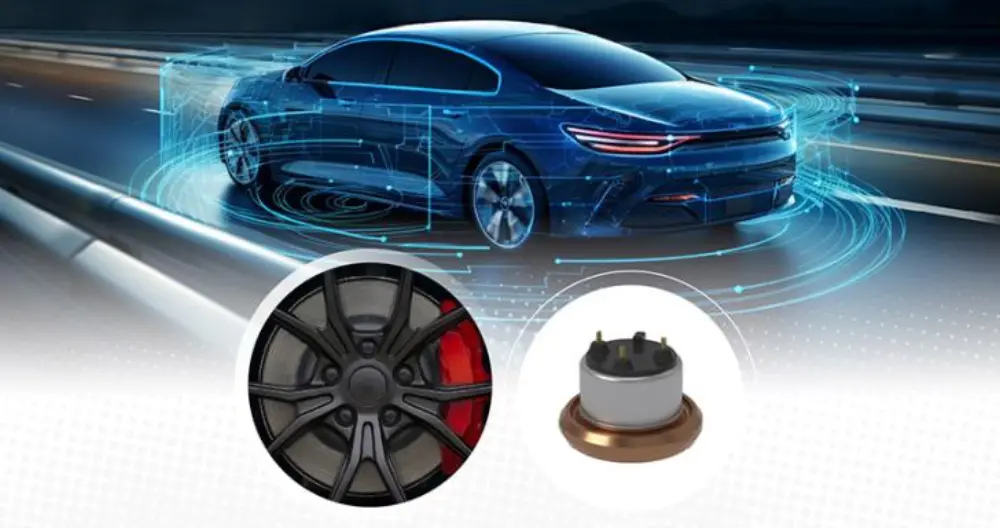
When automotive tier-1 supplier Sensata Technologies announced that its specialized brake force and clamping pressure sensors had entered volume series production across several mainstream electric vehicle platforms, financial desks largely treated it as an incremental component win. In reality, it marks a critical flashpoint in the transition toward fully dry electro-mechanical braking (EMB). For over a century, passenger vehicle deceleration has relied on incompressible hydraulic fluid to transfer kinetic command from the pedal to friction calipers. The elimination of master cylinders, vacuum boosters, hydraulic fluid reservoirs, and complex valve blocks is not merely an engineering tidiness project; it is an architectural prerequisite for software-defined vehicles (SDVs) and Level 3+ autonomous driving systems requiring sub-100-millisecond emergency deceleration response loops.
Yet behind the polished press communications and Tier-1 promotional rhetoric lies a far more unforgiving engineering and economic reality. The complete purge of brake fluid introduces extreme thermal, mechanical, and electrical challenges directly onto the wheel hub. As automakers attempt to scale electro-mechanical braking across mass-market lineups, the automotive supply chain is dividing into two camps: legacy tier-1s attempting to amortize existing electro-hydraulic 'One-Box' architectures, and aggressive Chinese EV platforms pushing for unproven, all-dry caliper actuation to unlock marginal gains in regenerative braking efficiency and aerodynamic packaging.
The Anatomy of Dry Actuation: Dissecting Caliper-Level Force Sensing
To grasp why Sensata's force sensor matters, one must dissect the physical mechanics of an electro-mechanical brake caliper. In conventional electro-hydraulic systems—such as Bosch's IPB, Continental's MK C2, or Bethel Automotive's WCBS—a central brushless motor creates hydraulic pressure inside a unified housing, which is then distributed via brake lines to slave cylinders at each corner. Deceleration force is controlled via line pressure sensors measuring hydraulic fluid resistance. In an electro-mechanical braking setup, the entire hydraulic circuit is eliminated. Each wheel hub houses an autonomous electromechanical actuator comprising a high-torque brushless DC (BLDC) motor, a planetary reduction gearbox, a ball-screw or roller-screw mechanism, and a high-precision force sensor.
When the electronic stability control (ESC) or autonomous driving domain controller requests 0.8g of deceleration, the caliper motor spins, driving the lead screw to clamp the brake pads directly against the cast iron or carbon-ceramic rotor. Unlike hydraulic systems where fluid pressure inherently balances across piston faces, an electromechanical clamp has zero hydraulic compliance. Without continuous, direct feedback of actual clamping force (measured in kilonewtons), the motor would rely on motor current monitoring (amperage draw) or Hall-effect rotor position tracking to estimate braking torque. Both methods are fatally flawed in safety-critical applications due to thermal expansion, pad wear hysteresis, and gear-train friction variation.
Sensata's integration utilizes microfused silicon strain gauge (MSG) or piezo-resistive thin-film sensing elements integrated directly into the caliper's load-bearing mechanical path. These sensors measure real-time clamping forces up to 30 kN with sub-1% accuracy across an operational thermal spectrum spanning -40°C to +150°C. By feeding precise clamping force measurements into the local wheel-end actuator micro-controller at frequencies exceeding 1 kHz, the system achieves closed-loop clamping control that closes the physical air gap between pad and rotor within 70 to 90 milliseconds—roughly half the time of an optimized One-Box electro-hydraulic unit and nearly one-third the latency of traditional vacuum-assisted configurations.
| Metric / Architectural Parameter | Conventional Vacuum / Two-Box | Electro-Hydraulic One-Box (Bosch IPB / Conti MK C2) | Electro-Mechanical Braking (Full Dry EMB) |
|---|---|---|---|
| Hydraulic Fluid Circuit | Full hydraulic (DOT 4/5.1) with external lines | Full hydraulic internal loop with steel lines | None (100% dry, copper harness only) |
| Time to Max Clamping Force (100 bar / 25 kN) | 250 - 350 ms | 120 - 150 ms | 65 - 90 ms |
| Autonomous Emergency Braking (AEB) Stopping Distance Delta (100-0 km/h) | Baseline (approx. 36.5 m) | -1.2 m reduction vs baseline | -2.5 to -3.8 m reduction vs baseline |
| Weight per Vehicle (Base System) | 10.5 - 13.0 kg | 7.5 - 9.0 kg | 6.0 - 7.2 kg (actuators + sensors) |
| Parasitic Drag Torque | 1.5 - 3.0 Nm per wheel | 0.8 - 1.5 Nm per wheel | <0.2 Nm per wheel (active retraction) |
| Electrical Bus Requirement | Standard 12V DC | Standard 12V DC (peak 40-60A) | Dual 12V or Dedicated 48V (peak 30-80A/corner) |
| Functional Safety Redundancy (ISO 26262) | Mechanical hydraulic fallback | Secondary electronic booster or dual-circuit | Full fail-operational dual-rail power & CAN-FD / FlexRay |
Supply Chain Reconfiguration: The Looming Displacement of Fluid Ecosystems
The operational shift signaled by Sensata's commercial sensor deployment initiates a multi-billion-dollar supply chain reallocation. In a mature automotive platform, brake calipers, master cylinders, brake hoses (EPDM rubber and stainless steel braid), brake fluid filling equipment, and ABS/ESC valve assemblies represent roughly $280 to $420 in total bill-of-materials (BOM) cost per vehicle. The suppliers that have dominated this domain for half a century—Brembo, Akebono, Advics, Nissin Kogyo, alongside Tier-1 systems integrators like Bosch, ZF Friedrichshafen, and Continental—face an aggressive hardware disruption.
In an electro-mechanical braking environment, the bill of materials transforms radically. The hydraulic fluid lines, fluid reservoirs, vacuum hoses, and bleeding valves disappear entirely. In their place emerges a mechatronic bill of materials: automotive-grade silicon microcontrollers (MCUs) certified to ASIL-D, high-power silicon-carbide (SiC) or silicon MOSFET motor drivers, precision planetary roller screws manufactured to micron tolerances, high-resolution angular encoders, and Sensata-style dynamic force sensors. While a traditional floating hydraulic caliper costs an OEM approximately $25 to $40 to procure, a fully integrated dry EMB smart caliper actuator currently commands an estimated OEM procurement cost of $85 to $130 per corner.
This cost premium explains why Tier-1 suppliers have historically proceeded with cautious incrementalism, pushing 'hybrid' brake-by-wire configurations (dry EMB on the rear axle, hydraulic One-Box on the front axle) rather than committing to full four-wheel dry architectures. Western Tier-1s are encumbered by billions in unamortized capital expenditures tied to electro-hydraulic assembly lines. Conversely, domestic Chinese chassis specialists such as Bethel Automotive Safety Systems (WBTL), NASN Automotive Electronics, and Tongyu Automotive are bypassing multi-generation hydraulic iteration, partnering with specialized component manufacturers like Sensata to pitch pure dry chassis solutions directly to agile domestic EV OEMs like NIO, XPeng, Zeekr, and BYD.
Competitive Dynamics: Western Incumbents vs. China's Chassis Insurgency
The industrial struggle for chassis domain dominance is no longer fought over horsepower or damper valving; it is defined by software-to-torque latency and zonal compute integration. For Western legacy automakers like BMW, Volkswagen Group, and General Motors, the migration toward full electro-mechanical braking is treated as a long-cycle validation exercise scheduled for late-decade architecture revisions. These OEMs have spent decades refining ABS slip-control algorithms tied to hydraulic fluid compliance. The non-linear behavior of hydraulic fluid—its compressibility changing across temperature swings from freezing Scandinavian winters to blistering desert testing—is exhaustively mapped in their safety architectures.
By contrast, Chinese EV manufacturers operate under shortened 24-month vehicle development cycles and perceive electro-mechanical braking as an immediate commercial differentiator. In the competitive Chinese retail market, where vehicle dynamics are measured against advanced urban ADAS benchmarks, shaving two meters off high-speed autonomous emergency braking (AEB) distances offers undeniable consumer marketing appeal. More critically, an all-dry brake system eliminates the messy, labor-intensive hydraulic fluid vacuum-fill process on assembly plant lines, shaving estimated assembly cycle times by 45 to 60 seconds per chassis.
Furthermore, full electro-mechanical braking enables active pad retraction. In conventional hydraulic brakes, residual pad-to-disc contact generates continuous parasitic drag torque averaging 1.0 to 2.5 Nm per wheel, quietly draining vehicle efficiency. By employing Sensata force sensors in conjunction with closed-loop motor control, an EMB caliper can physically retract the brake pads by tenths of a millimeter the millisecond deceleration demand terminates. This operational nuance eliminates friction parasitic loss, extracting an estimated 1.5% to 3.0% in real-world battery range extension without altering battery cell chemistry or inverter switching topology.
The Reality Check: Thermal Caps, 48V Dependency, and the ASIL-D Redundancy Paradox
Despite the undeniable theoretical advantages of dry brake-by-wire, industry reports trumpeting the imminent extinction of hydraulic systems overlook several severe physics and architectural barriers. Critical engineering interrogation reveals substantial vulnerabilities that manufacturers routinely downplay during product launches.
The Unforgiving Wheel-End Thermal Environment
The primary reason hydraulics survived for a century is that brake fluid effectively acts as a hydraulic conduit, allowing sensitive mechanical valves, electronic controllers, and master cylinders to reside safely inside the protected engine bay or frunk, isolated from the intense kinetic heat generated at the wheel hub. Under severe track use, repeated Alpine descents, or high-speed gross-vehicle-weight emergency stops, brake rotor temperatures routinely exceed 650°C. Conductive, convective, and radiant heat transfers directly into the caliper bridge.
In an electro-mechanical braking architecture, the electric drive motor, planetary gear reduction set, electronic control board, and Sensata force sensor are bolted directly to the caliper housing. While Sensata rates its sensor elements up to 150°C, the localized thermal environment during sustained high-load friction braking can degrade magnetic flux in permanent-magnet BLDC motors, break down synthetic gear lubricants, and induce thermal drift across strain gauge micro-bridges. If the electronic force sensor drifts due to extreme heat soak, the control loop risks applying incorrect clamping pressure, leading to asymmetric braking or catastrophic brake fade. Until Tier-1 suppliers provide independent, open-access lifecycle data demonstrating that wheel-end electronics can withstand 10 years of road-debris impact, corrosive salt brine, vibration shocks exceeding 20g, and 700°C thermal spikes, skepticism regarding long-term reliability remains fully justified.
The 12-Volt Power Bottleneck
A second severe constraint lies in the vehicle's electrical distribution network. Generating 25 to 30 kN of mechanical clamping force across four calipers within 80 milliseconds demands substantial instantaneous electrical power—up to 1.5 kW to 2.0 kW under peak dynamic ABS cycling. On a conventional 12-volt low-voltage electrical architecture, delivering 2.0 kW requires currents approaching 160 amperes. Routing high-amperage copper wiring through dynamic suspension knuckles requires thick, heavy, inflexible wiring harnesses that compromise unsprung mass and fatigue life.
Full-vehicle electro-mechanical braking is fundamentally optimized for 48-volt low-voltage zonal architectures, such as that introduced on the Tesla Cybertruck. At 48 volts, current demands plummet to manageable levels (under 40 amperes peak), allowing lighter, flexible wiring. However, the vast majority of Western and Chinese EV platforms remain anchored to legacy 12V low-voltage rails for interior switchgear, lighting, and sensor suites. Forcing EMB onto a 12V vehicle requires bulky supercapacitor buffer banks or expensive localized DC-DC converters at each corner, substantially wiping out the weight and cost benefits of discarding hydraulic lines.
The ISO 26262 ASIL-D Redundancy Penalty
Under functional safety standard ISO 26262, braking is classified under the most rigorous safety category: ASIL-D. In a traditional electro-hydraulic One-Box system, if the brushless motor, compute unit, or power supply suffers catastrophic failure, a mechanical pushrod connected to the driver's brake pedal operates a secondary hydraulic master cylinder, providing an unassisted physical fallback to stop the vehicle. The laws of fluid mechanics provide the ultimate safety net.
In a dry electro-mechanical braking architecture, there is zero physical or mechanical connection between the driver's foot and the brake pads. A complete loss of electrical power or a total network bus failure means zero braking force. Consequently, every EMB caliper actuator must feature dual-wound motor stators, dual-isolated microcontrollers, redundant communication buses (dual CAN-FD or FlexRay), and dual-rail low-voltage power feeds fed by isolated battery sources. This mandatory hardware redundancy drives up the component count, weight, and procurement cost of the electronic architecture. Industry claims that EMB represents an immediate cost-neutral alternative to One-Box systems fall apart under objective bill-of-materials scrutiny.
Global Regulatory Divergence and Standardization Obstacles
Beyond the thermal and electrical physics, electro-mechanical braking faces an uneven international regulatory framework. Automotive homologation requirements historically mandated a physical, hydro-mechanical transmission path between the driver control interface and the friction pads. In the European Union and UNECE signatory markets, UNECE Regulation 13-H has been progressively revised to accommodate complex electronic brake control systems (ECBS), permitting electronic transmission paths provided rigorous fail-safe and secondary performance criteria are documented. However, compliance validation requires extensive physical testing under simulated electrical faults, adding tens of millions of dollars to platform certification expenses.
In the United States, the National Highway Traffic Safety Administration (NHTSA) enforces Federal Motor Vehicle Safety Standard (FMVSS) No. 135 (Light Vehicle Brake Systems). While FMVSS 135 accommodates non-hydraulic actuators, its strict mechanical parking brake performance thresholds, energy reserve requirements, and warning indicator protocols create legal liability ambiguities for manufacturers deploying full-dry architectures. Western OEMs, perennially fearful of class-action tort exposure in the American market, are predictably conservative. They prefer deploying dry calipers initially on the rear axle—where the electric park brake (EPB) functionality already exists—while maintaining an electro-hydraulic One-Box system on the front axle to preserve physical redundancy for primary stopping power.
Conversely, Chinese regulators overseen by the Ministry of Industry and Information Technology (MIIT) are aggressively standardizing national GB standards to accelerate by-wire chassis deployment. The strategic imperative is clear: China's industrial policy views steer-by-wire and brake-by-wire as the core enabling physical layers for autonomous mobility and domestic semiconductor dominance. By standardizing testing protocols for dry EMB earlier than Western bodies, China is actively positioning its domestic component suppliers to export mature by-wire hardware just as Western markets finally harmonize their regulatory frameworks.
Strategic Outlook: Investment Trajectories and Enterprise Scenarios
The commercial rollout of Sensata's brake force sensor demonstrates that dry electro-mechanical braking has advanced from an engineering research concept to a commercially viable tier-1 component. Yet the pace of market penetration will vary dramatically across vehicle segments, electrical architectures, and geographic zones over the next 3 to 7 years.
Bull Case Scenario
Accelerated migration to 48V zonal electrical architectures across premium EV platforms (spearheaded by Tesla, NIO, and luxury European nameplates) triggers rapid scale economies for dry actuators. Tier-1 suppliers achieve manufacturing yield stability on planetary roller screws and integrated ASIL-D sensor-motor modules, dropping four-corner EMB system BOM costs to within 15% of premium One-Box hydraulic systems by 2028. Superior packaging, active pad retraction range gains, and sub-70ms emergency braking metrics compel mainstream OEMs to adopt full EMB across top-trim performance sedans and commercial robotaxi fleets, capturing 12% to 15% of new EV chassis production by 2030.
Base Case Scenario
Automakers adopt a fragmented, evolutionary deployment model. Most high-volume EV platforms standardize on a 'hybrid' brake-by-wire topology: maintaining a proven, cost-effective electro-hydraulic One-Box actuator on the front axle while replacing rear hydraulic calipers with dry electro-mechanical units. Sensata and competing sensor manufacturers secure consistent, moderate-volume contracts for rear-axle applications and select flagship models. Full four-wheel dry EMB remains restricted to ultra-luxury EVs, niche performance models, and specialized L4 autonomous shuttles, representing roughly 4% to 6% of the global passenger car market through 2031.
Bear Case Scenario
Severe thermal fatigue failures or wheel-end sensor reliability anomalies emerge in early series-production batches operating under harsh winter road-salt or heavy track environments, provoking regulatory scrutiny and costly OEM field service campaigns. Concurrently, legacy electro-hydraulic One-Box suppliers slash pricing and roll out advanced sub-100ms hydraulic modulation units that effectively close the performance delta with dry actuators. OEMs determine that the hefty cost of dual-rail power redundancy and 48V architecture conversion outweighs the marginal efficiency benefits, stranding capital investments and delaying widespread EMB deployment well into the 2030s.
Executive & Investor Strategic Takeaways
- Component vs. Systems Disruption: Component suppliers with proprietary IP in high-durability, harsh-environment sensing—like Sensata—are well-positioned regardless of whether adoption is full-dry or hybrid EMB. However, pure-play hydraulic component manufacturers face structural, irreversible volume decline over a multi-decade horizon.
- The Architecture Decoupling Bottleneck: Do not evaluate brake-by-wire adoption in isolation. An OEM cannot cost-effectively deploy four-wheel dry electro-mechanical braking without simultaneously transitioning to a 48V low-voltage zonal architecture to support high transient current draws.
- Geographic Testing Ground: Watch Chinese domestic Tier-1s (Bethel, NASN) and agile Chinese OEMs as the early-adoption barometer. If Chinese series-production models successfully scale full dry systems through 2026 without catastrophic recall campaigns, Western legacy OEMs will be forced to compress their conservative 7-year validation cycles.
- BOM Cost Realism: Despite PR narratives promising manufacturing simplification, full-dry EMB currently represents a significant system-level bill-of-materials cost penalty over mature electro-hydraulic units due to mandated ASIL-D dual-winding motors, compute redundancy, and fault-tolerant low-voltage power networks.