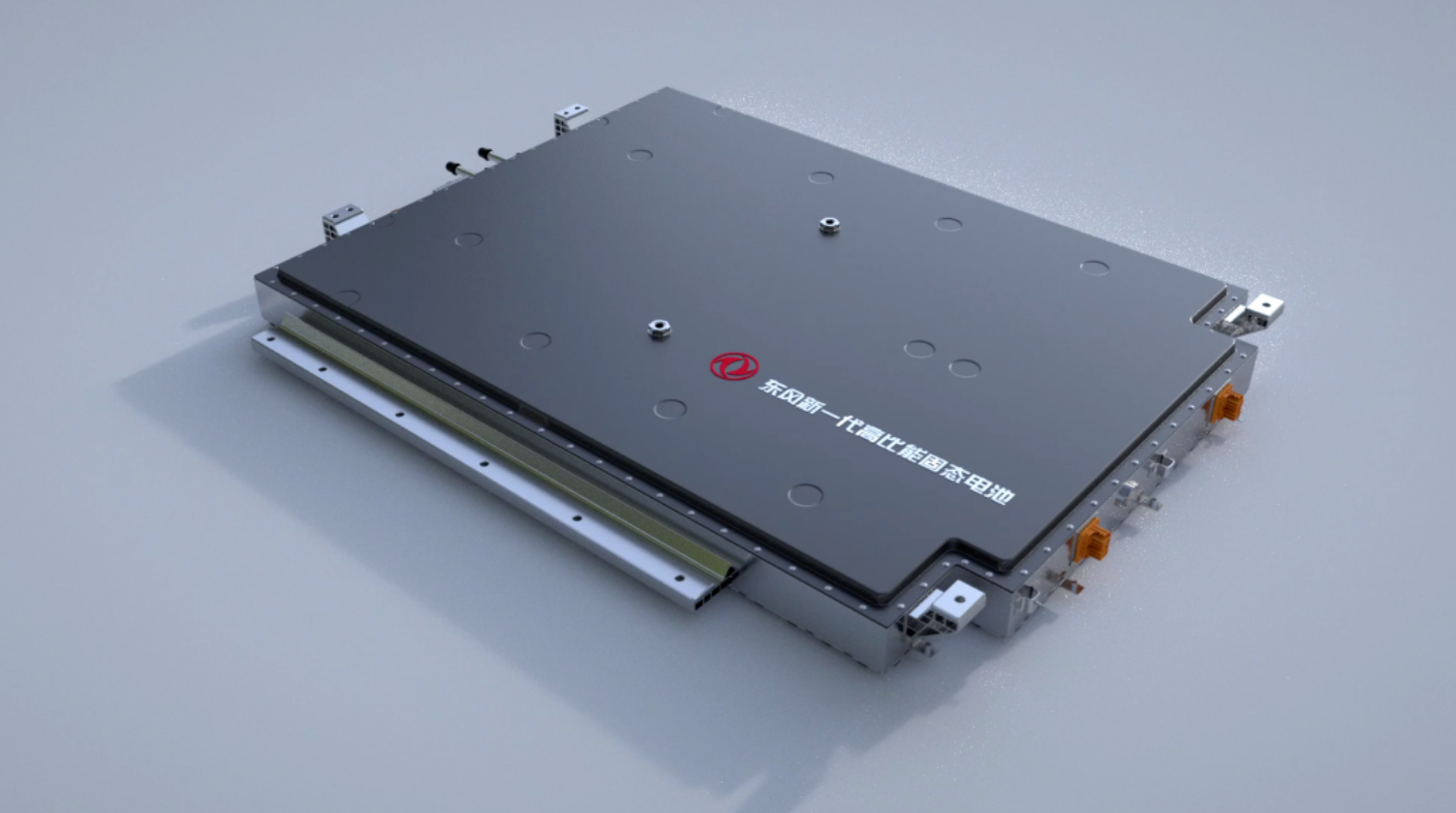
The race for the 'holy grail' of EV technology just took a massive leap forward. Dongfeng Motor, one of China's 'Big Four' state-owned automakers, has officially announced that its self-developed next-generation Dongfeng solid-state battery mass production will begin in the second half of 2024. This milestone bypasses the multi-year timelines of Western competitors and signals an aggressive acceleration in China's next-gen EV chemistry dominance.
Breaking Down Dongfeng's Oxide-Polymer Chemistry
While the industry has debated whether solid-state batteries are a near-term reality or a distant dream, Chinese OEMs have been quietly executing. Since 2018, Dongfeng's specialized R&D team has focused on an oxide-polymer composite route. This specific chemical pathway offers a crucial compromise between safety, energy density, and manufacturing feasibility.
By using a highly thermally stable solid-state electrolyte, Dongfeng's chemistry fundamentally lowers the risk of thermal runaway (battery fires) while packing significantly more energy into the same physical volume compared to traditional liquid lithium-ion cells. Unlike Western start-ups focusing heavily on pure sulfide-based systems—which are notoriously difficult to manufacture at scale due to moisture sensitivity—Dongfeng's composite approach balances performance with rapid scale-up capability.
How Dongfeng Solved the 'Solid-State Production Gap'
The transition from lab to line is where most solid-state battery concepts die. The high rigidity of solid-state electrolytes typically results in wide electrode gaps and high internal resistance, making mass manufacturing highly unstable. Dongfeng claims to have bypassed this bottleneck by optimizing chemical formulas and manufacturing processes directly based on real-world vehicle use cases.
Furthermore, Dongfeng's pilot workshop in Wuhan has already achieved fully automated production line operations. The facility handles over 20 intricate manufacturing processes—including feeding, coating, baking, and welding—with complete, independent intellectual property rights over everything from electrode materials to final battery pack integration.
Global Solid-State Timeline: China vs. The World
To understand why the Dongfeng solid-state battery mass production announcement is sending shockwaves through the automotive world, we must look at the global competitive landscape:
| Company / Region | Battery Chemistry Route | Target Timeline |
|---|---|---|
| Dongfeng (China) | Oxide-Polymer Composite | H2 2024 (Mass Production) |
| Toyota (Japan) | Sulfide-based Solid-State | 2027-2028 (Commercialization) |
| QuantumScape / VW (US/EU) | Anode-free Ceramic Separator | Late 2026+ (B-Sample Testing) |
Strategic Implications for Western Investors and OEMs
As a market analyst, this milestone highlights a widening technological asymmetric gap. Western OEMs (Tesla, Ford, Volkswagen) are largely relying on third-party joint ventures or early-stage startups that are still years away from high-yield mass production. Meanwhile, Chinese automakers like Dongfeng, SAIC (with IM Motors' Lightyear battery), and NIO (utilizing WeLion semi-solid cells) are actively putting solid-state technology on the road.
For global investors, this signals that China's lead in the EV transition is no longer just about cheap labor or scale; it is fundamentally about chemistry innovation leadership. Any strategic pivot for Western automotive suppliers must now account for Chinese solid-state solutions undercutting the cost and outperforming the safety of localized Western battery setups by mid-decade.