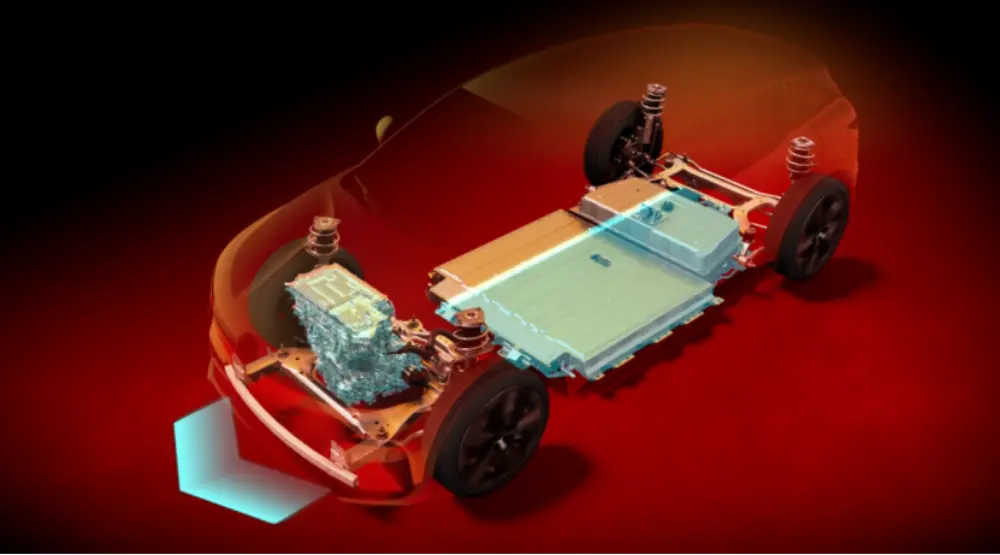
For years, the global automotive sector has been captivated by the promise of all-solid-state batteries (ASSBs). Promoted as the ultimate holy grail of electric vehicle (EV) range and safety, Western OEMs have invested billions waiting for this technological breakthrough. However, behind the scenes of 'China-speed' innovation, a strategic pivot is occurring. Leading Chinese automakers are realizing they cannot afford to wait for ASSBs while fighting an aggressive domestic price war. Instead, they are aggressively scaling Chinese semi-solid-state batteries as an immediate commercial compromise to unlock near-term profitability.
The Solid-State Mirage vs. The Semi-Solid Reality
At the 2025 World Power Battery Conference, China Automotive Technology and Research Center (CATARC) Chief Scientist Wang Fang clarified the regulatory roadmap by establishing a clear taxonomy: liquid, solid-liquid hybrid (semi-solid), and all-solid-state. Following this classification, the market hype briefly cooled. However, at the recent 2026 Future Car Pioneer Conference, semi-solid-state batteries (SSBs) surged back to the center of strategic discussions.
The reason is simple: All-solid-state mass adoption is taking much longer than optimistic PR campaigns suggested. Industry leaders, including Changan’s Deepal brand CEO Deng Chenghao, have adjusted their targets, noting that true mass-market integration of ASSBs will not realistically scale until 2030 or later. With pressure mounting to turn a profit today, waiting half a decade is a luxury Chinese OEMs cannot afford.
Why Chinese OEMs Are Orchestrating a Strategic Pivot to Semi-Solid Tech
As a Shanghai-based market intelligence analyst tracking supply chains, I see this shift not as a compromise in standards, but as a masterclass in pragmatism. Chinese automakers are using semi-solid-state batteries to gain an immediate edge in two critical areas:
1. The Profitability Equation
Developing ASSBs requires entirely new manufacturing facilities, precise moisture-free environments, and expensive raw materials. Conversely, semi-solid-state batteries—which combine solid electrolytes with a reduced amount of liquid electrolyte—can be manufactured on retrofitted lithium-ion production lines. This significantly lowers capital expenditure, allowing OEMs to improve vehicle margins and energy density without absorbing astronomical R&D costs.
2. Mitigation of the 'China Information Gap'
While Western media remains focused on the distant horizon of 2030 solid-state targets, Chinese OEMs are quietly deploying solid-liquid hybrids to capture market share. These vehicles offer energy densities upwards of 360 Wh/kg, effectively curing consumer range anxiety today while domestic competitors are still dependent on standard LFP and NCM chemistries.
Comparing China’s Leading Semi-Solid Battery Players
To understand how this technology is scaling, we must look at the key partnerships between battery disruptors and Chinese OEMs:
| Automaker | Battery Partner | Energy Density (Wh/kg) | Commercialization Status |
|---|---|---|---|
| NIO | WeLion | 360 Wh/kg | Mass-produced; currently integrated in battery-swap network. |
| SAIC (IM Motors) | QingTao Energy | 400+ Wh/kg (targeted) | Active deployment on premium models. |
| Changan (Deepal) | Ganfeng Li-Energy | 260–350 Wh/kg | Production scaled to secure immediate margin improvements. |
Strategic Implications for Western Investors and OEMs
For Western automotive brands and institutional investors, this transition carries profound implications. Dismissing semi-solid-state technology as a 'halfway measure' is a critical strategic error. While Western manufacturers risk losing market share by holding out for all-solid-state breakthroughs, Chinese competitors are building actual brand loyalty, refining real-world thermal management systems, and optimizing the solid-state supply chain.
The real risk is not that Chinese ASSBs will fail to materialize; it is that by the time they do arrive in the 2030s, Chinese brands will already dominate the premium, high-range EV segments using mature, profitable semi-solid architectures.
To stay ahead of the rapid technological shifts in the Chinese automotive landscape, subscribe to our newsletter for near real-time, AI-synthesized market intelligence.